Language
 English


17 Years of Remembrance Day
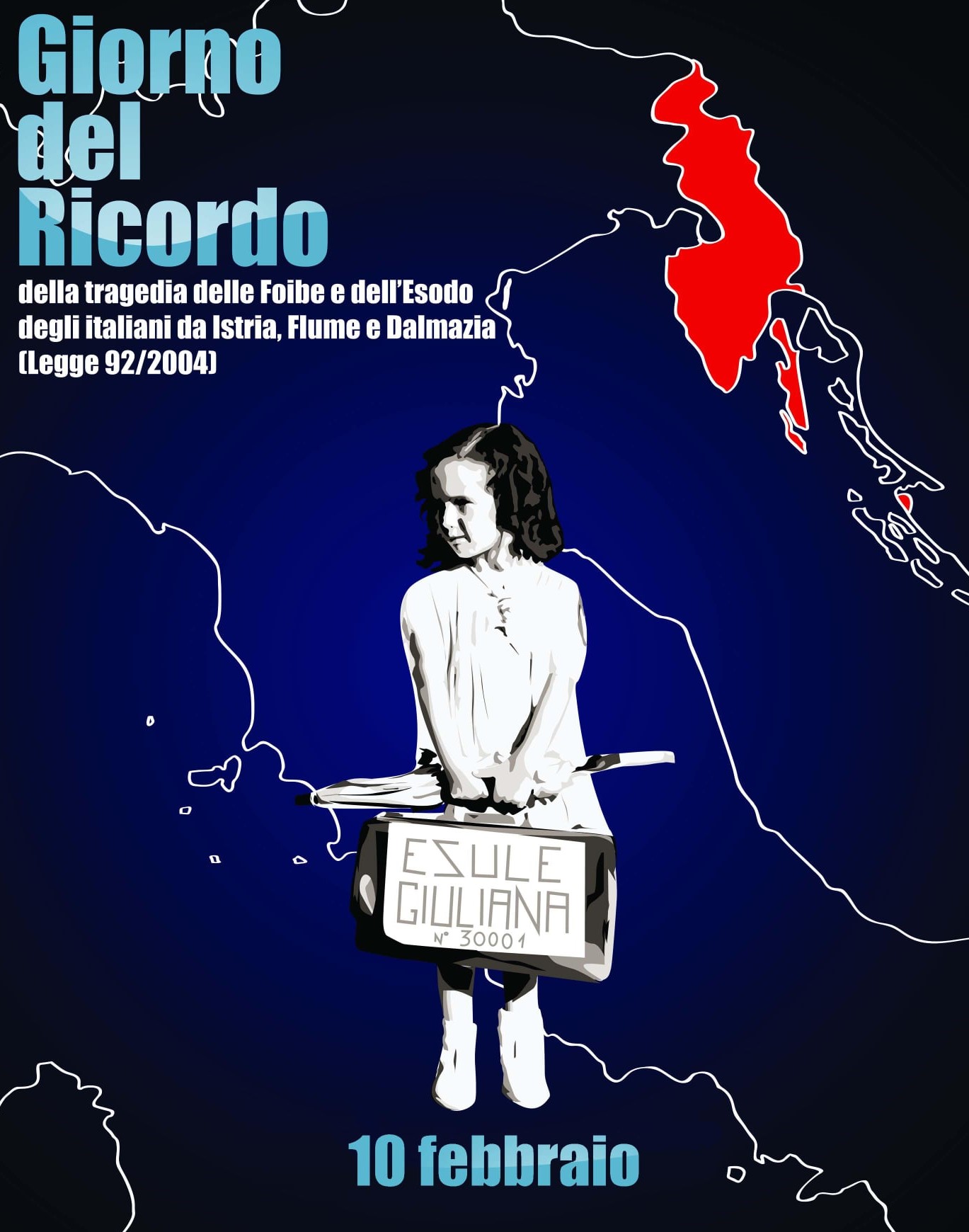
17 years have passed since Law 92 of 30 March 2004 was promulgated, establishing the Day of Remembrance, an anniversary that has managed to gain visibility and credibility thanks to the work of the associations of Istrian, Fiume and Dalmatian exiles, who immediately considered that Law not so much a goal achieved as a starting point. As highlighted by the President of the Republic Sergio Mattarella on the occasion of the Day of Remembrance 2021, these associations must be recognized for having preserved for over half a century the memory of the tragedies that struck the Italianity of the eastern Adriatic in the final phase of the Second World War and with particular virulence even once hostilities had ceased, leading to the exodus of 90% of the native Italian community. The bomb attack at Vergarolla on 18 August 1946 is the most tragic example of the continuation of these crimes after the war and represents the bloodiest massacre in the history of the Italian Republic, having occurred near Pola which, until the signing of the Peace Treaty on 10 February 1947, was to all intents and purposes Italian territory although under Anglo-American military administration.
Unfortunately, since the law was not approved unanimously by the Italian Parliament, even today there are those who belittle, justify, deny or decontextualize the massacres in the foibe, the drownings in the Adriatic, the deportations to terrifying concentration camps and the climate of terror implemented in Venezia Giulia, Carnaro and Dalmatia by the Yugoslav partisan forces, by the secret police organized by Tito and known as Ozna, by the Italian communists who placed ideological faith before national belonging and by the apparatus of the nascent Yugoslav national-communist dictatorship. It therefore seems a priority to refute these people with calm research work and to complete the requests of the exiles and their descendants that have not yet been met, from the Gold Medal to the banner of Zadar to the compensation for the goods abandoned or confiscated by the Titoist regime (and with which Italy paid for the damages of a war lost by all) through the identification and decorous arrangement of foibe, mass graves and burial sites currently in Slovenian and Croatian territory.
Remembering these losses and the suffering of the Julian-Dalmatian Exodus, from the pain of uprooting to the difficulties of reintegration (for many even in other continents) passing through the deprivations of the Refugee Collection Centers; starting from this catastrophe to go back to discover the literary, artistic and cultural heritage that the Italians of Istria, Fiume and Dalmatia have developed in previous centuries; seizing the opportunities that the European framework offers for the protection of the material and immaterial heritage of Adriatic Italianness, becoming aware that beyond the Adriatic there is still an Italian community that bears witness to an illustrious past.
Starting from these points of reference, the cultural work of the associations of the Adriatic diaspora continues throughout the year, aimed at not confining the knowledge of a page of history that belongs to the entire national community to the rituals of the date of February 10.
Lorenzo Salimbeni