Language
 English

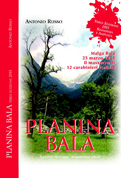
23–25 March 1944: the story of Malga Bala
by Antonio Russo
Dino Perpignano , vice-brigadier, commander, from Sommacampagna (Verona), born on 21 August 1921 – Primo Amenici , from Santa Margherita d'Adige (Padua), born on 5 September 1905 – Domenico Dal Vecchio , from Refrontolo (Treviso, born on 18 October 1924) – Fernando Ferretti , from San Martino in Rio (Reggio Emilia), born on 4 July 1920 – Lindo Bertogli , from Càsola di Montefiorino (Modena), born on 19 March 1921 – Michele Castellano , from Rocchetta Sant'Antonio (Foggia), born on 11 November 1910 – Attilio Franzan , from Isola Vicentina (Vicenza) born on 9 October 1913 – Rodolfo Colzi , from Signa (Florence), born on 3 February 1920 – Adelmino Zilio , from Prozzolo from Camponogara (Venice), born on 15 June 1921 – Pasquale Ruggiero , from Airola (Benevento), born on 11 February 1924 – Pietro Tognazzo , from Pontevigodarzere (Padua), born on 30 June 1912 – Antonio Ferro , from Rosolina (Rovigo), born on 16 February 1923.
These are the names of the 12 Carabinieri massacred in Malga Bala, in Slovenia, above Val Bausiza, in the district of Bovec (at that time Plezzo), on Saturday morning 25 March 1944, just because they were Italian.
They had been chosen from the barracks of the Tarvisio Tenancy and the Tolmezzo Company, on which Tarvisio depended. They had been there for a few weeks, to defend the hydroelectric power plant that supplied electricity to the surrounding towns and especially to the Cave mine. The entire territory, although Italian, was completely Germanized by the Nazi occupation, which had transformed this area into a simple Germanic appendix, where only and exclusively the German eagles reigned and reigned
They had been captured, those Carabinieri on duty at the switchboard, by deception on the evening of the previous Thursday, March 23, a national holiday as it was the twenty-fifth anniversary of the foundation of the Fasci. Forced to carry on their shoulders what was in the small barracks located on the square in front of the hydroelectric plant of Bretto Inferiore, they had been forced to climb with their captors to the top of Mount Izgora, where they had to spend, out in the open, the night between Thursday and Friday, a freezing and starry night. Then the descent into Bausiza, while the shining eyes of simple people followed every step from their homes. The stop in a stable, a bit of water and the resumption of the journey to the inside of Bausiza. In the evening the transfer, always on foot and always under armed escort, to the plateau of Logje, towards Bala. Locked in the barn from the outside, they were given for dinner a poisoned mash with caustic soda, bleach and black salt specially prepared by the women of Lojs Kravanja's family. A terrible night, as you can imagine. The next morning, Saturday 25 March, they resumed their march towards Malga Bala, the place chosen by Tito's Bolshevik partisans, all from the area of Bretto, Plezzo, Zaga and Caporetto, led by Franç Ursic, battle name Josko, assisted by Silvo Gianfrate, originally from Foggia, Ivan Likar, known as Socian, formerly a mine worker in Cave and the political commissar of the territory Lojs Hrovat, from Plezzo. In all 22 partisans. It should be emphasized that in times of war the true commander of a territory was not and is not the highest ranking officer but rather the political commissar of that area and that group. Nothing is done without his approval! The plan had been studied down to the smallest detail by Socian and approved by his undercover cronies. The Carabinieri and only the Carabinieri were the true representatives of Italy and therefore their revenge had to hit them, for an atrocious revenge against the hated enemy of all time, Italy. They could have taken revenge on the Financiers, on the Alpini, on the Militia; no, their target had been identified precisely in the Carabinieri, the only ones who then as now represented and represent Italy and the Italian government more than the other Italian armed forces. And that very day of celebration, March 23, 1944, had been chosen for the implementation of that crime that would wash away their deep hatred against the Italians with blood. If they had wanted to take revenge by killing the Carabinieri, they could have done so at any time from the moment of capture; but no, the prisoners had to be taken to the Malga and there, in that immense silence, among rocks and snow-capped peaks, sacrificed on the altar of hatred.
The theses of some journalists or scholars from Trieste, clearly of extremist communist ideologies and markedly of Slovenian tendency, are completely false and unfounded, but it is not clear why they continue to live in Italy with their hearts beyond the border, who continue to affirm against all evidence that the "massacre of Malga Bala" never happened and that the whole thing is pure invention of those who for years and years have published edition after edition the true story of Malga Bala, the result of hundreds and hundreds of interviews with directly interested parties, partisans first and foremost. There was no armed clash between partisans and Carabinieri. The real common thread of the whole thing was the hatred harbored deep in the hearts of these communist partisans of Tito towards Italy, an enemy since always and in particular since Italian Fascism had imposed its laws. Theirs, that of the partisans, was a pure act of atrocious revenge against poor innocent defenseless people, who were kept alive for three days only to increase their anxiety, expectations, suffering, otherwise they would not have been poisoned beforehand, until the terrible and inhuman sacrifice on the Bala mountain hut, in perfect mountain silence, as per the program devised by Likar Socian of Bretto di Sotto and implemented by those Slovenian partisans thirsty for blood and revenge. It was not a simple act of war, as some claim, if the partisans wanted to eliminate the Carabinieri, they would have done it immediately after their capture or during their capture, by blowing up the barracks of the Bretto power station.
Once at the Malga, the Carabinieri were locked in the little room where the cheeses were aged and, one at a time, stripped, tied up with wire, forced into the small kitchen of the Malga and confronted with a pickaxe. Finishing off a prisoner or an opponent with a pickaxe was a system used in the communist world as a sign of extreme contempt for the enemy, of total humiliation, of annihilation of his dignity and personality. This is what happened at Malga Bala. In the meantime, Commander Perpignano had been hooked upside down to a beam in the room and continuously kicked in the head, with ants attracted by the blood looking for a finally satisfying meal. Disembowelled, castrated, mangled, individually, immediately afterwards Lojs Kravanja and Bepi Flais would drag the mangled body of the unfortunate man under a large rock nearby and the slaughter would begin again with a new prisoner. Then, once the carnage was over and it started snowing again, the 22 heroic activists of Tito's communism went downstairs, trying to "purify" their image and putting forward the theory that it was the Germans who had committed the massacre, only to then maliciously place the blame on those poor innocent partisans who were completely unaware of what had happened.
This, in a few words, is the true story of Malga Bala, referring, for those who are seriously interested, to the reading of the various history books by Antonio Russo and in particular Planina Bala, 2011 edition or previous editions, by this same author. All the rest is pure fantasy, it is trying to cling to mirrors, those of wickedness and of not wanting to see reality, intentionally, for ethnic or political reasons. None of us can or should change a historical event; we can interpret it, see it from particular angles like when we observe a painting, but reality, the real one, cannot be scratched at all, whether we like it or not. Nor can we add completely unfounded scabrous details as that marshal of the Carabinieri of Brescia did with his associates by stating that the Carabinieri before being massacred were sodomized and "sexually raped". False. The partisans in those moments were not overwhelmed by particular instincts other than those of hatred against themselves and against the Italians. Not even the completely illogical statements of that other pseudo journalist from the Rovigo area, completely biased and far left, who condemns the Carabinieri of Malga Bala while praising Tito's communist partisans because the latter acted more than well, since Italians were "republicans" in every respect. Nonsense of those who sleep warm and eat to their heart's content. In that period being a "republican" is like being "communist" or "Catholic" or "non-Catholic" today: these are natural attitudes, of life, of convenience, not of considered choice. Meanwhile, the Carabinieri crushed at Malga Bala were not republicans as they are understood today, so many years later and outside of any fray, well seated in front of a desk; they, the Carabinieri, had naturally been assigned to that department and to those tasks, without being consulted in the slightest. Before judging from the height of one's own science, it is necessary to put oneself in those days and in those shoes; then to issue such offensive and devastating, illogical and senseless sentences, to share positively the actions of "those" partisans... well, this alone is enough to cancel any other reflection on the matter.
At that time, it is right to remember, this territory of Upper Friuli was to all intents and purposes Germanic territory and no one was allowed to "choose" or "oppose" or "act against the current". Consequently, any other consideration is completely out of place, especially if made today without at least mentally moving to that period.
“Come foglie al vento”, “Alle porte dell'inferno”, “Planina Bala” in the various editions and reprints, the detailed story of the massacre of Malga Bala later consecrated in “L'ultimo parroco di montagna” and “Dal Buric a Chiout Zuquìn, da Saps a Patocco ecc.” and in other volumes, the result of accurate, meticulous research, never refuted or contested by anyone, in Italy and abroad, research dangerous beyond all imagination, with hundreds and hundreds of interviews also with those directly involved, including living partisans, a tape recorder well open and working on the table,…: they are the historical documentation of what happened in Alto Friuli and in particular at Malga Bala, the result of the passion and historical and journalistic tenacity of Antonio Russo. No one else, especially that marshal from Brescia so much praised by some blind Tarvisians improvising journalists or historians or critics or politicians with different shoes and jackets, depending on the occasion, can boast or take on merits that they have never earned. Not for anything else and only for this reason in July 2010, after the awarding of the gold medal for civil valor to the Martyrs of Malga Bala by the Italian State, the undersigned was invited, received and honored as well as awarded at the General Command of the Carabinieri in Rome, in the presence of the General Staff of the Corps headed by General Leonardo Gallitelli.
A strange story, this one of the 12 Martyrs of Malga Bala, first completely forgotten, by the institutions and the uniforms, kept hidden as if it were an event to be ashamed of; then everyone has tried or is trying to ride their sad final story for propaganda purposes or exclusive hoarding.
Let us kneel instead on their graves and on their memories, in silence, together with their relatives who only thanks to “Planina Bala” and the other volumes by Antonio Russo have finally learned of the sad end of their relatives. They are Martyrs, Carabinieri, sacrificed by hatred and revenge only because they are Italian. And let us pray to God that such events will not happen again, even if the historical and social conditions are always the same, unfortunately, if not worse!