Language
 English

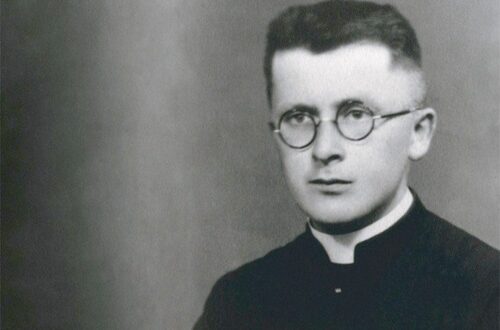
80 years ago the martyrdom of Blessed Boniface
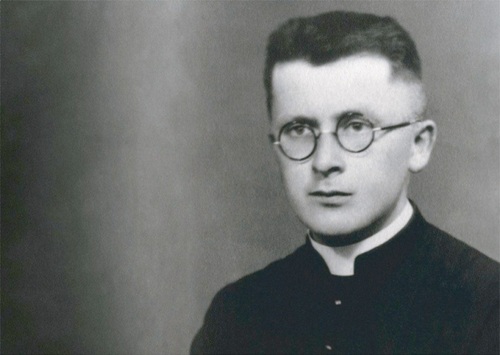
September 11, 1946, 80 years ago today: Don Francesco Bonifacio was captured on the road between Grožnjan and Krasica by Tito's People's Guards in an ambush and forced into a black car used to smuggle out "enemies of the people." Some witnesses saw the car, and some protested and tried to defend their parish priest, but the three criminals bundled him into the car, and from that moment on, Don Francesco, 34, was never heard from again.
Decades later, one of the three murderers would recount his martyrdom: “That priest kept praying and forgiving us, and this drove us crazy, until we dragged him out of the car, took off his robe, and hit him in the face with a rock. Finally, we slit his throat.”
The Pula prosecutor's office is still investigating today, together with the Zagreb forensic police, and, based on the in-depth studies conducted by Mario Ravalico, author of important essays on Blessed Boniface, has pieced together many pieces of this tragedy, which occurred a full year and a half after the end of the war!
Don Francesco had to be eliminated because young people crowded his religious services and Catholic Action meetings rather than those of the Communist Party. He was also a nuisance because he was too beloved by the people: he had always defended his flock from both the horrors of Nazism and Tito's communism, and his sanctity was unforgivable.
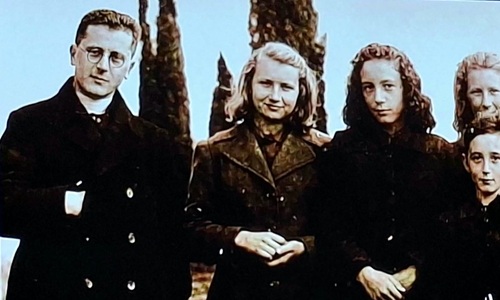
He died continuing to forgive his murderers, as he had learned from the Gospel and the teachings of his own family. His mother, Luigia, continued to wait for him, hoping that one day he would return from some forced labor camp. She waited until her death in 1963, and never a word of hatred escaped her lips: this is the will of Don Francesco Bonifacio, and it must not be betrayed.
Everything about his murder is now known, including the names of his convicts, the instigators, and the perpetrators: about twenty in all, 17 of whom were Italian and three Slavic. The only mystery remains the location of his body, but thanks to Mario Ravalico, his wife Giuliana, and the work of the Croatian prosecutor's office in Pula, we may not be far from the truth.
A prayer from all of us for our beloved Blessed Francis Boniface. God has surely welcomed him into eternal light. Thank you.
Lucia Bellaspiga
President of the Association of Italians of Pula and Istria – Free Municipality of Pula in Exile
THE COMMEMORATION OF DON BONIFACIO IN TRIESTE [Source: FederEsuli ]
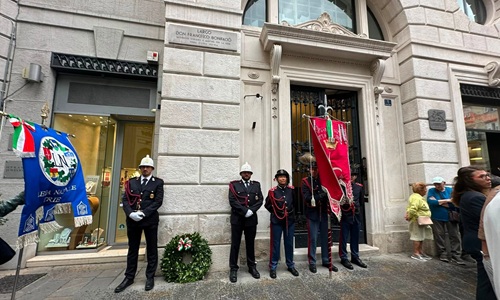
With a solemn ceremony attended by a large number of citizens, representatives of civil and religious institutions, FederEsuli, and Exiles' Associations, Trieste commemorated the killing of Blessed Francesco Bonifacio, the priest originally from Piran, barbarically tortured and killed at the age of just thirty-four by Tito's followers 80 years ago, on September 11, 1946.
On this special occasion, as every year, a laurel wreath was laid in the square named after him, at the beginning of Viale XX Settembre, with honors from the banner of the city of Trieste and the banners of the associations. At the opening, Bruno Marini, on behalf of the Association of Istrian Communities, thanked those present, retracing the steps of Don Bonifacio's beatification, also conveying a message of greeting and closeness from the Minister for Relations with Parliament, Luca Ciriani.
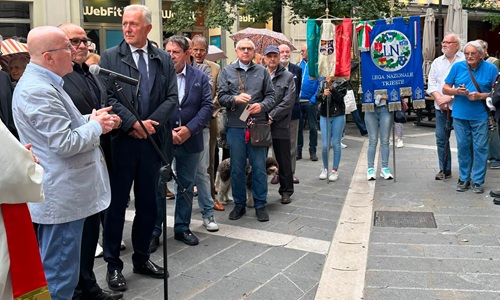
"I sincerely thank all those who worked tirelessly to organize it," emphasized Renzo Codarin, President of FederEsuli, "because for the first time, on February 10 of this year, we also commemorated the life and work of Blessed Don Bonifacio in Montecitorio. The entire world of exiles unites around the solemn memory of him, joined by the devotion of those who live in Istria today, in recognition of the merits of this young priest devoted to his community, along with the memory of the other priests, Slovenian and Croatian, who suffered the same fate. A decidedly more Christian atmosphere has been created compared to the years when we first began honoring his memory."
Before the blessing of the wreath, Councilor Massimo Tognolli greeted the city administration of the Julian capital and the Mayor. Notes of silence then accompanied the laying of the wreath near the plaque commemorating Don Francesco.