Language
 English

Alida Valli, an anti-diva but of “noble lineage”
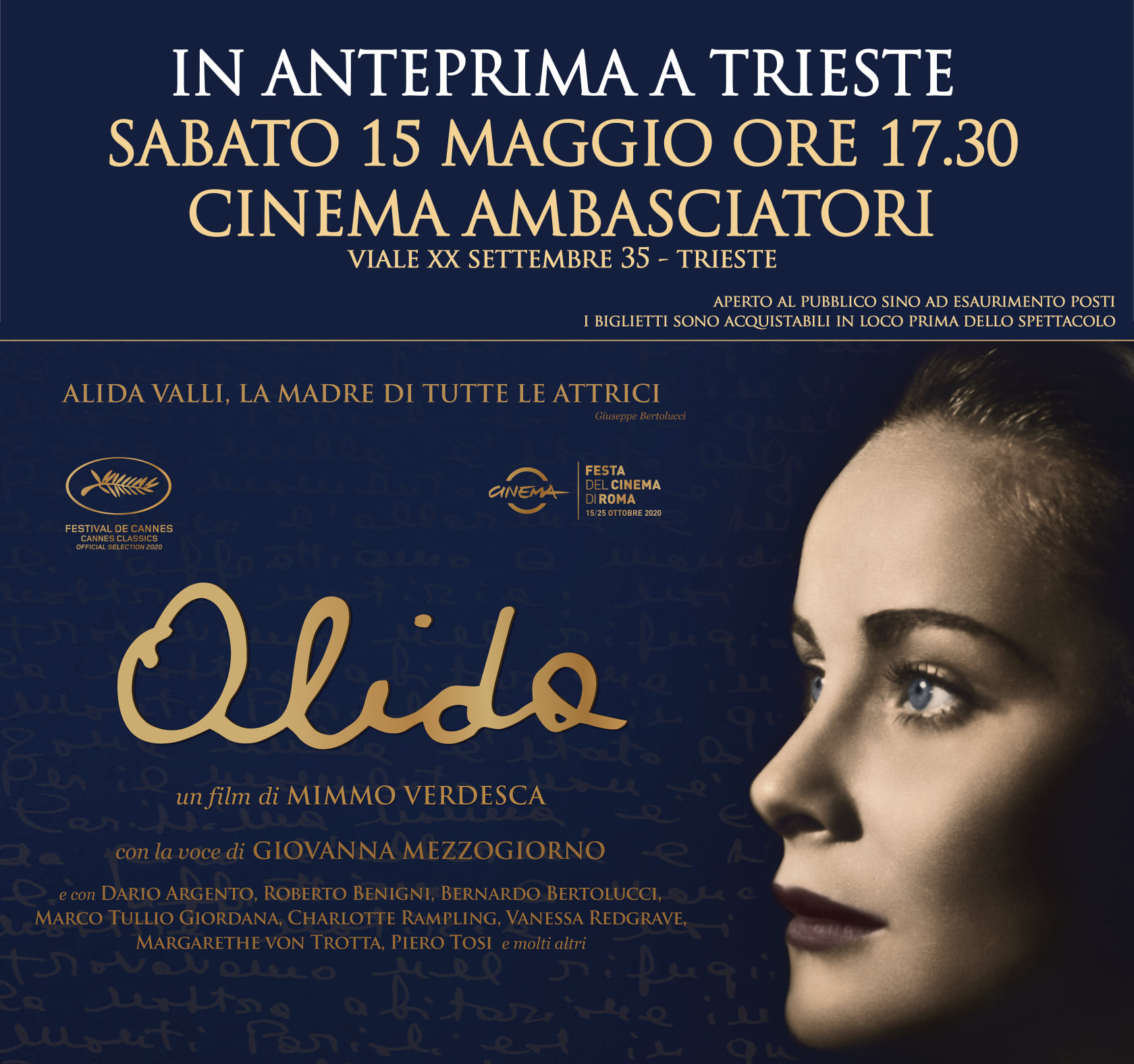
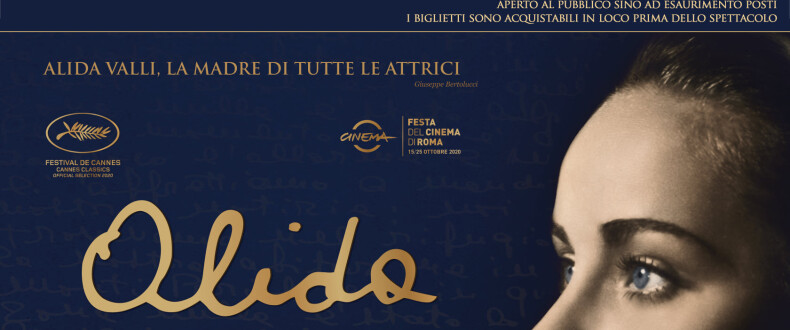
In theaters is the documentary film “Alida” by Mimmo Verdesca on the life of the great actress, born in Pola on May 31, 1921. “They wanted me to be Croatian but I was born and will die Italian,” she said before passing away in 2006.
"Alida. That's my name, and I like it. It means of noble lineage, warrior." Anyone who wrongly imagines Alida Valli, one of the most beautiful faces the human race has ever produced, as an actress from a "white telephone comedy," as they used to say, would be surprised by the film Alida, in which she herself recounts her restless and intelligent soul, through the diaries and hundreds of letters she kept throughout her life. Produced by VeniceFilm and KublaiFilm and directed by Mimmo Verdesca, Alida was one of the very few international documentaries selected for the 2020 Cannes Film Festival, but was immediately halted by the pandemic. The pandemic then put the success she achieved at the Rome Film Fest on hold.
A bumpy start, then. But finally, from May 17th it lands in Italian cinemas (the dates are on the Facebook page Alida – un film documento) on the occasion of the centenary of the Istrian actress, born on May 31st 1921 in that cosmopolitan Pula, shortly before Austro-Hungarian and now Italian, with the real name of Alida Altenburger von Marckenstein und Frauenberg. Too difficult: the pseudonym Valli will be invented by the director Mario Bonnard in 1937 (Alida is only 15 years old but dazzles him with an audition at Cinecittà), «she chose it from the telephone book», an elderly Alida Valli demystifies in the docufilm.
Letters and diaries are entrusted to the voice of Giovanna Mezzogiorno, whose timbre is so similar to the original, interspersed with interviews Valli gave on television around the world and appearances on international stages where she received awards. Yet what she did throughout her life was precisely demystify herself, "crumbling"—to quote Marco Tullio Giordana interviewed by Verdesca—"the devotion people had for her." She was "the mother of all actresses," says Giuseppe Bertolucci, who directed her in 1976 in the irreverent Berlinguer Ti Voglio Bene, a role rejected by Valentina Cortese for its "scandalous" dialogue, but embraced by Valli with the customary modernity that has always distinguished her.
It was as if she had been born a mature woman, capable of looking twice her age and therefore already intense in dramatic roles as a teenager. She was only 19, for example, when she starred in Mario Soldati's Piccolo mondo antico by Fogazzaro, yet when the stormy lake kills her, little Ombretta looks a hundred years older. And when she starred in Luchino Visconti's Senso , she was 32, an icon of perfection, yet she didn't need makeup to appear worn out, disappointed, betrayed. It was 1946 when Hollywood, which had snatched her from Italy with a seven-year contract, immortalized her alongside Gregory Peck in Alfred Hitchcock's The Paradine Case : Greta Garbo had refused to play the mysterious character (perhaps a cold murderer, perhaps a victim-lover), and the young Italian girl didn't make anyone regret it; at 25, she could be as cold as Garbo, and even more so, acting in English.
Galas, red carpets, paparazzi: America loves her, but the anti-diva maintains an almost surly reserve and a perpetual melancholy. "The satisfactions that come from my work help me to continue, but there is nothing that is worth the simple joys of family. I have always thought so and woe betide anyone who tries to take me off my tracks", she wrote to her mother in 1947, a guest at the Hitchcock ranch with her husband Oscar De Mejo and their first son Carlo, two years old. Work is a game, she repeats throughout her life, "it is love that makes you live". A love that she chases but eludes her every time.
Yet Alida has known what she wants since she was a child, to love a man for life. She is rebellious, restless, so much so that she worries her parents, with whom in 1929 at the age of 8 she leaves Pola and moves to Lake Como. She loves love before it even has a name: at 13 she meets Carlo Cugnasca, a student pilot officer much older than her, "he doesn't even look at me but I don't care, I'm happy to love. I'll grow up and he'll notice me. Finally my feeling has a face".
Her father Gino Altenburger, a literature teacher, the man who passed on to her the gift of deep and sincere writing, always knows how to understand her. Even when she goes dancing with the older boys at 12, she skips school for solitary walks on the lake shore or to swim across it. "Live calmly," Gino writes to his wife Silvia Obrekar, "she is much more sensitive than you think, persuasion is needed, not imposition."
It was 1935 when he decided to send her to Rome to a cousin who was a senator. It was fate that knocked: there Alida met the Centro Sperimentale di Cinematografia and decided to try. Verdesca's well-documented film also re-proposes that audition: Alida was 15 years old but moved with ease, she had a fresh and clean beauty. "I know that your stay in Rome will be profitable, that you will be able to highlight your artistic ambitions, "your dad" wrote to her". But it was May 1936, a year later, when Alida wrote in her diary: "Dad is no longer here, I am destroyed, I lived for him". Meanwhile in Rome no scholarship because "undisciplined and absolutely unsuited to the profession of actress. My dreams are crumbling, I will return to Como..."
It won't be like that. In 37, the Duce inaugurates Cinecittà, and Alida Altenburger, 16, returns with her mother for a screen test that this time immortalizes her and changes her last name. Soon, on Hollywood posters, she won't even be "Alida Valli" anymore, but simply "Valli," two syllables that make audiences and the biggest producers dream. But the gilded cage of ferocious success is unbearable (David Selznick, the producer of Gone with the Wind, forbids his actresses from having children, and in 1950 she acts "secretly pregnant" with her second son, Larry), so she breaks the contract: "This will serve as a lesson to me," she writes to her mother, "because I will never again put myself in this condition of a paid slave."
At the cost of a $150 penalty that ruins her, she chooses autonomy and dignity. Decades of great successes on the stage in Italy and in the cinemas of a France literally at her feet will follow. But the longed-for love always fades. First the Oscar-winning separation, then more goodbyes. "The acting profession is merciless," Valli confesses, "I've experienced too many love stories in fictional cinema to be able to experience a true one that's all my own, forever." Starting with that Carlo Cugnasca she loved so much as a child: as she had predicted, he will notice her and a love will blossom so strong that it will destroy her when, in 1941, the pilot's plane is shot down in Africa (Alida is not yet 20 and is filming 9 O'Clock Chemistry).
From her diary: «Darkness. Tobruk, April 14, 1941, why did he leave? Why did he give his life in vain? It is impossible to suffer more». A faithful pain, which lasted until Alida's death, on April 22, 2006. Shortly before, in her diary, the other great regret: Pola. «I have always chosen not to return to Pola», too much torment. Her last gesture of freedom: «They offered Alida Altenburger honorary citizenship as a Croatian artist! I replied that too many times, like my city, I had changed skin, but I was born and will die Italian».
by Lucia Bellaspiga – 05/14/2021
Source: Avvenire