Language
 English

Two hundred years of Luxardo
The maraschino that was born from the hands of a countess
Two centuries ago in Zara, Maria and Girolamo began the long entrepreneurial adventure of one of the oldest distilleries in the world, still managed by the same family today
by Massimo Greco – 13/02/2021
Source: The small
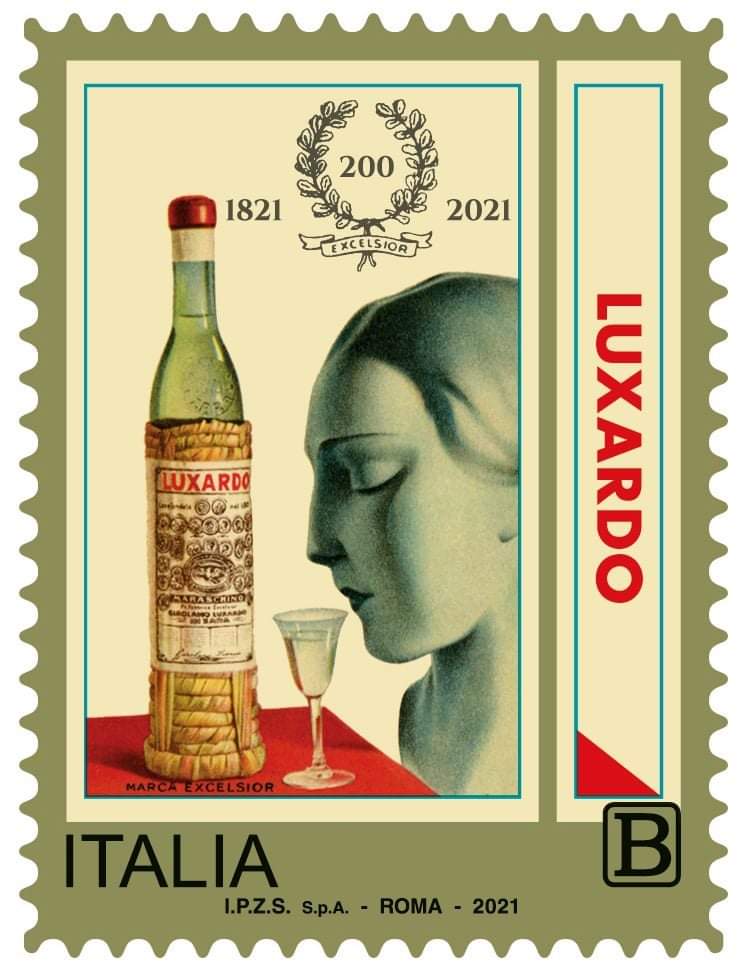
Two hundred years, a round, important anniversary. It is the death of Napoleon, as Manzoni's verses remind us. But we also have a more pleasant memory to sip.
Two centuries ago, the Marchioness Maria Canevari enjoyed preparing “rosolio maraschino” in her home in Zara, where she resided as the wife of Girolamo Luxardo, who later became consul of the Kingdom of Sardinia in the Dalmatian city.
Her husband, a Genoese patrician originally from Santa Margherita Ligure who landed in Zara to trade coral, perceived in the quality of the liqueurs distilled by his wife something more than a simple domestic divertissement borrowed from the processes conducted mainly in convents.
And Gerolamo thought of launching this know-how in an entrepreneurial way, outside the home walls: the infusion of marasca cherries in alcohol, with the addition of sugar and rose essence, became industrial production, increased by steam distillation.
It all began with a unique raw material, a locally grown fruit, the Marasca cherry, a tart cherry unlike the ones we now eat in late spring, harvested in Vignola, near Verona, in Puglia. With these premises, the Luxardo factory was able to launch in 1821. Eight years later, it obtained a "privilege" from the Emperor of Austria, granting it exclusive production rights for fifteen years. This recognition is still preserved in the company name as the "Privileged Maraschino Excelsior Factory."
In a sector characterised by changes of ownership and large-scale mergers, Luxardo stands out as one of the few exceptions, because since 1821 the brand and production have always remained in the hands of the family. The “patriarch” Franco, the last born in Zara together with his brother Paolo, a doctor, reconstructs, from the height of his 85 springs, the current genealogy within the company, where three generations coexist over a period of half a century: the fifth (Franco himself), the sixth (Piero, Guido and the younger ones Matteo, Giorgio, Filippo), the seventh (Gaia, Nicolò). In Torreglia, in the Euganean Hills near Padua, they run one of the oldest distilleries in the world.
Yes, founded in Dalmatia and settled in Veneto. Because the story of the Luxardos goes beyond the purely economic-entrepreneurial story to transform itself into a tragic chapter of contemporary history, which requires a story from the twentieth century. After the happy debut in the 1913s, the company continued to prosper driven by its flagship product, the “maraschino”, until the eve of the First World War, when in XNUMX Michelangelo Luxardo, third generation in the “dynastic” line, built a modern factory, among the largest in the then empire, of which documentary images are preserved.
The peace treaties, which ended the Great War, brought the enclave of Zara into the Kingdom of Italy, where it was the smallest province with only two municipalities and a surface area of 120 km1919. Luxardo's growth continued, the range was enriched with a new label, "Sangue morlacco", the ratafià/cherry brandy so renamed by Gabriele D'Annunzio, who sipped it in the Fiume legionaria of XNUMX: one of the Luxardos took part in the enterprise, who provided supplies for the Poet's canteen.
But the outbreak of the Second World War blocked the expansion of the distillery: Zara was hammered by Anglo-American bombings and what had been a cutting-edge plant, where over 200 people worked, was left half-destroyed. It wasn't over: when in 1944 the Italians and Germans had to evacuate the city, Tito's troops arrived. A good part of the Italian population managed to leave, some remained. Among them were the brothers Pietro and Nicolò Luxardo, who, together with Bianca Ronzoni, Nicolò's wife, were drowned by the occupiers, at two different times, in the waters in front of Zara. The Luxardo assets were then confiscated by the Yugoslavs.
The company's situation seemed compromised by the deaths, exile and loss of assets. However, the determination of the only surviving brother, Giorgio, intervened to reverse the fortunes. His son Franco recalls: "My father wanted to reopen the business, but it was necessary to identify a suitable land for growing marasca cherries. He evaluated an initial proposal in the province of Udine, but it was too close to an unwanted border. He weighed another hypothesis in the Illasi valley in the Verona area. Finally, at the suggestion of the scholar from the University of Florence Alessandro Morettini, he chose the Euganean Hills, where he bought 3 hectares from the Pezziol family, producers of Cynar and Vov".
"We went to visit the site in Torreglia - continues Franco Luxardo - starting from Venice, where we had settled, with a battered 500. There he decided to restart the distillery, which was inaugurated on a sadly symbolic day: February 10, 1947, when the Paris peace treaty handed Zara over to Yugoslavia."