Language
 English

This is why Fiume dreamed of being a piece of Italy
In «èStoria» two scholars tell the story of the epic of this free port that began well before the Poet's enterprise
When speaking of Fiume, in Italy, it is almost automatic to associate the name of this ancient city with two words: enterprise and D'Annunzio. As if in the end this small maritime republic that today has more than 175 thousand inhabitants (of whom very few speak our language), in the history of our country had entered only through the merit, or fault, of the Poet and his expedition of September 12, 1919.
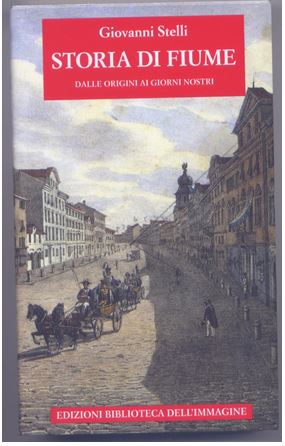
To realize that this is not the case, there is nothing better than the meeting of the festival èStoria di Gorizia that is being held today at 18 pm in the great hall of the university campus of the city (Via Santa Chiara 1), entitled precisely Storia di Fiume and held by Fulvio Salimbeni. Fiume, in fact, begins its history, full of relationships with Italy as a Roman port. At the time it was part of Roman Italy, like the whole of Liburnia, and was a small municipality. And after the collapse of the Empire and the hardships due to the many barbarian invasions, it quickly rose to an autonomous political entity determined to remain separate from the Slavic context that surrounded it. As one of the two speakers at the meeting, Dr. Giovanni Stelli (author of the volume Storia di Fiume), explains: «Since there have been minutes of the city council and documents written in the vernacular, a Venetian dialect has been used, the so-called Veneto da mar. Some have tried to argue that it was a sort of official lingua franca, not necessarily that of the people. But we can be fairly certain that it was truly the language spoken in the city. There is a XNUMXth century ordinance that regulates the sale of fish. It is a sort of price list that was obviously for the use and consumption of the people; the fact that it was written in Venetian is more than indicative».
Even from a political point of view, Fiume immediately presented itself as a body separate from the rest of the territory. Stelli continues: «Istria was characterized by a city civilization that borrowed its way of being from the Italian municipalities. This, for example, does not mean that the people of Fiume were not good subjects of the Austro-Hungarian Empire. But they always made it clear that the city depended directly on the Kingdom of Hungary and should not be assimilated to the surrounding territory. For example, in 1779 they had their status as a Corpus Separatum from Croatia recognized with a diploma from Empress Maria Theresa of Austria. They had absolutely autonomous management and answered only to Buda. They reaffirmed their desire to maintain it at all costs even when, after the riots of 1848, an attempt was made to re-unite them with Croatia. They carried on a twenty-year protest and won in 1867».
It was not in any way what we would call nationalism today, the idea of nation was still very far away and, in fact, is a child of the nineteenth century, but the people of Fiume were clearly aware of their particularity that was expressed in the Italian language and in autonomy. Stelli and Fulvio Salimbeni (professor of contemporary history at the University of Udine) explain: «The people of Fiume defended an autonomy. They also defended it from the Serenissima that twice in the sixteenth century put the city to fire and sword. After all, you can also see it in the map. Just like Trieste, Fiume does not seem like a Venetian district like, instead, many other cities on the Adriatic. It is different. But cultural and linguistic contacts were mainly directed towards the Italian area. Obviously, this does not mean that there was not a Slovenian or Croatian component in the city, which perhaps became the majority, in the countryside... But the city's propensity was clear. The people of Fiume have always and only wanted to depend directly on distant Buda."
So how did the people of Fiume become Italian irredentists? Was it all a whim by Gabriele D'Annunzio and his followers? No. The speakers explain: "Nationalism and irredentism developed during the 1918th century, during which there were also episodes of violence by the pan-Slavists of Sokol. Faced with the impossibility of simply being people of Fiume, an impossibility dictated by the events of the First World War, the inhabitants of the city chose, due to cultural contiguity, to be Italian. And moreover, the principles enunciated by the president of the United States Woodrow Wilson would have allowed them to do so fully. Then the treaties took on a completely different form - also because Wilson, after having spoken of self-determination, actually favored the nascent Kingdom of Serbs, Croats and Slovenes - and only then did D'Annunzio intervene. But already in XNUMX the city council of Fiume, which had taken the name of the Italian National Council, unilaterally declared that Fiume wanted to be Italian. A will that was the daughter of a precise cultural and linguistic history".
Eventually this stubborn will led to the annexation of Fiume to Italy which became definitive in 1924.
But then the Second World War put the Italianness of Fiume, at least culturally and linguistically, in crisis. Salimbeni says: «For the Italians in the city it was a matter of choosing between a communist and ultranationalist regime that imposed two years of military government and flight. The overwhelming majority left. They could do nothing else». It was the end of the centuries-old public use of the Italian language in the city of Fiume.
Source: Il Giornale