Language
 English

EU Italian: the trip to Rome of young Italians from Croatia and Slovenia
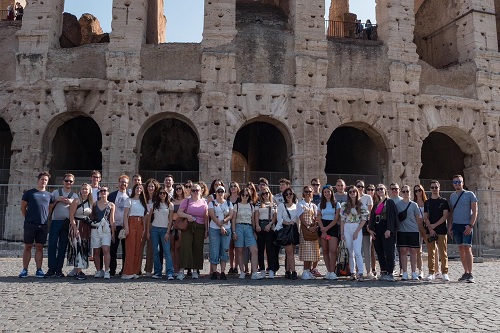
From September 26th to 30th I had the honor of participating in a fascinating study trip to Rome, organized by the Italian Union. This organization has represented for over three decades the community indigenous present in Croatia e Slovenia. These communities have always been rooted in those places, but they maintain a special bond with Italy, characterized by mutual support and cooperation, and by the memory of the tragic pages that those territories have crossed in the last century.
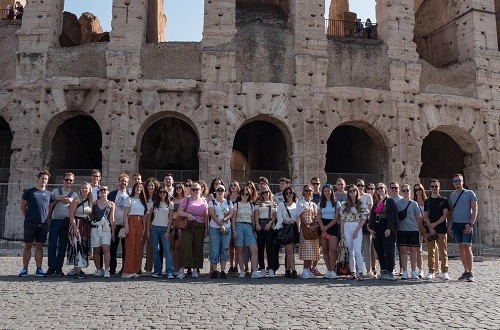
The journey, an integral part of the larger project EU ITALIAN, saw the participation of over thirty young people under 35 belonging to the CNI (Italian National Community) of Croatia and Slovenia. The experience was rich in activities, including: the promotion of knowledge of Italian institutions, a visit to the Chamber of Deputies, training sessions in project management and euro planning, as well as immersion in the history of the communities of exiles who found refuge in Italy after the Second World War and the study of the complex, but fascinating, history of the political and historical evolution of the territories in which they live today.
In addition to the training activities, it was a great networking opportunity in the lives of all participants, where they discovered new friendships, met people with whom they could share suggestions, debates and ideas, all seasoned with the magnificent cultural setting of Rome. Divided into groups of 4-5 people, we also developed during the week some real projects for a contest of ideas, which were finally submitted to the Italian Union and from which, after having decided who emerged as the winner, the basis for many future projects for the future of their communities arose.
Offering this opportunity to so many young people who have Italy in their hearts, and their heads in Europe, is a way to give them the tools to become future leaders, capable of continuing to make their communities live and claiming their right to exist. Not only through a mere cult of ashes, but also with the custody of the fire, or the valorization of their identity but projected towards the future and the World, capable of not giving value to their reality only in function of an important past, but above all for a present and a future full of potential and opportunities to be exploited and relaunched.
For me, a Calabrian by origin who has lived in Trieste for almost ten years, a cross-border worker, it was fascinating from the first moment to discover a community of my peers and compatriots who have their roots in territories that have lived a history parallel to mine. There are many points of contact but also differences that run through this common history: a different development of the Italian identity and stories that, after a long time, today can finally try to reunite under the same roof of our common European home.
Over the years of close contact with this reality, I have vividly recognized the need, and I would add the duty, we in Italy have to raise awareness of the existence of this Italian minority in the Adriatic from school age. These communities cannot be superficially assimilated to the hundreds of other Italian communities abroad. They are unique, having always been present in those places, far from our peninsula , but still our brothers and sisters. They represent a different Italian identity that can only enrich our identity, laying the foundation for building bridges towards renewed international cooperation, especially in Eastern Europe.
The Italian national identity is, by its very essence, open and multicultural, and represents one piece of the wonderful mosaic that makes up our Europe . Together, we can continue to make this identity even more beautiful and inspiring, not only for our continent, but for the entire world.
Emanuel Cristelli
Source: The Reformist – 19/10/2023