Language
 English

“I loved River like a woman”
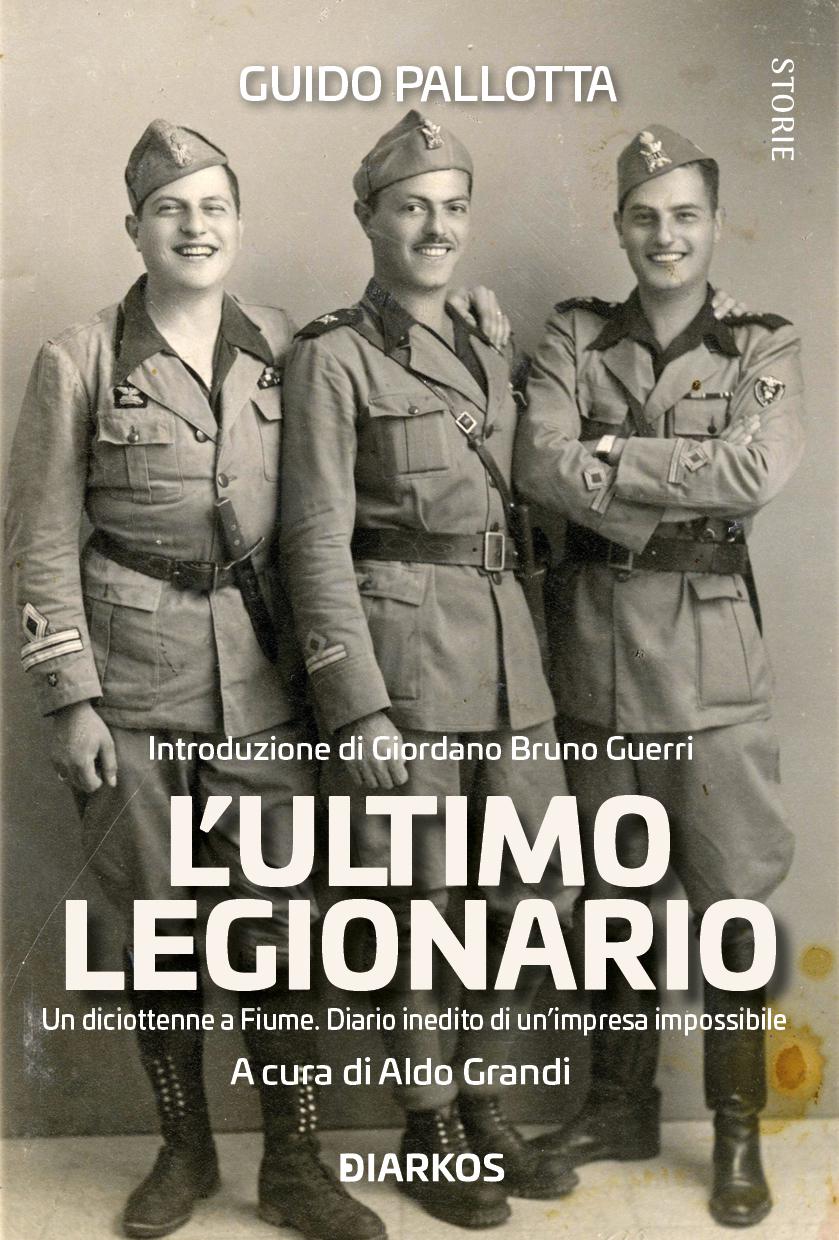
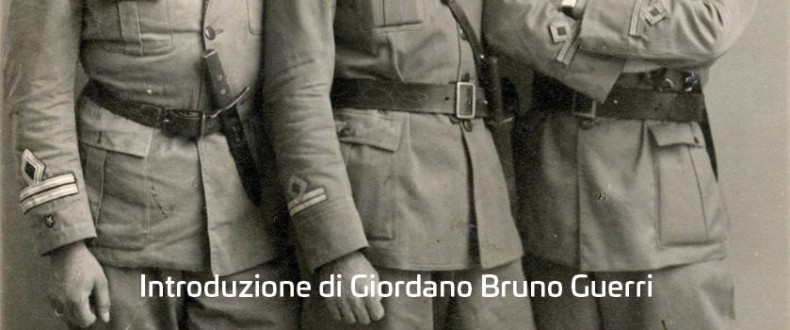
Introduction by Giordano Bruno Guerri to "The Last Legionnaire – An Eighteen-Year-Old in Fiume," by Guido Pallotta (ed. Diarkos), published by "La Verità"
In the memories of Giovanni Comisso – a boy in Fiume – we read: «You must know that you have arrived in a dangerous city for your young years», some officers say to a boy who has just arrived, «here one does without any restraint whatever one wants. The lowest and highest forms of life alternate here no differently than light and darkness».
Another future writer, Marcello Gallian, a seventeen-year-old guard at the Information Office, senses "a great smell of perdition. I loved it like a woman, that city, it was a real sensuality to find myself in it, now. As if I were about to do something big, important: exalted like a beautiful assassin []. I was an outlaw, impatient, without rules. I wanted to do it all myself, an unknown and great action, to make me known immediately as a hero".
In addition to the young fugitives and the reserve officers, the barracks of Fiume are crowded with brutalized veterans from the trenches, political agitators, artists, emissaries of "fishing boats", fixers and receivers. General Sante Ceccherini, commander of the troops, calling them "extremes", emphasizes that "not all of them had the same feelings of honesty and military and moral discipline".
It is true, in Fiume there was everything, dreamers and criminals, adventurers and mystics of the homeland, future anti-fascists and future fascists. There was also Guido Pallotta, who would become a hero of fascist mysticism, then a fascist hero, and finally simply a hero, falling in combat in 1940: "Fascist mysticism is faith and action, absolute but at the same time conscious dedication."
Pallotta, a very young legionary from Fiume, wrote this book, which has remained unpublished until now, in 1923, shortly after the events, but in a completely changed situation: D'Annunzio, defeated, had retired to Gardone Riviera, where he would devote himself almost exclusively to the construction of the Vittoriale; Mussolini, triumphant after the March on Rome and before the Matteotti murder, was established in power. In this book, Pallotta was already a fascist, and it was all too obvious, but this is precisely the point of greatest interest in the volume: seeing firsthand, almost simultaneously, how the regime would have made the "Impresa" its own enterprise, taking everything from it - rites, myths, methods - except the spirit, which transformed a nationalist coup into a libertarian revolution.
Mussolini – after having played D'Annunzio with his greater political skill and having made secret agreements with Giolitti – would have plundered everything that happened in Fiume, except its most important document, the very advanced Carta del Carnaro. It is therefore clear, from these pages of Pallotta, how for many Fiume could have been, especially for those who had not had the opportunity to fight in the Great War, a prelude to fascism.
"After these nine months of relentless toil, a new period of struggle begins," D'Annunzio declared in his proclamation to the legionaries on June 12, 1920: "Be ready. Vigilant, silent, ruthless, deliberate, I want you to do everything: polished muskets, sharp daggers, maneuverable bombs."
Let them prepare for daily military exercises, "our morning games with fire, our uproar of explosions, our waves of crawling under the crackling fan of machine guns, our eyed duels with hand grenades, our embraces with dust." []After exhausting warm-ups with free body and running, the students are subjected to exercises of increasing difficulty, even psychological; the most famous and crazy is the passing of a grenade without a safety catch.
The grenade is a symbol of the brave together with the knife, it must be mastered, you must know how to calculate the range of action, endure its roar. In Gallian's head and pen the shouts of the instructors resonate: on all fours, forward. Step by step. Ready, go. Throw the bombs. A tear with the teeth and the throw. If it stays in your hand, it's death, what? It's no joke. Don't act like babies, don't have fun, they are real, authentic bombs. They are not glasses. They are not boxes of confetti.
Throw, throw What are you up to, you ignorant, my salami. Do you want to have your head taken away? Do you want to remain maimed? Let's see how you manage to remain maimed. It was in a grenade throw that Pallotta's life would end, 23 years later. With the addition of the cult of the Chief, Fiume seems like a factory of heroes, according to fascist mysticism. But, if the first chief of staff and main collaborator of D'Annunzio in Fiume was Giovanni Giuriati, future secretary of the National Fascist Party, the second and most important chief of staff was Alceste De Ambris, who died in exile for anti-fascism.
Likewise, Ettore Muti, another future secretary of the PNF, was an Uskok – the “pirates” that D’Annunzio charged with robbing ships with a payload. But his boss, in Fiume, was a figure who is now forgotten, despite everything, the twenty-three-year-old from Arezzo Mario Magri, known to all as “Captain Magro”. Once the enterprise was concluded, Magri would go to fight for the freedom of the Rif, a region of Morocco that was fighting against Spanish colonial rule: a hopeless revolt. In the mountains, Captain Magro commanded the rebels’ artillery against vastly superior enemy forces, until the inevitable surrender.
Back in Italy, he did not resign himself to the rise of fascism, trying in every way to convince the legionaries and the Poet to take a clear position against Mussolini. […] Ettore Muti and Mario Magri, indomitable adventurers with many lives, both killed by a gunshot: a plot that alone demonstrates the multiplicity of stories, ideas, possible ethical and political paths born from the chaotic crucible of the Fiume revolution. In the first months of his retreat at the Vittoriale, D'Annunzio lingered, partly out of resignation, partly because he believed that Mussolini's power would be temporary and that his opportunity would present itself.
On November 2, 1921, he published a message in a legionary newspaper, La Patria del Popolo, to tell his followers that "we must tolerate, support and dominate with pure thought, an experimental government that postpones elections until early spring." It was an illusion: the fascist experiment would evolve into authoritarianism, where there was no room for other associations and, above all, for other leaders. D'Annunzio would have had to resign himself to being relegated to the rank of icon of the fatherland. Many were convinced, instead, that the Poet could constitute a danger for fascism.
General Emilio De Bono, quadrumvir of the March on Rome and now chief of police, was also convinced of this. In December 1922 he invited the prefects to control and repress all organizations linked to his name, starting with the Federation of Legionaries. In April 1923 the Federation, some unions and the Association of the Arditi of Italy merged into the Unione spirituale d'Annunzio, which had the declared objective of resisting fascism and founding a constituent union inspired by the Charter.
A flurry of searches and arrests, between summer and autumn, wrecked the project. The Poet had already abandoned to their fate all the associations that referred to him. During the Matteotti crisis, the Unione Spirituale d'Annunzio joined the opposition of the Aventine, and between 8 and 10 September 1924 called a National Council in Milan. In a few days the legionaries transformed the Unione Spirituale into a clandestine association, with secret deposits, anonymous membership cards and a network of cells charged with supporting workers' struggles and all forms of opposition to the regime.
The «fascist laws» of 1925, however, also fell relentlessly on the weak legionary coalition, of which we have no certain information except in police reports and in the rare pamphlets seized during searches of the headquarters. Between November and December 1925 the Union – the last militant guardian of independent Fiumanism – was overwhelmed by repression. Five years later the School of Fascist Mysticism, hated by D'Annunzio, was born.
Giordano Bruno Guerri
Source: Dagospia – January 16, 2022