Language
 English

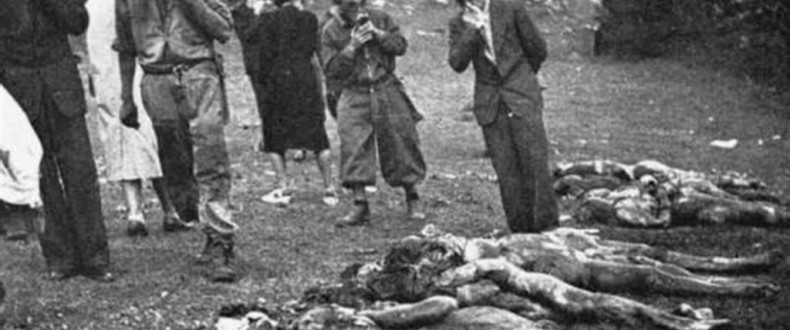
Foibe, the courage of those who denounced the crimes
Dear Future,
I am the granddaughter of Marshal Arnaldo Harzarich, the head of the Fire Brigade of Pola who from 1943 in Istria led the teams to recover the bodies of Italians from the Foibe, and for this Gold Medal of Civil Valor.reading the interesting article by Lucia Bellaspiga of January 6, 2018, with the interview with the last eyewitness of the extermination in the Foibe, Mr. Giuseppe Comand of Latisana (Udine), the dramatic moments experienced by me, then fourteen years old, passed through my mind, "running" like in a film. I remember as if it were yesterday that Uncle Arnaldo came every evening to say hello to Mom. But one day my grandmother came to my house, since we lived across the street, and scared she said to me: “Come with me, Saretta, let’s go to my uncle’s house because last night he didn’t come to say hello to me”. She was looking for courage and at the time I was the eldest granddaughter, the others, all boys, were much younger than me. We walked to my uncle's house. As we entered the main door and climbed the first flight of stairs, we immediately realized that something very serious had happened. The front door was open, the kitchen window wide open, everything else was in perfect order. All we could understand was that the uncle, his wife and daughter had rushed out of the window, which fortunately looked out onto an embankment where the firewood was kept, and there we found the ladder with which they had escaped. We left with a lot of anguish in our hearts and, naturally, we thought the worst: those were times when Italians were rounded up from house to house and disappeared into thin air. Only much later did we learn that the uncle had been helped to escape from Pola by the secret services of the Allied Military Government that ruled in Pola, because the Ozna (Tito's secret political police) was looking for him to kill him and had placed a price of 50.000 lire on his head, dead or alive. The existence of the Foibe as places of extermination was not supposed to be known, and yet he, with his courage and that of his comrades of the 41st Fire Brigade of Pola, had ensured that the crimes of Tito's communists were discovered and that the poor remains that could be recovered were given a Christian burial. But it wasn't over yet: he had been living in exile in Merano for years, but Ozna tracked him down in Italy and tried to eliminate him again: it absolutely had to and wanted to get rid of the living witness who had documented one of the greatest crimes of Yugoslav communism. One day he was on the doorstep of his house, about to go to the Merano Fire Department station where he was now serving, and he bent down to kiss his wife at the exact moment he was being shot at, which, miraculously, did not hit him thanks to that kiss that saved his life. I am delivering these youthful memories of mine to “Avvenire”, hoping that they may be useful as another piece in reconstructing a story that is still too unknown, but which finds space, depth, and sensitivity in your newspaper. I am happy that even the President of the Republic Sergio Mattarella read with emotion the interview with Comand and awarded him the title of Commander of the Order of Merit of the Italian Republic. Thanks to “Avvenire” for this.
Sarah Harzarich
More than seventy years have passed, but in this letter the memories flow as if it had all happened yesterday. A 14-year-old girl who takes courage and accompanies her grandmother, and finds her uncle's house abandoned in a hasty escape, towards who knows what fate. That uncle who had witnessed the horror of the foibe, and for this was still persecuted and chased: even in Italy, with a price on his head, because that man had to remain silent forever. He was saved by a kiss to his wife, miraculously, by that bending down for an instant while someone had him in their sights. These are the testimonies we need, of the foibe as of the Shoah: the stories of those who were there, and saw, and can recount the facts with the strength of those who keep indelible images in their eyes. These are the living words that can convey what happened to those who were not there. And it is important that men and women like this receive high honors from our President of the Republic, such as the delivery of the insignia of commendatore to Giuseppe Comand, an eyewitness to the massacres in the foibe, and very high honors, such as the appointment of Liliana Segre, a survivor of the Nazi extermination camps, as senator for life. Today we still have witnesses, to silence the lying malignity of deniers, of those who minimize and insinuate that the truth is something else. But, when the generation of the war years will have disappeared? Will it not be easier then, for those who want to rewrite another story, a lie, to raise their voice without being contradicted? The memory of the atrocities of the twentieth century must be carefully preserved, must be passed down and taught in schools with effective and not rhetorical words, so that no one can say they do not know. With words like these from Sara Harzarich, fresh and astonished as her eyes as a fourteen-year-old who witnessed, astonished, the explosion of evil.
Marina Corradi