Language
 English


Historic Justice for the People of the Exodus
Here we go again… Julian-Dalmatian exiles in the midst of political disputes
Article by Carlo Greppi in Domani , "Foibe, Fascism, Resistance. For many years, we've been telling history backwards": http://www.editorialedomani.it/idee/cultura/italia-storia-memoria-foibe-fascismo-resistenza-fratelli-ditalia-o0hijdmf
Now the Day of Remembrance has, according to Gobetti and many others, become “The Day of Fascist Remembrance”…
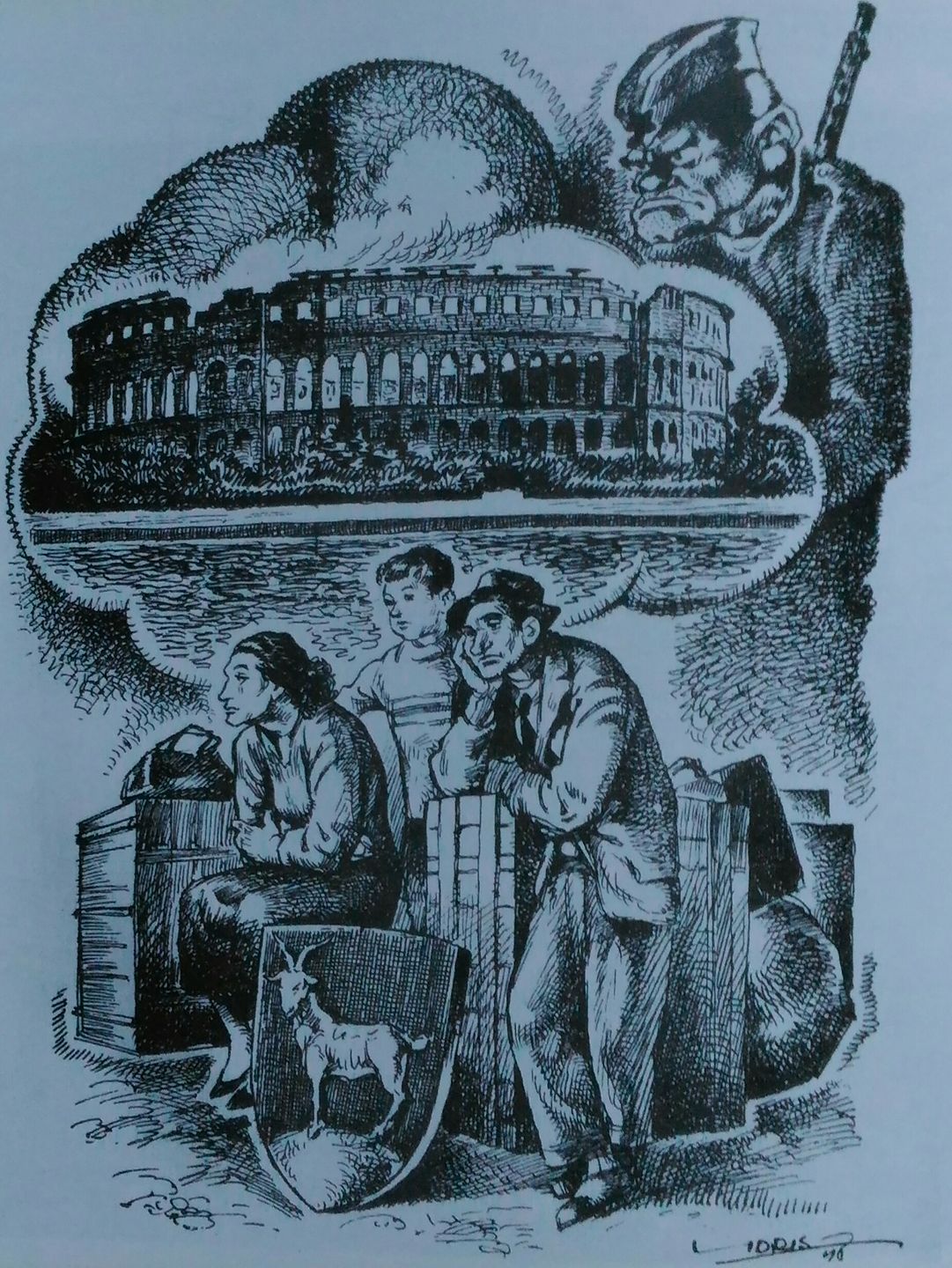
The legitimate debate on memories, however, must not prevail over the acquired right of remembrance at a national level of the tragedies that struck the Julian-Dalmatian community of exiles. A mass of over 300.000 people who lost everything. A people massacred, mistreated, robbed and driven from their homes and their land in the name of what peace and justice? The one applied by the Yugoslav communist regime of Marshal Tito for years and years in times of peace? Telling this story now becomes fueling the right... The Julian-Dalmatian people have suffered all the "isms" of the twentieth century, this is a truth.
It is said in the article that many killed in the foibe were guilty. Surely there are some, but where are the documents or court sentences that seal the postulates of guilt? In most cases of people thrown into the foibe there were no trials because these eliminations were simple summary executions. The Yugoslavian people's courts, in reality, were the instrument of an anti-democratic and liberticidal dictatorship. The trials of the Yugoslavian People's Army were show trials, where the accused had no possibility of defending themselves. The nationalizations of Italian property were acts imposed by a communist dictatorship. How can historians, who declare themselves as such, not take into account even just these aspects in 2021? Certainly the crimes of fascism and nazism should not be forgotten, but they cannot be the justification for the crimes against humanity perpetrated by the Yugoslavian communists.
Furthermore, the last prefect of Italian Zara Vincenzo Serrentino, as reported in the article, was not awarded the Gold Medal for Civil Valor, but a simple commemorative medal to his family according to law 92/2004. Serrentino underwent a show trial by the Yugoslav People's Army Tribunal and before reaching rapid conclusions, one should carefully consider certain statements by Gobetti which were then also repeated by Greppi.
In conclusion, although I understand the concerns of the author of the article, he does not show any attention to the reasons of the Julian Dalmatian Community.
Some brief additional considerations.
Remembrance Day brings to life in the Italian nation the pain of the Julian-Dalmatian people, who paid the full price for all the errors of the various ideologies and the horrors of the Second World War.
In the post-war period, Julian-Dalmatian exiles were booed, threatened, and opposed by PCI militants for ideological reasons. Now the “heirs” of that ideology continue to do the same to the exile community. In the debate staged by Eric Gobetti and others against the Right, the reasons and rights to memory of Julian-Dalmatian exiles seem to have no importance.
This is not how you build a “complete Memory” or do historical justice to a people who boast a centuries-old history.
Marino Micich
Director of the Historical Archive Museum “Fiume” of Rome