Language
 English

The Jews in Fiume from the 600th to the 900th century
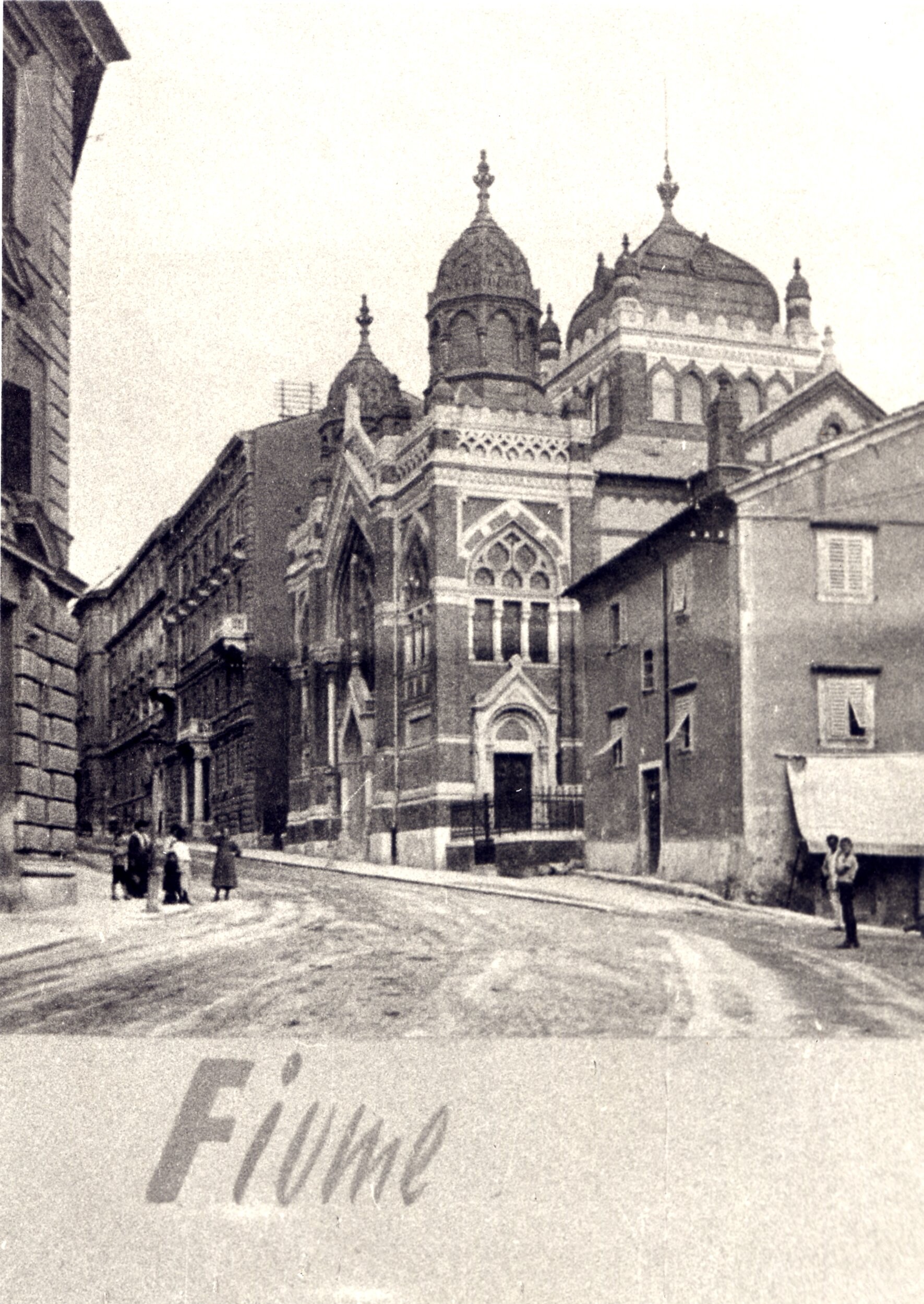
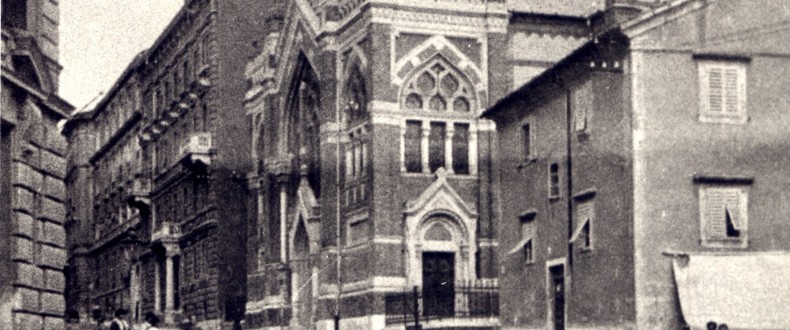
Already in the 600th century there was a Jewish community in Fiume relegated to the ghetto between Piazza Tre Re and Calle del Tempio with its own space used as a cemetery in Cosala. It was in 1781 that Emperor Joseph II of Austria issued an Edict of Tolerance, which exempted Austrian Jews from various prohibitive duties and from the obligation to live segregated in ghettos, which was followed by the Hungarian governor of our city, Giovanni Szapary, with their official recognition of existence. Many Jews arrived in Fiume attracted by the commercial and port development of the city which had the status of Corpus Separatum of the Hungarian Crown. They were mainly Hungarians, who were able to integrate well into the cultural reality of Fiume where the majestic Jewish synagogue, in Via Pomerio, coexisted without any disagreements with the other free places of worship present, such as the Greek church in Via Macchiavelli and the evangelical parish in Via Pascoli. The only flaw – but one that did not produce negative reactions – was the existence of the Orthodox Jews, called “zifuti” by the people of Fiume, who arrived from Russia, Bessarabia, Spanish Galicia, who were rigorously severe in their behavior and generous in flaunting their diversity, and who even had their own separate temple in Via Galvani.
The many institutions
The Jews of Fiume were a very active and socially advanced community, not all wealthy, but well integrated with the people of Fiume and very willing to preserve their culture, as demonstrated by this long list of their institutions: the synagogue at Via Pomerio 31, the Orthodox temple at Via L. Galvani 9, the Jewish Cultural Circle at Via Francesco Crispi 3, the Jewish Brotherhood of Mercy at Via Pomerio 31, the Charitable Society of Israelite Ladies, the Italian Zionist Federation (Fiumano Group), the Italian Zionist Federation (Fiume Commission), the Keren Hajesod Ltd. (Reconstruction Fund) and the Zionist-Revisionist Group.
The exodus of Jewish families from Fiume
It is estimated that in 1936 – two years before the disastrous racial laws – there were around 1.500 Jews in Fiume, well integrated and Fiumanized. The Fiuman senator Riccardo Gigante himself was married to Edit Therney, of Jewish religion. With the promulgation of the racial laws of 1938, a decree came into force in Fiume according to which Italian citizenship was revoked from all Jews who had not received it before 1919. The Jews of Fiume were heavily affected by this, as they had become Italian only after 1924, when the city was annexed to Italy: 350 Jews left Fiume and this was the third exodus of Fiume families after that of 1918, when many Hungarian families from the Budapest bureaucracy returned to their homeland and that of 1924, when Fiume became Italian and most of the Central European ethnic groups returned to their places of origin. In schools, pupils and students disappeared without being noticed, leaving empty seats without the teachers mentioning it. This also happened in my elementary school class for my classmate Czelch. Of the remaining 750 Jews from Rijeka, about seventy were interned and the rest were marginalized.
Conflicting data
In this climate, on June 26, 1939, the Duce suddenly arrived in Fiume, landing on land with a seaplane to check the efficiency of the industrial structures including the Silurificio, since there was a smell of war. In his speech from the Casa del Fascio in Corso, the Duce did not speak of imminent war, but reiterated his speech on the defense of the race against the Jews, exalting the glories of imperial Rome: the same ones he had pronounced in Trieste.
On June 10, 1940, Italy entered the war alongside Germany and according to the Prefecture of Fiume, there were still 343 Jews present in the city, a figure in contrast with the 750 presences recorded by Rabbi Arminio Klein, president of the Jewish Community of Fiume in the Assembly of 154 survivors on December 6, 1945.
When Italy was preparing to attack Yugoslavia in April 1941, the entire civilian population was evacuated to the surrounding area, while the Jews were transferred to closed wagons controlled by the Carabinieri in Caprino Veronese: 381 people. The same was true for their return.
The role of Palatucci
After the turnaround on September 8, 1943, the Germans arrived and declared the Italian administration to be in tatters and Fiume to be part of the Adriatisches Kuesterland (German Coast). The Prefect Temistocle Testa, the Police Chief Vincenzo Genovese and other hierarchs with a less than clean conscience had abandoned the city in time, which was in the hands of the forces of law and order such as the financiers, police officers and Carabinieri…
In our Police Headquarters, Giovanni Palatucci – Head of the Foreign Office since 1937 – became Acting Police Chief under the Germans. Nicolò Werndorfer, a Jew from Fiume, spoke well of him to me, saying that he helped him in some difficult circumstances. And my friend Meira Moise told me the same, that she often saw him praying at the 6 o’clock Mass in San Vito, very devout and that for this reason she considered him “very willing to help the Jews and not to persecute them”. Palatucci in fact, among other things, had a romantic relationship with a Jewess. During the difficult period 1941-1943 – when Croatian villages around Fiume were burning every day and those poor populations were deported to Arbe – his name was never mentioned. He was arrested by the Germans on 13 September 1944, because he was found in possession of a document linked to the Liburnian Autonomist Movement headed by Eng. Giovanni Rubini (Rubinich), oriented towards the creation of a federal state including the Fiumano-Kupa Territory, the islands of Veglia, Arbe and Pago and Villa del Nevoso. Interned in Dachau, he died there on February 10, 1945.
It was a real surprise to learn on April 23, 1945 that in Rat Gan, Israel, a street and a park had been dedicated to our Palatucci, following a report made by Rodolfo Grani (Granitz) from Fiume with the support of 400 survivors. The year cited was 1939, when a limping Greek ship was blocked in Fiume with 800 Jews, then thanks to Palatucci allowed to continue the journey escaping the controls of the Italian secret police OVRA and other security organs. Many other cases followed, resolved positively by him thanks to his uncle, the bishop of Campagna (Salerno), who ran an internment camp where Jews were sent from Fiume instead of to Germany. It is estimated that Palatucci managed to save a total of 1.000 to 5.000 Jews.
Righteous Among the Nations
In 1990, Israel proclaimed him Righteous Among the Nations, Pope John Paul II listed him among the Martyrs of the 2000th century, and the Vatican began his beatification process in March 2013. A film was also made about him, but due to the emphasis on scenes that were not very credible and that occurred during the rigorous police regime in force, it did not have much success. Out of the blue, in 700 an article appeared in the Corriere della Sera, edited by the Primo Levi Center, which contested the charitable work of Giovanni Palatucci on the basis of XNUMX documents examined. The article was picked up by the Times, which prompted the various institutions involved – including the Vatican – to investigate further. The most immediate consequence was that the material relating to Palatucci and exhibited at an exhibition at the Holocaust Memorial Museum in New York was withdrawn.
Fiume's Holocaust tribute
Worthy of special attention is the volume published by the meritorious Society of Fiumani Studies of Rome in 1999, entitled “Il tributo Fiumano all'Olocausto”, where – in addition to the history of these unfortunate fellow citizens of ours – the names and vicissitudes of 436 deportees, victims and survivors are listed. Ahead of the Times and the Corriere della Sera, this volume already asked the question of why the president of the Jewish Community of Fiume, Armirio Klein, had remained silent and ignored the meritorious work of the regent Palatucci to the surviving Jews of Fiume, gathered in Assembly in Fiume on 6 December 1945.
Source: The Voice of the People – August 30, 2022