Language
 English

Tito's Partisans in the Resistance
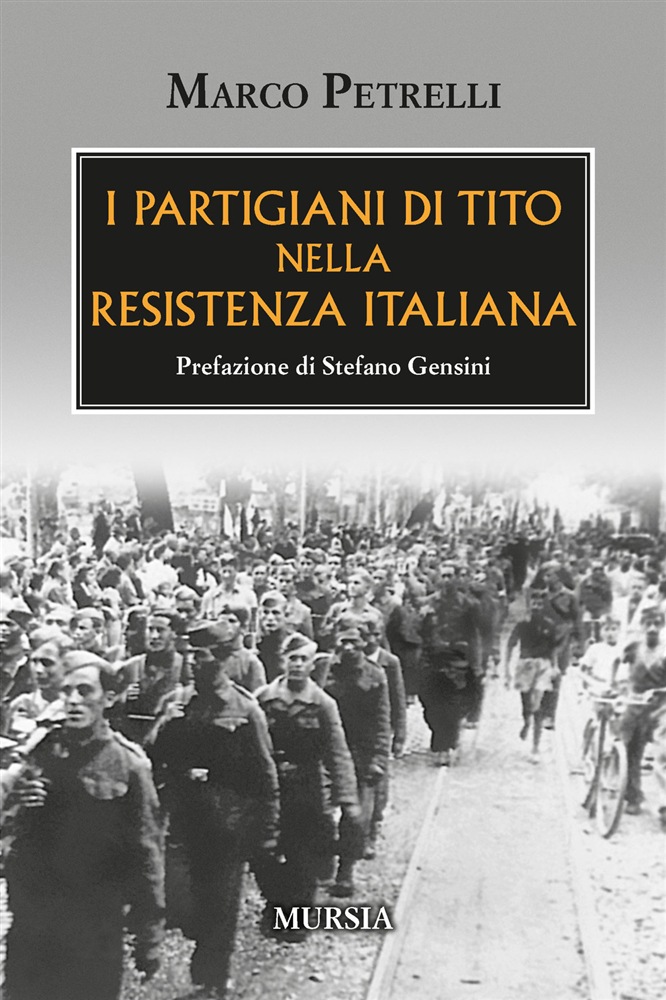
"Describing the role of Yugoslav partisans in the Italian Resistance goes far beyond studying the dramatic chapter of the Civil War. It means immersing oneself in the analysis of an area of the world, the Balkans, in which ethnic conflict transcends diatribes and ideological clashes," says Marco Petrelli, journalist and author of Tito's Partisans in the Italian Resistance (Mursia, 162 pages, €17,00).
Source: Agrpress – 05/09/2020
At the time of the communication of the Armistice with the Anglo-Americans, thousands of prisoners of war and civilians from enemy countries were interned on Italian soil. Among them were many Slavs who had fallen into the hands of the Axis forces after the defeat of the Kingdom of Yugoslavia in 41 and who had fled following the chaos generated by the armistice events.
Alone in an enemy nation, in an unknown territory and now a war zone, in an attempt to survive, many joined the Italian Resistance, which was just beginning to emerge in the autumn of 1943.
“The experience gained in the National Liberation Army of Yugoslavia was a resource for the bands that welcomed them, whose members, Italians, although motivated, often lacked military and organizational skills. Other times, the ideological framework of the Yugoslavs was an element of friction (especially with the formations made up of soldiers of the dissolved Royal Army) on the treatment of prisoners, spies or presumed spies, on obedience to the CLN and the Supreme Command of Brindisi and on the opportunity to avoid exposing the population to useless reprisals” continues the author.
Foreigners in a country that had captured and deported them, they were in fact more interested in fighting the Germans with a view to quickly returning to their homes, rather than in the fate of Italian civilians.
A further element of conflict with the different souls of the Italian Resistance materialized in the border areas. Here, the heated nationalism of the IX Slovenian Corpus and the ambiguous (if not accommodating) attitude of the Italian Communist Party, caused a deep fracture with those souls of the partisan movement ready instead to defend the integrity of the national territory from any enemy, German or Slav.
And it is precisely the theme of nationalism that the Author explores in his study:
“Communism was a social 'glue' but the tool that really allowed Tito to achieve his goal (first military, then political) was nationalism. The previous experience of the Kingdom of Yugoslavia had in fact revealed the need for an element capable of holding together peoples so different from each other and in centuries-old conflict, to ensure that they recognized themselves in a single nation born from the fight against external (Axis) and internal enemies. That is to say those minorities persecuted during and after the conflict. Therefore, abandoning the theory of ideological conflict, cultivated for decades by a not always objective historiography, this study also seeks to analyze the political project of Josip Broz and the legacy left by it after the dictator's death”, concludes Marco Petrelli.
Marco Petrelli (Terni 1983) is a journalist and photojournalist. He has collaborated and continues to collaborate with national newspapers and leading trade magazines (ilGiornale.it, Affari Internazionali, formiche.net , East West Magazine, RID, conoscerelastoria.it ). He publishes research for Italian and international genre magazines (BBC History, Aerojournal). Passionate about military history, he has authored two books on the National Republican Air Force. He is an Officer in the Selected Reserve of the Italian Army.
Marco Petrelli, Tito's Partisans in the Italian Resistance , Mursia, Milan 2020.
The volume can be purchased directly on the Mursia publisher's website:
https://www.mursia.com/index.php/it/novit%C3%A0/marco-petrelli-i-partigiani-di-tito-nella-resistenza-italiana-detail