Language
 English


The secret side of Tito
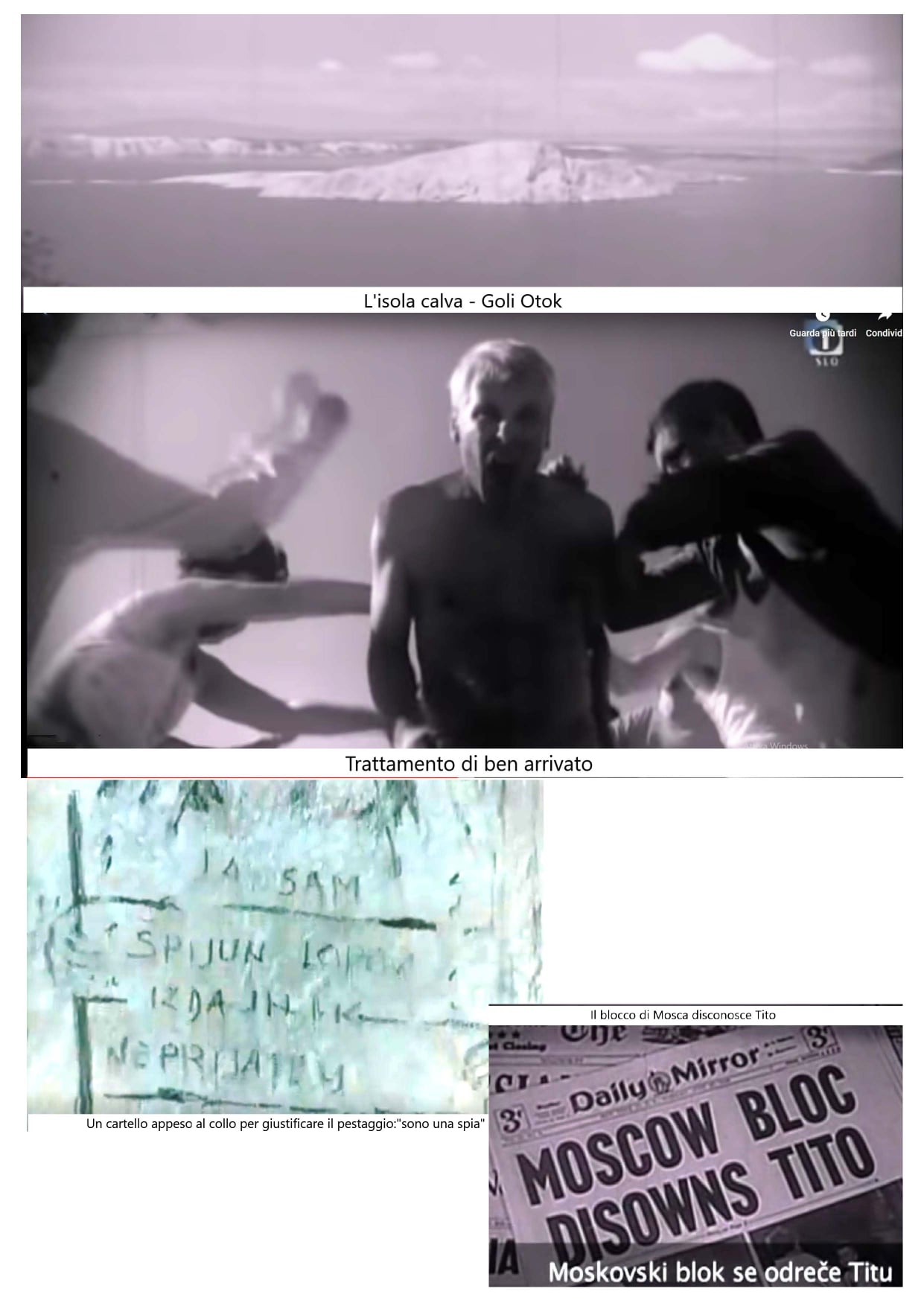
We want to tell the horrors of Tito in Goli Otok, the island a stone's throw from Italy where Marshal Tito imprisoned 30 opponents, including hundreds of Italians. We want to do it through the eyes of the three-time World Press Photo winner photographer, Ivo Saglietti, and the words of Matteo Carnieletto, editor of InsideOver.
SUPPORT THE REPORTAGE
The black and white images from the Istituto Luce show Tito's arrival in Italy on March 25, 1971. The most important political representatives of the time were there to welcome him in the capital: «Ciampino Airport. All the highest offices of the State were waiting for this plane: from Saragat to Colombo to De Martino, Pertini, Fanfani and Moro. The plane was a Caravelle decorated with red stars. It came from Belgrade, Yugoslavia, and was carrying a guest who, for the first time, was coming on an official visit to Italy. A controversial but singular head of state. The guest, here he is, is Josip Broz, known as Tito, president of the Federal Republic of Yugoslavia, a country of twenty million inhabitants (Serbs, Slovenes and Croats), a dozen ethnic minorities, all recognized. The only country, together with China, that gave itself communism without the intervention of the Soviet armies. As a result, he was excommunicated by Moscow in 48, but he certainly did not suffer from it. Tito, 69 years old, with a solemn stride to cover his ailments, is the man who leads Yugoslavia. He fought the war against the Germans thirty years ago, he said no to Stalin less than ten years later. In Belgrade, he is an undisputed leader. He has toned down the communism of the 45s into a socialism that means two things: greater internal freedom, independence and neutrality on the international level. Of course, Yugoslavia needs friends, but it prefers, and by a lot, European ones, Italy above all, which opens up more than one glimmer of hope for it on the MEC (European Common Market, ed.). Tito said, as soon as he arrived: “This meeting casts a first stone. It is a stone taken from Moscow’s pedestal. It is a first stone that counts”.
Tito smiles as he meets the political leaders of our country. Everyone welcomes him with open arms as if, on the other side of the Adriatic, nothing had happened. As if three hundred thousand exiles had never crossed the borders to escape the violence of Tito's gangs and to avoid living under the communist regime. As if the more than ten thousand deaths of the foibe had never existed.
The Quirinale diaries are very sparse: «The President of the Republic receives in audience. State visit of the President of the Socialist Federal Republic of Yugoslavia and of Mrs. Broz (25-27 and 29 March 1971).
Engagements of the President of the Republic. State visit of the President of the Socialist Federal Republic of Yugoslavia and Mrs. Broz (March 25-27 and March 29, 1971). Private meeting in Castelporziano». The images (over three hundred and sixty) speak for themselves: the Marshal (and his wife) are immortalized like stars. They are well dressed, and it cannot be otherwise. During official receptions, Tito and his wife do not disdain the symbols of the bourgeoisie, such as the tuxedo and the long dress (and strictly designer). Not only because the ceremonial requires it, but because Tito and Jovanka are great lovers of the luxury created by the much-maligned capitalist world.
Thanks to the Golden Album, an exhibition organized in Belgrade in 2011, it is possible to reconstruct the couple's wardrobe: Tito has a large collection of ties by Dior, Yves Saint Laurent, Hermes, but also some made by his own tailors, who design them for him in the colors of Yugoslavia. In Italy, in addition to hats, he has Graziella leather gloves, very fine socks and silk underwear purchased. For gala receptions abroad he shows off a tailored tailcoat with a white bow tie and, for more "social" evenings, he has a series of tuxedos. As for coats, he loves elegant British Chesterfields. And he never gives up his vice of Cuban cigars. From the Shah of Persia, to Emperor Hailé Selassié, to Queen Elizabeth, the former partisan leader likes not to make a bad impression.
In Belgrade, in 1957, Simone Signoret, defines him as "a very refined gentleman (...) with a diamond on his tie". Tito, however, has no problem in changing from the role of "dandy" to that of Marshal in full uniform or hunter of all latitudes. The mania for uniforms invented for him, with large frogs, various decorations and matching colors, serves him as a psychological or diplomatic "weapon". He confesses to one of his biographers that "in a peasant country there is great respect for the leader in battle and his uniforms". When he welcomes the Russians to Belgrade in 1955, during a reconciliation visit, the New York Times writes that "his dazzling blue uniform with gold frogs" cuts a fine figure in front of the "gray suits of the Soviet leaders".
Mrs. Broz, who quickly forgot her Spartan life as a partisan, is no exception. She does not disdain Chanel suits while Dior keeps Jovanka's bust in his atelier in Paris. Klara Rothschild does the same in Budapest. Moreover, Dusica Knezevic, curator of the exhibition on the couple's clothing at the Yugoslav summit explains in an interview with Il Giornale: «Jovanka, after her marriage to Tito, changed radically. New exceptional hairstyles, makeup (starting with Dior lipstick), lots of jewelry and a series of excellent clothes. She was the only one in Yugoslavia at that time who wore hats».
Jovanka loves light colors in contrast with strong colored details of violet, red, yellow or orange. Luxurious shoes and snakeskin handbags are another affectation. In some way she tries to coin a kind of Hollywood style with a socialist twist: her elegance, jewelry, hairstyles and makeup blend with the Gascon uniforms of her husband, who also knows how to be a dandy. Especially in the eyes of the outside world, because in his homeland, with Tito in power, most of the photographs of the exhibition and the glittering wardrobe remained a taboo.
di Fausto Biloslavo e Matthew Carniletto – 01/06/2021
Source: InsideOver
You can support this report with a donation with Paypal or credit card, or with a bank transfer:
ASSOCIATION FOR THE PROMOTION OF JOURNALISM
POPULAR BANK OF LODI
Milan branch, Piazza Mercanti 5
IBAN: IT43L0503401633000000004244
REASON: Reportage Goli Otok
SUPPORT THE REPORTAGE