Language
 English

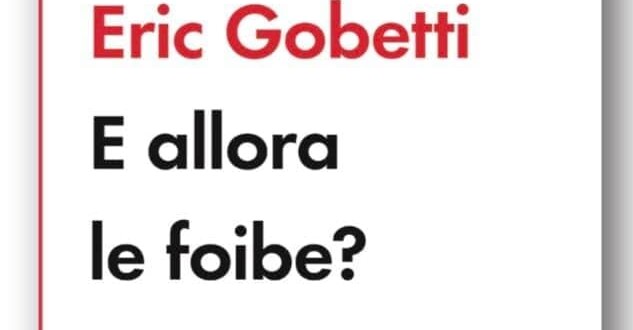
The book that offends the foibati
The publishing house Laterza has published a book by the historian Eric Gobetti entitled “And then the foibe?”, an offensive title towards the thousands of Italians killed by Tito's communist partisans that comes out a few days before the “Day of Remembrance”
by Francesco Giubilei – 29/12/2020
Source: The newspaper
Don't judge a book by its cover is the first lesson you learn in a publishing house.
The second is that the title and the cover are fundamental aspects to sell a book. This is what the Laterza publishing house must have thought when they chose the title of the new text by the historian Eric Gobetti, coming out in mid-January, “E allora le foibe?”. Let us start by saying that, since it has yet to be released, we have not read the book in question and will therefore limit ourselves to a few observations on the title, the content of the synopsis and the biographical profile of the author.
Freedom of speech and expression are two cornerstones of democracy, but so is respect for the dead, and ethics should be an element at the base of every publisher's work, especially for a historic brand like Laterza. Titling a book "So what about the foibe?" to sell a few more copies and to create a debate on a tragedy that cost the lives of thousands of people is unacceptable. The publication period is also not coincidental, a few days before February 10, the "Day of Remembrance" established by law March 30, 2004 n.92 to "preserve and renew the memory of the tragedy of the Italians and of all the victims of the foibe, of the exodus from their lands of the Istrians, Fiume and Dalmatians in the post-war period, and of the more complex story of the eastern border."
As Emanuele Merlino, president of the Comitato 10 Febbraio, states: “I find it shameful that in 2021 such an important publishing house can give space to editorial products that are provocative right from the title and that are born with the intent of diminishing the tragedy of the Italians of Istria Fiume and Dalmatia recognized as such by Italians starting from the Presidents of the Republic who have said definitive words on the subject”.
Last year Sergio Mattarella spoke bluntly, calling the foibe and the exodus a “national disaster” with a warning against denialism. Words that must not have reached the ears of Eric Gobetti, who a few years ago had his picture taken with a clenched fist next to a portrait of Marx, with a red handkerchief around his neck and the flag of Tito's partisans, the same ones who massacred thousands of Italians, around his shoulders.
It is difficult for a profile of this kind to carry out an objective analysis on the dramatic story of the Foibe as written in the synopsis of the book and without a doubt, reading his other public interventions, an ideological vision emerges, the opposite of what a good historian should do.
On the other hand, continuing to define the victims of the foibe as "fascists" as Gobetti does (we quote: "in the public narrative of the Day of Remembrance, the vision is substantially gaining ground according to which only the partisans are executioners, while the fascists are only victims") and not people whose only crime was being Italian, means completely distorting the reality of the facts.
It is disconcerting that a publisher like Laterza would lend itself to an editorial operation of this kind with a provocative and offensive title that out of respect for the victims of the foibe, their relatives and all Italians, should at least be changed.