Language
 English

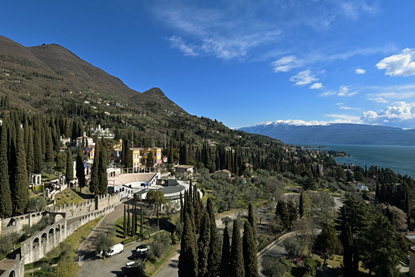
The Vittoriale, the people of Fiume and the European dialogue
With reference to Mr. Bernkopf's intervention regarding the flag of the Municipality of Rijeka/Fiume displayed on the flagpoles at the Vittoriale degli Italiani [intervention published on September 6th in the daily newspaper “La Gazzetta di Parma” and reported below, ed.], I would like to explain a factual reality to the reading public.
As the Secretary General of the Society of Fiumani Studies and director of the Historical Archive Museum of Fiume, reconstituted in exile in Rome in 1960, I am very grateful to the President of the Vittoriale Foundation Giordano Bruno Guerri for having offered the widest collaboration and friendship towards our institution in these years. This collaboration has borne fruit not only in the field of studies on the D'Annunzio period of Fiume, but also in the construction of a cultural bridge with the present city of Fiume (in Croatian Rijeka), belonging after the dissolution of the former Yugoslavia (1991-1996) to the Republic of Croatia.
President Guerri's desire to keep the flag of the current municipality of Fiume-Rijeka displayed was above all an act of kindness and European cultural openness towards a city administration that substantially respects the minorities present in the city today, including the Italian one.
I remember well when, a few years ago, a philatelic exhibition dedicated to Fiume was organized, to which the Ambassador of Croatia and the Croatian Councilor for Culture of the Municipality of Fiume-Rijeka were invited. On that solemn occasion, the leaders of the Society of Fiumani Studies and the leaders of the Association of Italian Fiumani in the Free World - Municipality of Fiume in exile with headquarters in Padua were also present. All this happened because our associations from 1991 onwards began an official dialogue with the city of origin, so that from the violent conflicts of the past a path of peace and mutual cultural exchanges between the Fiume exiles and the Croats could be reconstructed.
President Guerri himself came to Rijeka with us in 2018 to establish contacts in the city with Croatian and minority scholars. The tragedy of the Rijeka, Istrian, and Dalmatian exodus is for us an imperative goal, one that must not be forgotten and must be publicized, while respecting each other's national histories. The precise historical references to the Rijeka epic described by Edoardo Bernkopf are flawless and sacrosanct, but in my opinion, President Guerri's succinct response, " Dear Mr. Bernkopf, we have raised the Rijeka flag today just as we raise the Italian flag without the Savoy coat of arms ," must be considered in light of what I have stated above.
One can be against or against dialogue, but our organizations have decided to open up. Finally, the burial of Riccardo Gigante's remains was possible thanks to the fundamental intervention of President Guerri who accepted our request and we will be eternally grateful to him.
Dr. Marino Micich
Director Archive Historical Museum of Rijeka
*
Dear Director of the Gazzetta di Parma ,
at the Vittoriale degli Italiani in Gardone, where the remains of D'Annunzio and his dearest friends and comrades in arms rest, a Fiume flag rightly flies, but not the red, yellow and blue tricolour of the Italian Fiume, but the blue flag of Croatian Rijeka. When I saw it, I was convinced that it was an error by some employee. Instead, the President of the Giordano Bruno Guerri Foundation responded to me in this way, confirming that it was a specific cultural choice he wanted: "Dear Mr. Bernkopf, we have put up the Rijeka flag today as we put up the Italian flag without the Savoy coat of arms. GB Guerri".
It is not the same thing: the people of Fiume fought for Italianness, not necessarily for the monarchy, so much so that in 21, in the first free elections after the First World War, when following the Treaty of Rapallo Fiume was proclaimed a “Free City”, the autonomists of Riccardo Zanella won, who was removed the following year by the fascist coup d'état.
As the son of Fiume exiles, I am mortified, and I believe all the Julian-Dalmatian exiles are, and Fiume in particular: at the Vittoriale degli Italiani I really did not expect a Slavic flag to fly. It is certainly not for Rijeka that D'Annunzio left with his Legionaries, including Antonio Gottardo, Giuseppe Piffer, Mario Asso and Guido Keller, who rest in the tombs of the Vittoriale Mausoleum.
It is certainly not for Rijeka that Riccardo Gigante, senator and mayor of Fiume, died, killed by Slavic communist partisans without trial, and barbarically thrown into a common grave. When his remains arrived at the Vittoriale, Mrs. Gigante covered the coffin with the tricolor without the Savoy coat of arms, but also with the Red, Yellow and Blue flag of Italian Fiume. On that occasion Giordano Bruno Guerri said "we can satisfy a wish of Gabriele d'Annunzio and his friend Riccardo Gigante who wanted to be buried together, near other comrades in war and of the Fiume Enterprise". He should have said "of the Rijeka Enterprise": if they saw the Croatian flag waving above them, those dead would turn over in their stone tombs.
I can only ask Doctor Guerri to correct this error.
Edward Bernkopf