Language
 English


Inaccuracies and political attacks in “And then the foibe?”
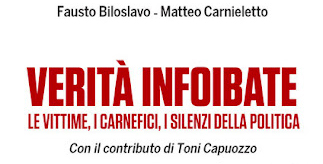
From the provocative title “And then the foibe?” Eric Gobetti’s new pamphlet has caused a stir in the world of Istrian, Fiume and Dalmatian exiles. The short read, full of historical and political inaccuracies, although the publisher is the authoritative Laterza, turns out to be a new justificationist position, seasoned with a fatalism that hurts those who lived those events or have memories of them in their family.
Once again, as in the worst historiography aimed at reducing the foibe to a reaction to fascist oppression, the narrative begins with the burning of the Balkans, without any reference to the tensions between Italians and Slavs fomented by the Austro-Hungarian Empire in its last years of existence, nor to the killing of the Italian sailors in Split as the episode that triggered the riots that would later lead to the siege of the Balkans. The author invites us to “understand” the Istrian foibe of '43 as a reaction to the discrimination of the twenty years of fascism and to the repression carried out by the Royal Army during the occupation of Yugoslavia. These would have been inevitable massacres in the logic of war and the foiba itself is superficially presented as a burial place and not as an abyss into which the victims were thrown very often still alive, ignoring testimonies and reconstructions of the events that were now officially established.
The Exodus is then diluted in the sea magnum of forced population movements that occurred at the end of the Second World War, without grasping its specific characteristics, treating the conditions of the Refugee Collection Centers with embarrassing lightness and non-existent appear the references to the assets of the exiles with which the Italian State paid war reparations to Yugoslavia. On the other hand, the references to current political events appear broad and biased, aimed at presenting the Day of Remembrance as a right-wing anniversary, forgetting that the State defined as "still expressly anti-fascist", is also a democratic State that officially recognized with Law 92/2004 "the massacres of the foibe and the Julian-Dalmatian exodus". The unheard-of judgments of film critics on the film “Rosso Istria” that “seems like a product of Nazi propaganda” are only aimed at redeeming a certain “resistance vulgate” and praising Tito's partisan struggle, next to whose statues the author loves to be photographed. Gobetti also attributes to Senator Maurizio Gasparri, whose political commitment in favor of the exiles has always been consistent, significant, as well as aware and well-informed, statements full of gross inaccuracies, which obviously have never been released, as can be easily demonstrated. Gobetti's attacks probably depend on the commitment made by Gasparri to spread knowledge of the tragedy of the foibe and the exodus and on the sensitivity shown for the needs of the Adriatic diaspora since the beginning of his political career and not only in the run-up to Remembrance Day.
I therefore express solidarity and support to Senator Gasparri, unjustly and incorrectly cited, and to the people of the Julian-Dalmatian exodus, outraged and wounded once again.
Donatella Schurzel
National Vice President of the National Association of Venezia Giulia and Dalmatia
President of the Provincial Committee of Rome of ANVGD