Language
 English

The Luxardo Massacre in a Book
The tenuous thread of hope alternating with disillusionment runs through the story of the drama of the brothers Nicolò and Pietro Luxardo, prestigious entrepreneurs and prominent exporters in the political and civil life of Zara, victims of the events that followed the Yugoslav occupation of the Dalmatian territories in 1944. Against the backdrop of a city tormented by war, the destinies of the two protagonists develop according to an inscrutable plan, which will culminate in the assassination of Nicolò and his wife Bianca by unknown Yugoslav partisans and in the mysterious disappearance of Pietro. It is the thread of hope that guides the efforts that the Luxardo family makes for many years to learn the truth about the fate of their loved ones, patiently sifting through every official response from the authorities consulted, every document relating to the farcical trial with which the Tito regime will subsequently justify the execution of Nicolò and his wife, every testimony offered spontaneously by those – hoping to profit from it – “might perhaps know”.
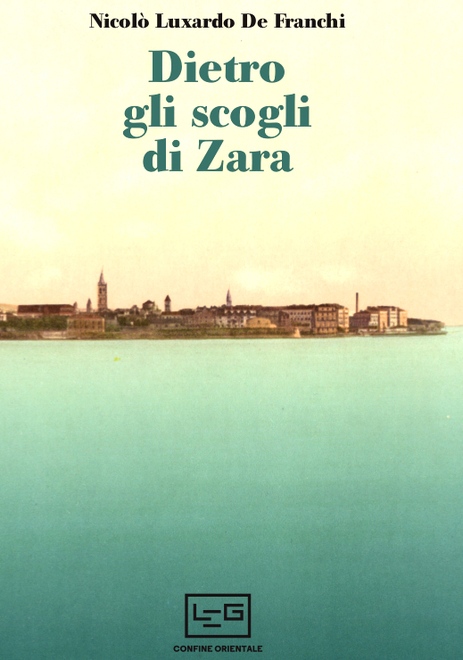
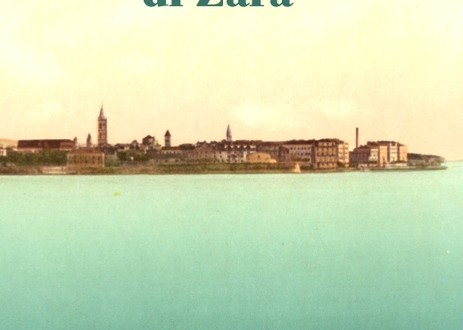
The story of the tragedy that struck the Luxardo family is told by Nicolò Luxardo De Franchi in the book “Dietro gli scogli di Zara” , published by Li breria Editrice Goriziana (Leg) , on newsstands from today with “Il Piccolo” at the price of 9.50 euros plus the cost of the newspaper.
In the labyrinth of hypotheses that is being built behind the death of Nicolò and his wife, the reader is gradually involved and pushed – almost as in a detective story – to embrace the most plausible, adhering to the fate of men that the narration gradually transforms into choral figures, mirrors of events shared by a silent multitude. Thus, from the first pages, the recollection of the bright youthful years of the protagonists – with reference to the patriotic associations and the sporting victories of the glorious “Diadora” – lets the subdued memory of the industrious Italian community of Zara emerge, of which the distilled liqueur of the Luxardo factory is the symbol. A larger story echoes that of “Mister Piero” and “Mister Nicolò”: it is that of an entire city, which gathers around the austere Barcagno palace, behind those rocks that tell the story of the pain of an entire population.
Nicolò Luxardo De Franchi, firstborn of the fifth generation of Luxardo del Maraschino, joined his uncle in 1944 to rebuild the industry founded in 1821, destroyed in Zara by Anglo-American bombing and Yugoslavian confiscations. He took on the technical direction of the company and promoted, with intense travel abroad, the expansion of sales of Luxardo maraschino in almost all the countries of the free world. In 1958 he founded the first Gruppo Giovani Industriali d’Italia in Padua. President of the Società Dalmata di Storia Patria, founded in Zara in 1926, he has directed its collection “Atti e Memorie” since 1976, with twelve published volumes. Director of the “Rivista Dalmatica” founded in Zara in 1899, one of the oldest Italian magazines, he has published over fifty historical studies on Genoa, Piacenza and Dalmatia.
The founder of the Luxardo company, Girolamo Luxardo (Santa Margherita Ligure 1784 – Zara 1865), was the founder of the Luxardo family. Girolamo began his career as a rope merchant and in Trieste, where he went several times to supply his goods to the Austrian Navy, in 1814 he met the rosolio manufacturer Giacomo Balletti. After an unsuccessful attempt to market his products, he became associated with the Swachhofer trading house in Trieste. In 1817 Girolamo went to Zara to start trading in coral there. Having accumulated a good amount of capital, in 1821 he used it to produce a typical Zadar drink, a cherry-based distillate known as “rosolio maraschino”, which has been popular in the area since the Middle Ages. In 1823 he was appointed vice-consul in Zara by the King of Sardinia.
In 1829, the company – called Girolamo Luxardo – had obtained a privilege from the Emperor of Austria that gave it the exclusive right to produce cherry liqueur for fifteen years. Over time, another ten spirits and rosolios of varying alcohol content were added to the original production. Thanks to an exceptionally wide distribution network, which extended from Zara to Venice and Trieste to Genoa, and to the relationships that his positions as vice consul and director of the Chamber of Commerce of Zara had allowed him to weave, Girolamo was able to rapidly expand his business not only in the local market, but also in foreign markets.
Gabriel Hall
Source: Il Piccolo – 24/11/2017