Language
 English

Calva Island. The Culture of Remembrance
On the European Day of Remembrance for the Victims of All Totalitarian and Authoritarian Regimes, the President of the Government of the Republic of Croatia, Andrej Plenković, visited the former concentration camp.
By Moreno Vranich – August 23, 2020 – Source: La Voce del Popolo
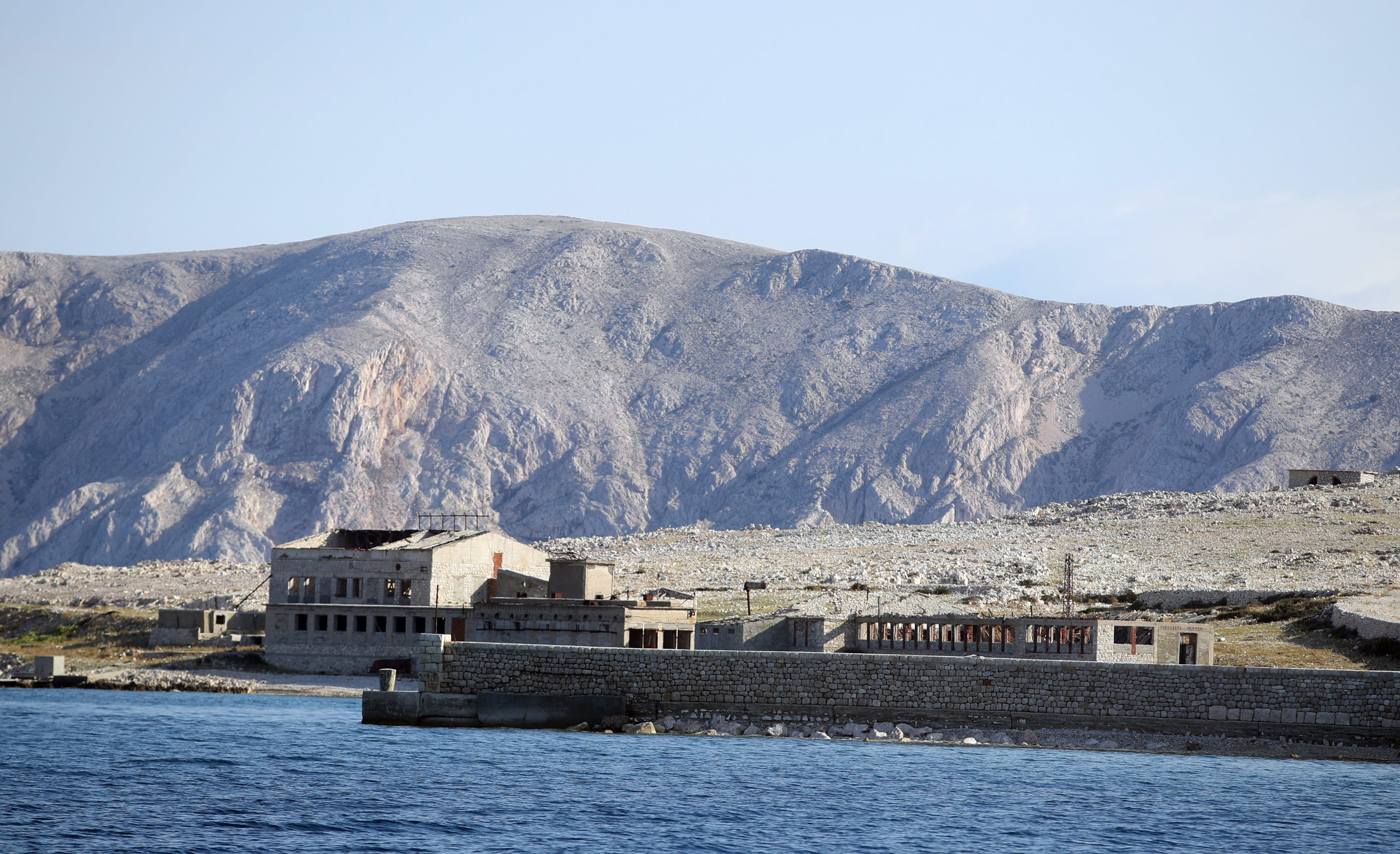
On the European Day of Remembrance for the Victims of All Totalitarian and Authoritarian Regimes, the President of the Government of the Republic of Croatia, Andrej Plenković, visited Goli otok (Goli Island), where he laid a wreath at the foot of the commemorative plaque placed by the Government in memory of the victims of the communist regime, but also more generally of all victims of totalitarian and authoritarian regimes.
“It is important to cultivate the culture of remembrance, because without the truth there can be neither awareness nor respect for the victims, nor reconciliation of the European peoples, including the Croatian people,” Plenković emphasized during the solemn moment. “Today we are here to honor the victims of the communist regime, which was one of the totalitarian regimes that characterized the 80th century, including in Croatia,” Plenković wanted to recall, who then added that Golić Island remained a detention center whose purpose was to punish those who arrived there, until the XNUMXs.
When asked why the prime minister was visiting, given that former prime ministers had been to the island very rarely, Plenković replied that the visit was his wish. “I am not the first prime minister to come here, there is a commemorative plaque placed by the Executive that is now ten years old, and last year the president of Sabor was here, with several other delegations that have already visited this place. This year I wanted to come personally to honor the victims,” the prime minister explained.
Ceremonies at Mirogoj
And while the prime minister was on Golić Island with the minister of the sea, traffic and infrastructure, Oleg Butković, and the prime minister's special advisor, Zvonko Kusić, in Zagreb, at the Mirogoj cemetery, the deputy prime minister and minister of defense, Tomo Meved, paid homage to the victims of titanic regimes. Here, Medved lit candles at the Wall of Sorrow and other symbolic places. "Our complex history, like that of many European peoples, is marked by great tragedies. That is why today, too, we condemn all totalitarian regimes and pay homage to the victims," the minister said.
Crimes to be condemned
Kusić, on Goli Island, spoke about how no tragedy can be put into perspective and therefore how a crime committed by one side cannot be justified in any way by previous crimes. “One of the basic points of this government is that no human right can be called into question by any evil. No political goal can justify the crimes that have been committed, this is the thinking of the Committee for Comparison with the Past, established by the government,” the academic said.
Regarding the condemnation of the symbols of these regimes, Kusić explained very simply that in society there will always be extreme factions, both on one side and the other, who will not agree with the prohibition of the symbols they feel closest to, while they will be extremely convinced of the need to prohibit the symbols of others. “There is a draft law that defines everything very clearly, including the necessary exceptions. But also considering the fact that there are children born after the Homeland War, it is important to move forward and try to reduce these antagonisms,” Kusić said.
Words that certainly indicate the will to move forward, like the gesture made by the prime minister, which was also shared by the Center for Comparison with the Past and the Zagreb Office of the Friedrich Ebert Foundation, which produced a statement to express satisfaction for Plenković's visit to Golubovci. "We would like to welcome your decision to visit Golubovci on the occasion of the European Day of Remembrance for the Victims of All Totalitarian and Authoritarian Regimes. At the same time, we once again call on you to protect Golubovci and Sveti Grgur, because as you have unfortunately had the opportunity to see, the properties on the island have been left at the mercy of the elements, condemned to devastation," the open letter reads.
Mass in Macelj
Another event of great symbolic value for what yesterday represents, was held in Macelj, on whose territory there are 130 caves that have been transformed into tombs, from the largest of which 1.250 victims of the communist regime were exhumed, including 21 priests. In this location, the parish priest Vlado Mustač officiated a solemn mass, while Damir Borovčak, vice president of the Macelj 1945 association simply wanted to recall the fundamental principle on which the association is based: “No hatred, no revenge, we only want the truth to be made public”.
“In January of this year, the remains of 4 new victims were found in a cave measuring 4,6 by 82 meters. The news was published twice on the pages of the Ministry, but unfortunately it did not receive even a little attention from the Croatian media,” Borovčak said, intending to make it clear that even today, in reality, the exact proportions of all the tragedies that have occurred in these places are not known.