Language
 English


Itineraries in the land and novels of Fulvio Tomizza
A project named after the great author, aimed at promoting, along five routes, the culture and traditions of the area
In the warm season that we left behind, the "Fulvio Tomizza historical-literary itinerary" was born, a special tribute to the writer and his literary opus. Inspired by Tomizza's novels, the itinerary invites you to retrace the places where the author lived and loved, to learn about the events and destinies of the people of these lands. Traveling it is also rewarding for the beauty of the landscape and the historical traces that you encounter along the way. Divided into 5 easy routes, the route is completely marked with blue signs and trail markers, traceable by GPS. The map is for information purposes only. A QR code has also been created to download the route in digital form.
The initiative's "team"
The project aimed at enhancing our culture, the life and traditions of the inhabitants, the history of the territory and now also outdoor activities is the work of the Italian Community "Fulvio Tomizza" of Umag (which is the publisher) and was published in agreement with "Grandi & Associati" of Milan. Its financiers are the City of Umag, the People's University of Trieste and the Italian Union. The president of the association, as well as author of the text and editor of the itinerary brochure, Floriana Bassanese Radin, underlines the importance of the fruitful collaboration with Maja Livada in the graphic creation and with Antonella Degrassi for the entire organization. Maura Favretto is the editor of the project in Italian and also signs the English translation. The translation and revision in Croatian, as well as the revision of the texts in Italian are by Lorena Monica Kmet and Manuela Bose. The GPS track of the route is the work of Goran Blažević. The graphic design is by the company Umag City Council; printing by Paper World Umag. The rich photographs were provided by CI “Fulvio Tomizza”, the Library and the City Museum of Umag, Martina Dagostini, Lean Brajković and David Deehan.
Guided by quotes
The route winds through the entire Umaghese territory following quotes from the works of Fulvio Tomizza, such as “Materada”, “The best life”, “The fifth season”, “My literary summers”, “The house with the almond tree”, “The guilty relationships” and “Behind Trieste”. Following the itinerary you will find yourself immersed in the landscape and the world of the writer, learning about the historical vicissitudes of the Umaghese territory and its people, the tragedy of the exodus, which at the end of the Second World War and in the following decades profoundly marked and changed the socio-cultural identity of the peninsula.
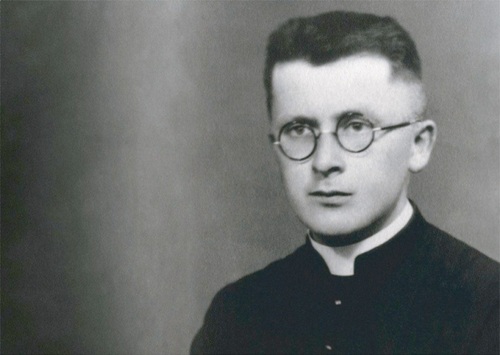
Fulvio Tomizza (Giurizzani, January 26, 1935 – Trieste, May 21, 1999) is an important Italian author of the second half of the twentieth century, an authentic voice of the Umaghese and the surrounding countryside, a narrative witness of the historical events that have overwhelmed the Istrian territory. There are numerous literary passages that, in the brochure, intersperse the historical explanations of the locations and places of interest: they are words and thoughts that masterfully marry with the proposed route.
It starts from Matterada
The first literary route (7 kilometers) begins in the small town of Materada, where Tomizza was born and where he rests with his ancestors in the silence of the cemetery. “Materada” is also the title of the novel that made him known to the public and that reveals the author’s deep bond with this parish, founded by his ancestor, the steward Giorgio Tomice, in 1668, as evidenced by the ancient inscription on the architrave of the local church. It then goes on to Giurizzani, the largest town in the district and the center of events in most of Tomizza’s novels. The itinerary continues by taking the road that from the fountain leads to the village of Babizza where, at the crossroads, you take the small road on the left that leads to the village of Momichia. At the end of the town, on the left side, a small road leads to Fulvio Tomizza’s house. In the 70s, in fact, the writer bought a small house in Momichia, where he could return to a simple life, in tune with the rhythms of nature. In this quiet corner he wrote his most beautiful pages. The first itinerary ends by proceeding alongside the writer's olive grove to the village of Pizzudo. Crossing the intersection with the asphalt road, between woods and fields, you come across the course of the Patocco, which leads to the gates of Petrovia.
From Petrovia to Seghetto
It is precisely from this last village that the second route (15 kilometers) starts. With the second novel of the Istrian Trilogy, “The Girl from Petrovia”, Tomizza introduces readers to this village, located halfway between Giurizzani and Umag. “The Girl from Petrovia” is the ideal continuation of the previous novel, “Materada”. From the square in Petrovia, proceed towards Umag, along the road bordered by typical family houses. After about 100 meters, turn left towards the hamlet of Maccalè, where the dirt road runs alongside well-kept vineyards and the centuries-old oak forest of Boscognade. The path leads to the Stanzia di Lacoti and continues on asphalt for about 1 kilometer, arriving at the village of Cusci, to become a forest path to the village of Dolinzi, from where it leads to the Umag-Novigrad state road. After crossing the road, after just 50 meters you reach the Finida campsite, in the Buso bay. These places are part of the territory of San Lorenzo which owes its name to the homonymous religious building located right in the center of the town. In the center of the town there is the church and the House of Culture, which hosts the local Brass Band “Naša sloga”, founded in 1913, one of the longest-running in Istria, as well as the local Italian Community, founded in 1993. The stretch of coast, with the countryside and the forest behind Punta San Giovanni, is also called Finida.
Continuing towards Umag, you come across the village of San Giovanni della Cornetta. Located on the seafront, at Punta Rosazzo, is the church of white Istrian stone dedicated to the deacon and martyr San Pellegrino, patron saint of Umag and mentioned in historical documents from 1106 onwards. Continuing along the cycle path towards Umag, on the left you can see the olive groves of the former cement factory, located on Punta delle Vacche. To reach the village of Seghetto, from the main road, take the road to Rosazzo on the right, at the end of which you can see the imposing Palazzo dei De Franceschi, which still dominates the small village and bears witness to the peculiar and long history of its owners. You return to Umag along the main road.
From Pozioi to Umag
The third route (4 km) begins after passing the residential areas of Muiella and Pozioi, along the promenade that borders the southern shore of Umag, called Riva San Pellegrino, from which you can see the beach where, until the end of the 40s, the Bagno San Marco bathing facility, owned by the Coslovich family, was located. At the end of the Riva stands the Civic Museum, the oldest and best preserved building in the historic centre of Umag. The itinerary continues through the historic centre along Via Fiume to Piazza Libertà, where traces of the original Gothic and Renaissance architecture are still visible. There are still numerous historical-tourist points exhaustively reported in the paper, such as the largest national industry, the dam, the church of Umag dedicated to the Assumption of the Madonna and to San Pellegrino, the elegant bell tower from the 1667th century, the municipal cistern from 1947 and much more. The route passes by the deconsecrated church of San Rocco and continues along Commercial Street to the building of the Open University “Ante Babić”, where the City Library is located on the ground floor, while the Italian Community “Fulvio Tomizza” occupies the eastern part of the building. Founded as the Circolo di Cultura Italiana (CIC) in November 2002, it has borne the writer's name since XNUMX.
From Umag to Salvore
The fourth route (10 kilometers) covers the stretch from Umag to Salvore, which you arrive at by passing through the tourist villages of Stella Maris and Katoro. Continuing along the paths along the coast, from Zambratija you arrive at the westernmost point of the Istrian peninsula, in Bassania, which boasts the oldest lighthouse on the Adriatic (1818) still in use. Nearby, on Punta Laco, you can see the unique cranes used to lift the batanas and protect them from storm surges. Bassania is also home to the headquarters of the CI of Salvore, founded in 1962. One of the many curiosities reported is that at the entrance to the ancient town of Salvore there is a memorial stone that commemorates the victims of the steamship "San Marco", the liner that connected the towns on the Istrian coast with Trieste. The area, rich in remains of ancient rustic villas, is also notable for important port works from the Roman era. Immediately outside the town, on the left of Villa Anna, take the cycle path and turn right along the path immersed in the shade of mulberry, black pine and laurel trees.
From Salvore to Matterada
The fifth and final 22-kilometer route starts from Salvore, passes through Villania and returns to Matterada. It goes towards Monte Rosso, passing through the villages of Alberi and Valfontane. After passing the Kempinski hotel, the dirt road leads to the site of San Pietro. To get to Madonna del Carso you cross a karst area, not very suitable for agriculture, which is why in the past the most popular activity was sheep farming. Even today, along the route, you can come across shepherds with flocks of sheep. Continuing along the route you reach the Parenzana, which should be followed to the Valizza station. From here the route continues towards the village of Barboi, which via a forest path leads to the cemetery of Madonna del Carso. Among other things, in the village of Madonna del Carso you will find the beautiful church of the Beata Vergine delle Grazie, from the 500th century, the bell tower with the high conical spire and the interesting baroque palace of the Sossa family. The itinerary ends by returning to Matterada. Immediately after the Madonna del Carso football field, take the path in the woods that leads to Cava di Villania. Once you reach Villania, continue along the asphalt road for about XNUMX meters in the direction of Petrovia where, leaving the road that passes through the woods, you arrive at Patocco. A point of choice: turning left in the direction of Gurizzani you arrive at Matterada, the starting point of the itinerary, or, heading in the direction of Petrovia, it leads to Umago to conclude the itinerary on the Riva nuova.
Journey to the table
The brochure ends with local cuisine, so dear to Tomizza. From the pages of his autobiographical writings, “My literary summers”, in particular from the essay “Istrian cuisine”, all the richness of Istrian gastronomy emerges, born from the encounter of the land with the sea, but also from the encounter of people of different origins and cultures. Wonderful pages, from which emerges, once again, all the writer's attachment to his land.
Erika Barnabas – 10/10/2021
Source: The Voice of the People