Language
 English

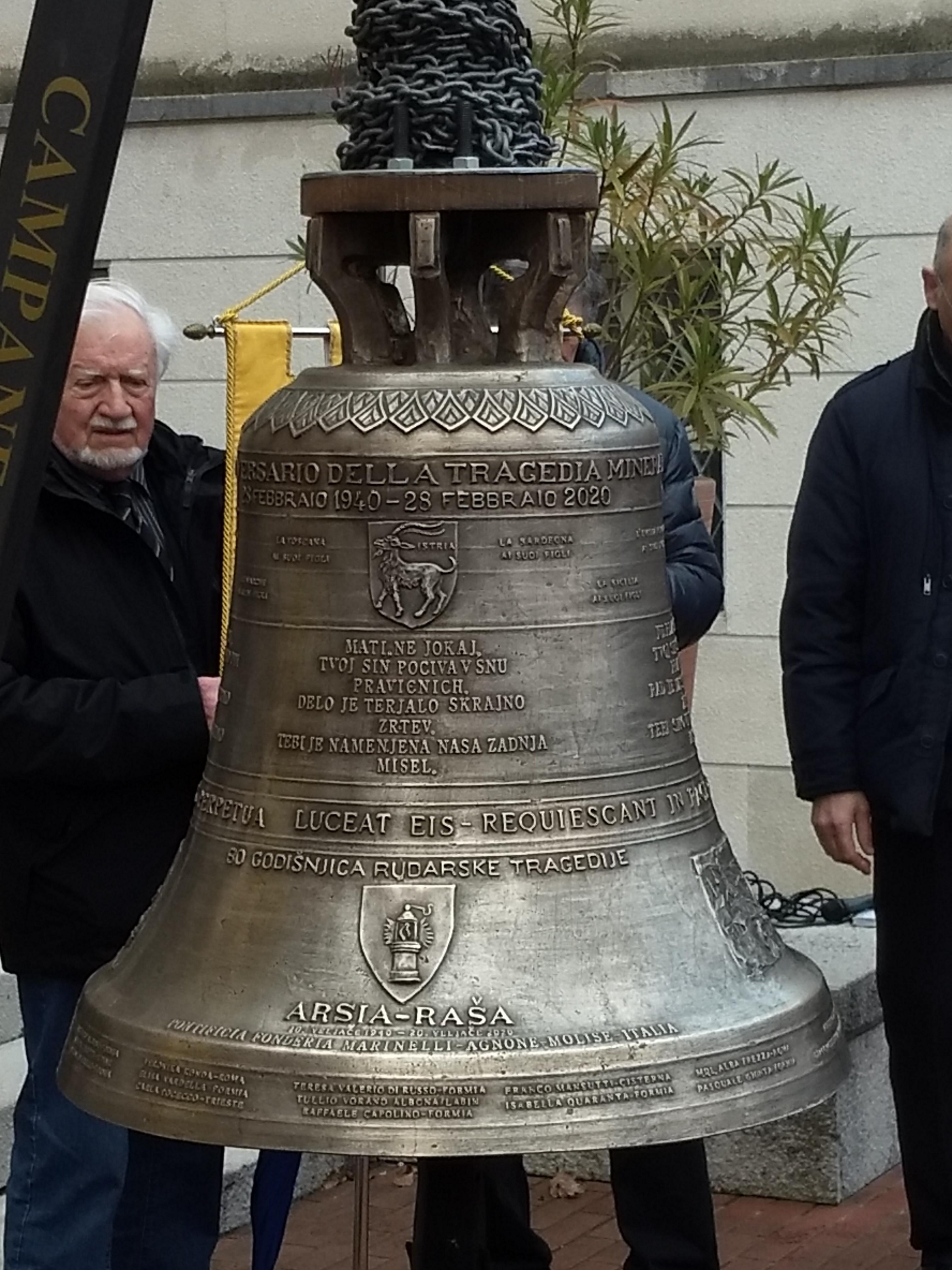
The bell in memory of the miners of Arsia
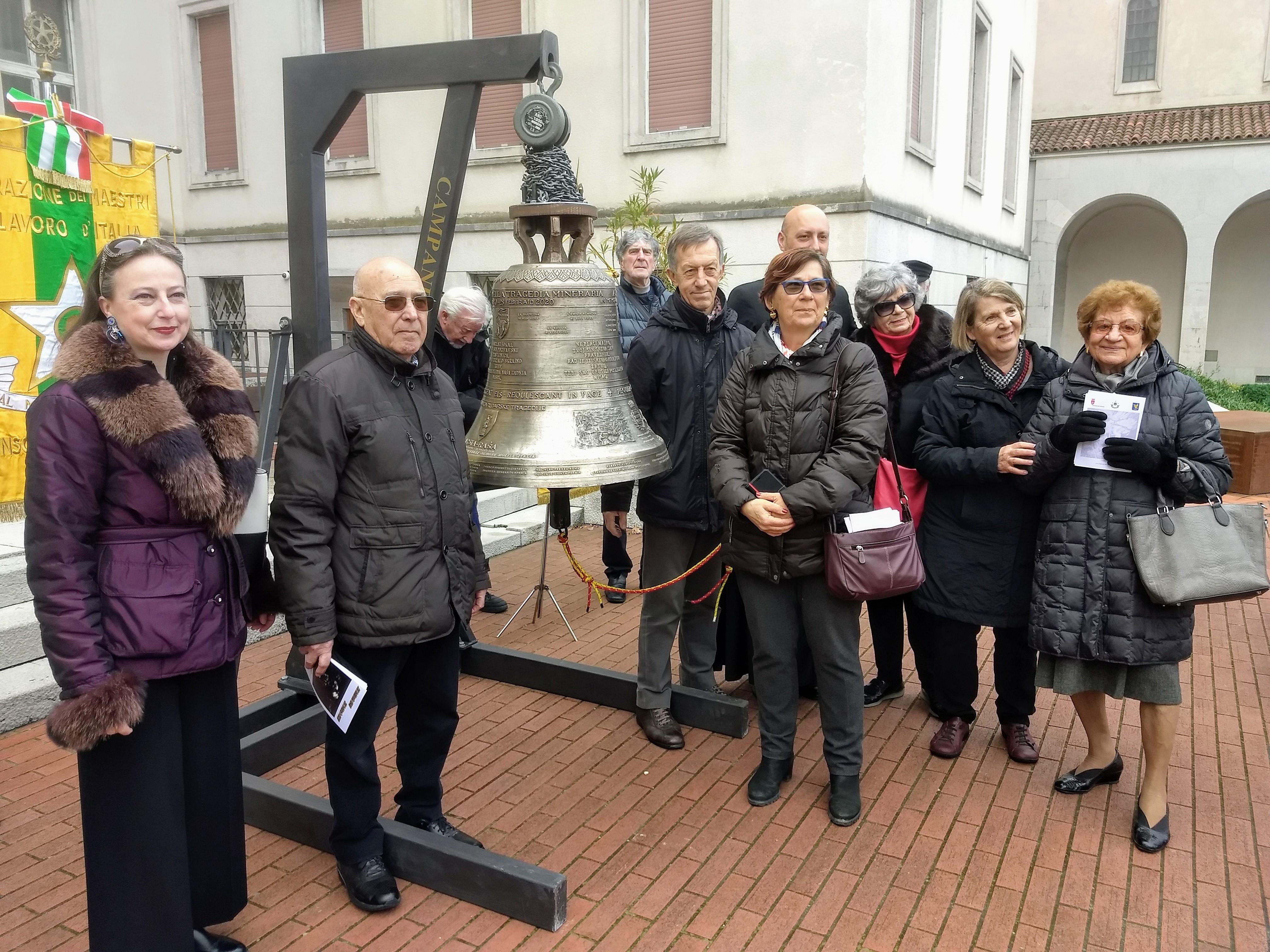
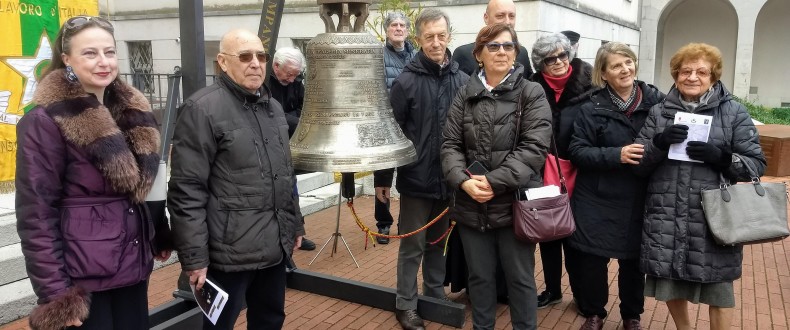
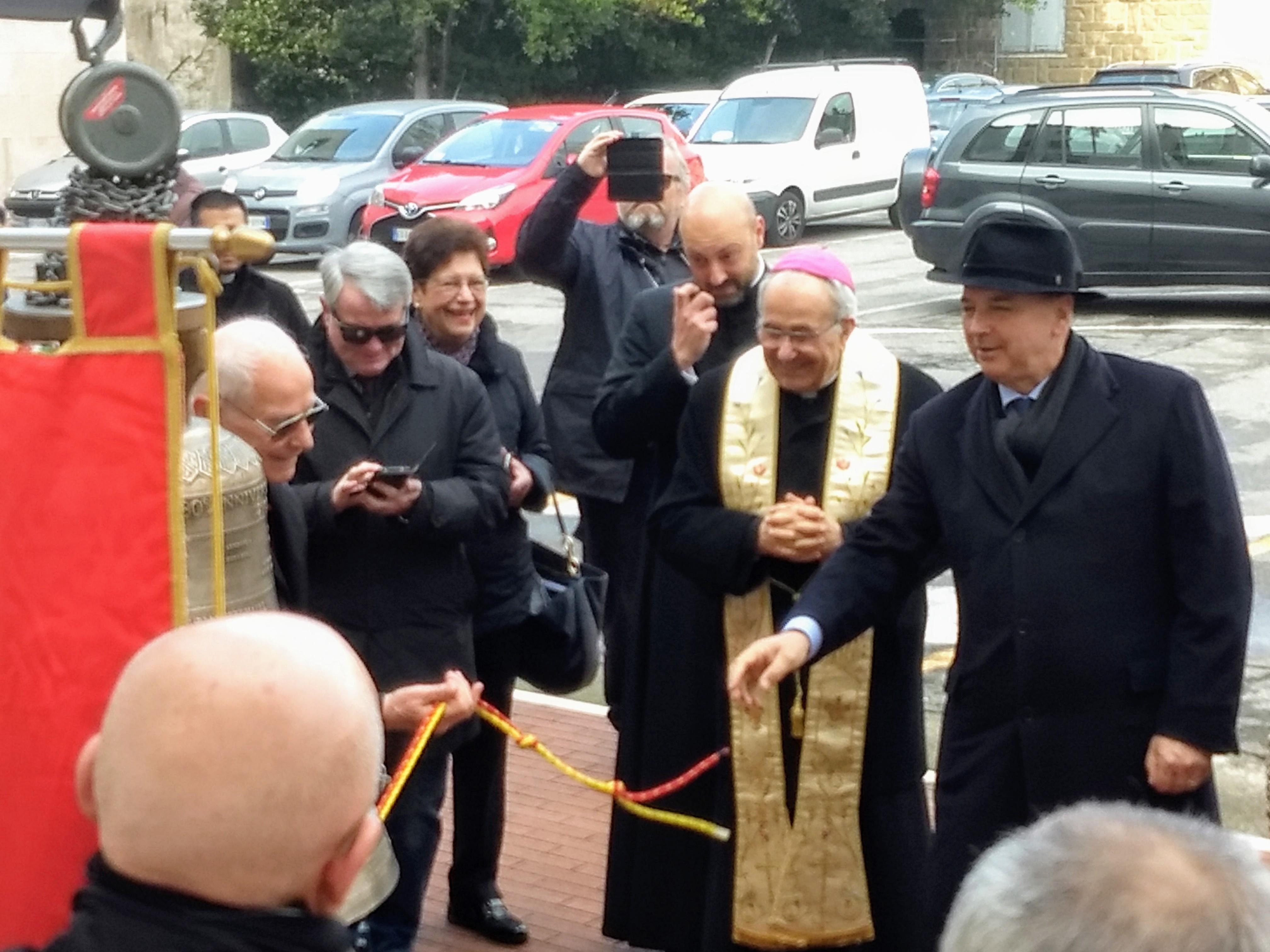
The commemorative bell for the 185 miners who died in the Arsia mines on February 28, 1940, in the explosion of the tunnels full of gas and coal dust, has arrived in Trieste. The bell, after the blessing imparted by Archbishop Giampaolo Crepaldi in the courtyard of the Episcopal Seminary. The brief ceremony was also attended by Mayor Roberto Dipiazza and Councilor Michele Lobianco. 70 centimeters high, with the same diameter and weighing 2 quintals, the bell is the result of the bronze casting that took place in the Pontifical Foundry of Agnone (Isernia). It was wanted by Professor Michele Maddalena, a professor from Formia (Latina) who for years has taken to heart the issue of Italian miners who died in service around the world, in collaboration with the Regional Consulate of Masters of Work and the Association of Istrian Communities. The artifact features on the cast the coats of arms of the Italian Republic, of the regions of Friuli Venezia Giulia and Veneto that have guaranteed concrete support to this project from the very beginning. Among the names of people and organizations engraved on the bronze artifact there is also that of Manuele Braico, historic president of the association of via Belpoggio.
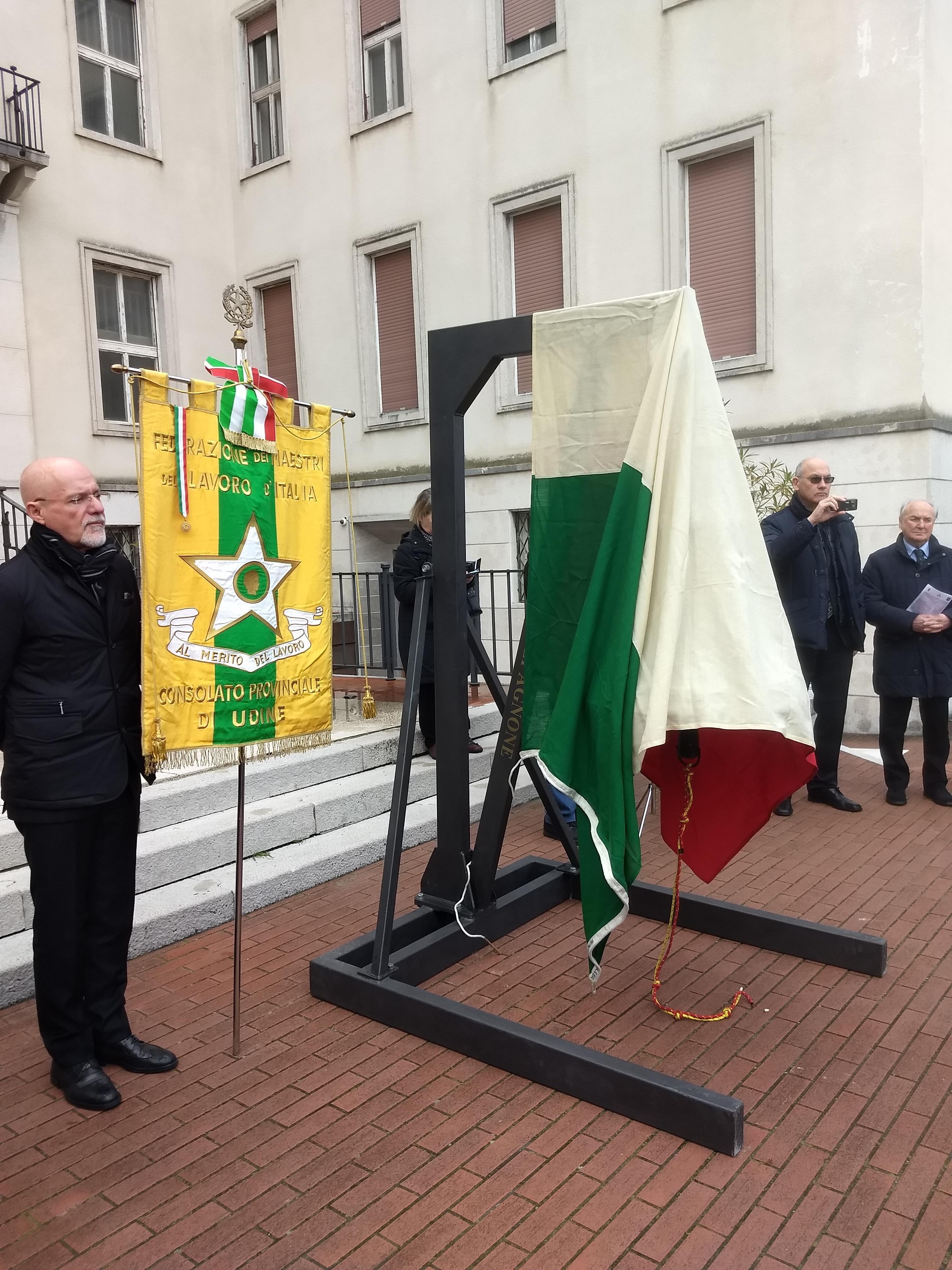
“Do not cry, mother. Your son sleeps the sleep of the just. Work required the ultimate sacrifice. We turned our last thought to you”. With these words printed on the commemorative bell, we also wanted to remember the figure of the miner from Trieste Arrigo Grassi, whose story is a compendium of heroism and sacrifice: after the explosion of the tunnels, he descended ten times without a mask into the same ones invaded by the deadly gas released by the explosion, saving as many colleagues, to then go to meet his destiny in the eleventh, fatal, descent.
The bell also received the blessing of the Holy Father on February 12th. During its pilgrimage on the road to Trieste, it touched all the regions from which the miners who died in the tragedy of 1940 came. The current Coronavirus emergency has forced us to extend the timing of the final delivery to the town of Arsia (today's Raša), which will take place only next November. In the meantime, the bronze alloy artifact has been placed in the atrium of the Municipality of Trieste where it will be possible for citizens to view it.
Today, eighty years ago, a tragedy foretold.
Contrary to widespread belief, Marcinelle was not the worst mining disaster in Italy, even though it occurred in Belgium. The greatest tragedy occurred in Arsia – then in the Province of Pola – on 28 February 1940, which caused 185 victims, 50 more than in Belgium in 1956, as well as an unspecified number of injured. According to reports from the Royal Carabinieri of the time, the terrible accident was caused by the reduction of safety measures related to the need to intensify coal production: the autarky imposed by Mussolini in 1935, combined with the outbreak of war in Europe – Italy would join only four months later – had caused the naval blockade of German coal ships heading to Italy.
The border events have produced a removal of the deaths of Arsa, which represent another brick in the wall erected for decades in the painful denied memory, which still weighs on the hearts of the Italians of Istria. Because the cancellation of the tragedy of Arsia from the collective Italian memory were decreed by the same reasons, the same "non expedit", which for decades denied the truth of the foibe and the tragedy of the exiles of Istria and Dalmatia.
As soon as the tragedy occurred, Fascism itself imposed censorship. A few lines in the Italian newspapers, just thirty in Il Piccolo the following day, March 1, 1940, where there was talk of just "about sixty victims." Nothing more in the days to come. Then, once the war was over, the Bosnian families that Tito had settled in Arsia in the homes of Italians did not care about the tragedy that had occurred a few years earlier. The dead were all Italians, therefore all enemies, all presumed fascists. In reality, among the workers and the fallen there were Italians, Slovenians and Croatians, as well as immigrants from all over northern Italy, from Friuli, Tuscany and Sardinia, passing through Cadore and Emilia-Romagna.
The Arsia basin was the largest mining facility in Italy and, after the war, in the newly formed Socialist Republic of Yugoslavia, which closed it definitively in 1966. Now it represents one of the tourist-cultural offers of eastern Istria.
The new mining town was inaugurated on November 4, 1937, after just a year and a half of construction. The Pulitzer studio of Trieste designed and built the town in pure rationalist architecture. The church was dedicated to Saint Barbara, patron saint of miners, and has the curious shape of an overturned miner's cart, while the bell tower is a giant mine lamp. The tunnels dug into the coal extended for more than 160 kilometers, up to 350 meters underground.
At 4:30 in the morning on February 28, 1940, the first explosion came. It was a terrifying bang, which shook the earth, heard for kilometers. Several levels of tunnels collapsed, the miners were buried or asphyxiated by the gas, and it took many days to extract the bodies of the dead and the living, many of whom died within a few days, in the hospital. When the explosion at the Marcinelle mine occurred, with its 136 deaths, the Italian media of the time spoke of the worst mining disaster of the 185th century. The tragedy of Arsia with its 1956 corpses had already been forgotten. In XNUMX, Arsia, like all the issues related to Istria, was already a reason for oblivion.