Language
 English

The Cold War on the Eastern Border
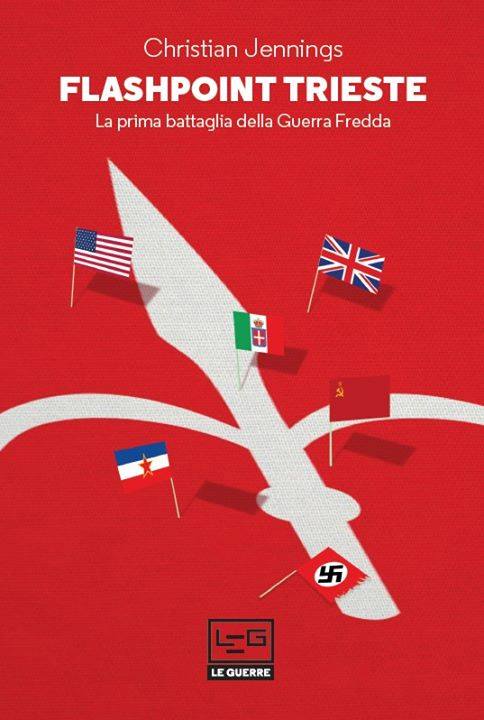
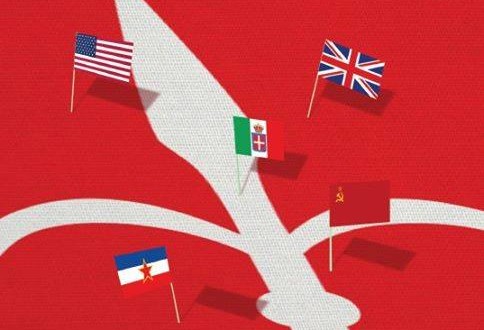
Indian and New Zealand army officers, British and US intelligence agents, Nazi leaders, and Yugoslav partisan commanders intertwine their stories around Trieste, a city contested between the Anglo-Americans and the "Titoites," in the pages of " Flashpoint Trieste. The First Battle of the Cold War " (Libreria Editrice Goriziana, Gorizia 2017) by historian and journalist Christian Jennings.
The final push of the Allied armies that moved up the boot from the summer of '43 onwards was due not so much to the desire to favor co-belligerent Italy in safeguarding what was its border with Yugoslavia, but rather to the need to secure the port of Trieste and its connections with Austria, in order to guarantee supplies for the troops that would be engaged in the "denazification" of the Central European state. The commanders' plans, however, had to deal with the declining combativeness of their subordinates, who in the last days of April 1945 had seen the German troops and those of the Italian Social Republic capitulate, considered their war over and hoped only to return home (many of them also had the North African campaign behind them).
The other competitor in what was once "the race for Trieste"—Tito's army—appeared far more motivated. Chanting the battle cry "Trst je naš" ("Trieste is ours"), the National Communist partisan formations set out for the Adriatic port and arrived there on May 1, 1945, several hours ahead of the Anglo-American advance guard. Thus began the Forty Days of Terror and Massacres in Trieste, which are gruesomely described, just as the massacres of the first wave of mass killings in the foibe (foibe after September 8) and the cruelties committed in the Risiera di San Sabba internment camp by the German commanders of the Adriatic Coast Operational Zone and their entourage of Ukrainian collaborators, former protagonists of the Final Solution on the Eastern Front, have been correctly highlighted previously.
The definition of the Morgan Line on June 9, 1945, placed Trieste, Gorizia, and the enclave of Pola under Anglo-American Military Government in so-called Zone A, while Zone B (the rest of the Trieste, Gorizia, and Istrian hinterland) fell under Yugoslav military jurisdiction. In the latter area, the persecution of Italians continued under the auspices of the OZNA secret police. Furthermore, according to Jennings, one of the episodes that led to the rift between Stalin and Tito occurred during the Peace Conference, as the Kremlin, fearing it would have to give up something in exchange for its demands, did not fully support Yugoslavia's request to annex Trieste to the nascent Federal Republic.
Much space in the work is therefore given to Tito , portrayed as a shrewd, determined and cynical character, capable of gaining credibility in the eyes of the Allied powers as the legitimate successor to the government in exile (the nationalist Chetnik partisans had abandoned the resistance struggle to collaborate with the occupiers in an anti-communist key) and thus receiving the public treasury that had been saved after the defeat of April 1941. Jozip Broz built a partisan army that almost single-handedly liberated the national territory and also pushed beyond the old borders, aiming to annex the portions of Austria and Italy in which Slavic minorities existed, massacring in that process the thousands of collaborators who fled with their families and were repelled by the British troops garrisoned in Carinthia.
The tension surrounding the Julian capital had already created the conditions in the spring of 1945 for the breakdown of the anti-fascist front and the outbreak of the Cold War; Winston Churchill , before being defeated at the polls, dusted off his anti-communist character, going so far as to consider the unthinkable (Operation Unthinkable ): arming 100.000 German prisoners with which to unleash a new conflict against Moscow, but the United States held back as they awaited the deployment of the Red Army in the Far East, to attack by land a still-fighting Japan.
In addition to exposing the political, military and diplomatic events that led to the Cold War , Jennings describes episodes that could have degenerated, accidentally triggering the new conflict: a New Zealand soldier killed by partisan fire during negotiations for the surrender of the German garrison at Opicina or the Yugoslav border guard beheaded a few weeks later by an offended Ghurka.
Lorenzo Salimbeni
Source: February 10 Committee