Language
 English

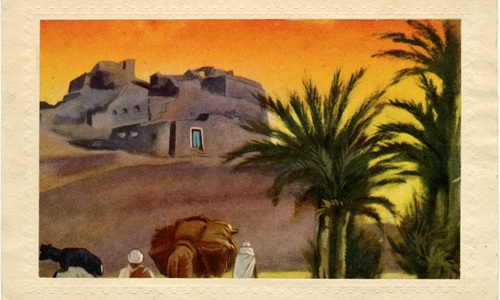
Marcello Dudovich's Libya on display at the IRCI
The exhibition "The Two Ages of Dudovich. Selected Works from Two Major Italian Collections" opened on July 17th at the IRCI (Via Torino 8, Trieste). The exhibition will remain open until at least Sunday, September 20th, 2026, and is open Monday through Sunday, 10:30 AM–12:30 PM and 16:30 PM–18:30 PM.

DUDOVICH, 1900
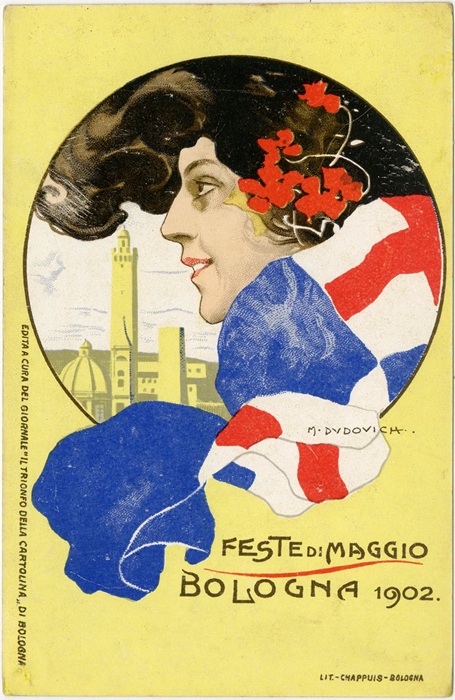
At the beginning of the twentieth century, Trieste-born Marcello Dudovich was just over twenty years old. He was therefore a very young poster designer with great promise: he worked in Bologna and won numerous awards in the city's annual competitions. He then landed at the prestigious Officine Grafiche Ricordi in Milan and took off, with posters that emancipated themselves from any decorative and allegorical influences of the Art Nouveau style and focused on a novel approach to formal synthesis and large, unshaded fields of color.
Seductive female figures were his winning subjects for his advertising campaigns, and they remained his signature, leading him to be rightly considered the most important Italian poster artist of the 900th century. His early years, up to 1910-1912, were his most original and creative, with masterpieces created for major brands (Campari, Borsalino, Strega, Uliveto, Fonotipia) but above all for the Mele brothers' Neapolitan clothing department store: a "gallery" that still retains its extraordinary visual impact today.
DUDOVICH, 1937
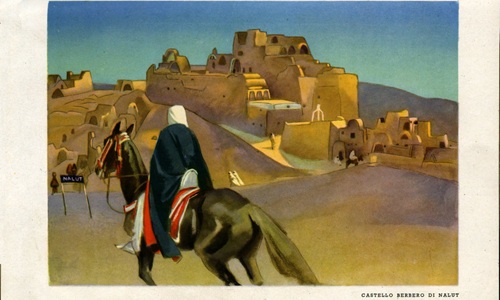
Italy's most celebrated poster artist had recently fallen into a kind of shadow, feeling aged and lagging behind in a world of art and graphic design that was undergoing radical changes in the 1930s: a new generation of poster artists was emerging, photography and photomontage were being discovered in advertising, and new design styles were gaining ground (Studio Boggeri, Ufficio Tecnico Pubblicità Olivetti). This disoriented Dudovich received an invitation from Nives Comas Casati, his niece, student, and model, to travel to Tripoli, in colonized Libya, where Governor Italo Balbo was gathering a "court" of Italian artists. The impact with that reality was providential: the sixty-year-old "Dudo" rediscovered his taste for painting and illustration, created several posters, and above all, photographed and portrayed the various human and social aspects of the surprising and fascinating indigenous habitat, even making a personal contribution to the construction of the tourist image of the so-called "fourth shore."