Language
 English

The Birth of the Armenian Community of Trieste
April 24, 1915 marked the beginning of the extermination of the Armenian community residing within the Ottoman Empire: there had already been persecutions and oppression by the Young Turk Government, but during the First World War the massacre of one and a half million people took place. Even before this catastrophe, the Armenian diaspora had spread throughout the world and Trieste, after the establishment of the Free Port in 1719, also welcomed an Armenian community that contributed to the development of the city.
The birth of the Armenian community of Trieste:
a difficult beginning (1770-1810)
The growth of Trieste in the central years of the eighteenth century, first through the (failed) attempt of Charles VI of Habsburg and subsequently with the progressive reforms of Maria Theresa of Austria and her son Joseph II, allowed a continuous influx “of foreign merchants".
They were merchants, shopkeepers and small entrepreneurs attracted by the opportunities offered by the free port: not only for the tax exemptions, but for the religious and judicial protection. The rational layout of the Theresian village under construction thus hid a chaotic and changing undergrowth of adventurers and merchants in search of fortune.
In order to regulate this shapeless chaos of religions and languages, the Austrian authorities encouraged naturalization, in the form of applying for Austrian citizenship.
It should be noted, in this regard, that it was preferable to acquire Austrian citizenship rather than municipal citizenship, because it was less rigid, less bound by local laws.
Through these requests for naturalization it is possible to trace the history of the first ethnic-religious communities of Trieste: from that of the Greeks, the English, the French, arriving at the Armenians themselves.
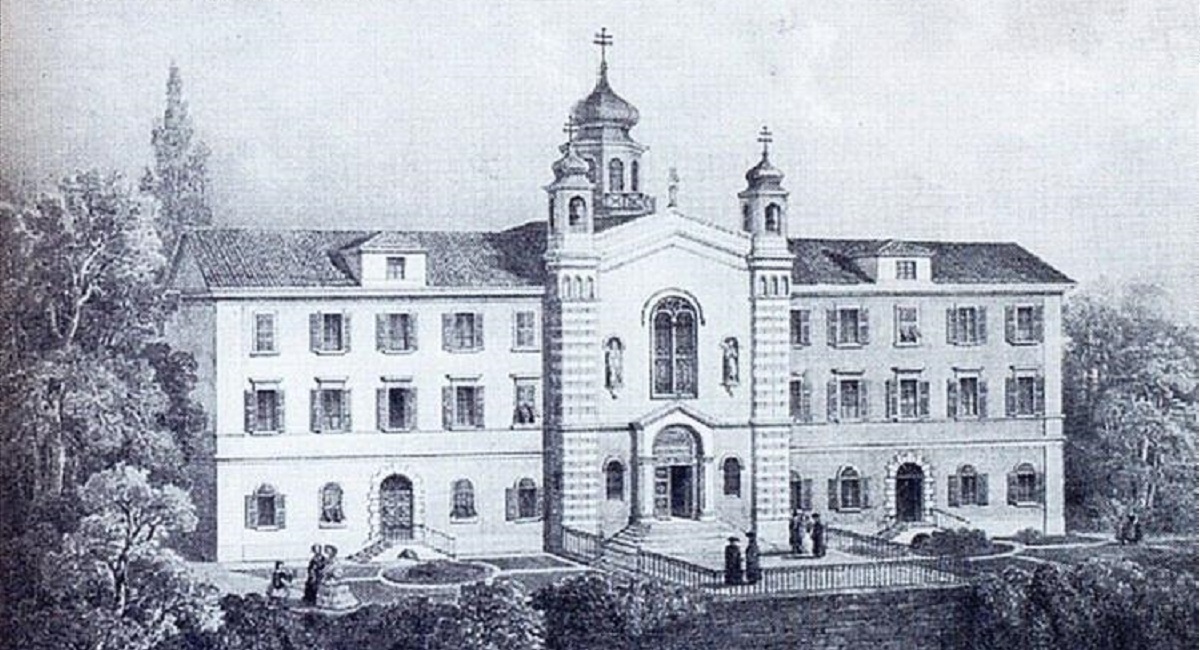
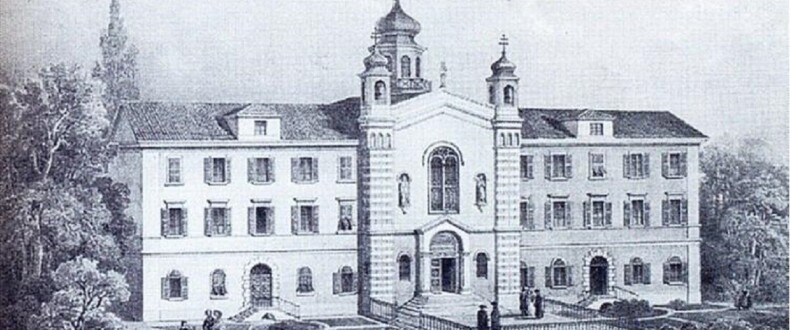
The year of our Lord 1773 is traditionally considered the first year of the Armenian community in Trieste, when a group of Mechitarist Fathers, who had left the island of San Lazzaro in Venice, arrived in Trieste. Under the welcoming wings of the Double-Headed Eagle they aimed to open a printing press: a natural outlet for the motto now and work and study of the Armenian Mechitarist monks, still embodied by the publishing activity of San Lazzaro.
The congregation always had a difficult life in Trieste due to continuous quarrels among the monks on economic issues: the community's resources were poorly managed and the whole enterprise was heavily overshadowed by the Armenian community of Constantinople, interested in the franchises of the free port of Trieste. Although all this also damaged the secular Armenians, in the first decades the presence of a religious nucleus made it possible to attract the first Armenian migrants, mostly merchants. Around 1774 a Turkish subject of Armenian faith, John Baptist of Sarum, asked for citizenship for himself and his two sons, justifying that he had settled "in this free port with Morandi spirit to undertake my usual career of Commerce“. According to the Commercial Intendancy it was a “Merchant of esteem” who had traded in the Indies and Turkey. Another Armenian merchant was registered in the same year, this time of Venetian origins; and in 1773 we know that Father Giovanni Ariman of the Mechitarists and the director of the Egyptian Company Giorgio Saraff were in Trieste.
The latter, as was characteristic of many well-integrated Armenians, was a prodigious polyglot who knew the language “Turkish, Arabic, Armenian and Persian” and who worked as an official interpreter for the Coast Guard and for the Health Authority.
Towards the 30s, after Maria Theresa granted a Statute to the Armenian nation in Trieste (1775 May XNUMX), the community grew considerably.
Initially, around 1774, thirty secular Armenians and Mechitarist monks stayed in Trieste; around 1780/90 there were around one hundred "Trieste" Armenians.
The Bishop of Trieste, in this regard, used the Armenians to counterbalance the presence of the Greek Orthodox: “It seems to me that much greater advantages could be drawn from it, especially to repress the boldness of the Greeks, who are continually increasing in number of miserable and beggars, and who never cease to seek greater privileges which in a short time will put them on a level with the dominant religion; it would be excellent to counterbalance them with the introduction of religious, and rich, Armenian families.".
The merchants mostly came from Europe, respectively from Venice, Livorno, Ancona, Lisbon, Ragusa; and from the Middle East from Cairo, Smyrna, Constantinople and Persia. In 1776 39 Armenians arrived; in 1777 another 26; mostly merchants, although there was no lack of a tailor, a barber, a printer, a jeweler, furriers and some students. The community, thanks to the presence of the Mechitarists, was forming in its heterogeneity of professions and classes; yet, moving on to the XNUMXs and XNUMXs, immigration stopped and the community decreased.
How come, unlike the Greeks, the Jews, the Serbs, the community did not grow to the levels of other minorities and did not have a prominent role in Trieste?
The reasons are many and difficult to pin down.
First, the internal squabbles of the tiny Mekhitarist community leaked outside the walls of the church and soon became known not only in Trieste, but also in the main European and Eastern Armenian communities, discouraging secular Armenians from seeking refuge in the free port.
Secondly, and perhaps the most serious reason that goes against the current of the Armenian tradition itself, capable of integrating with great skill into national societies, the Armenian community of Trieste was always very jealous of its own autonomy: unlike, for example, the Jews, it never integrated into the fabric of Trieste, remaining tied to its own customs and traditions. There was no such integration with the population of Trieste and its project of a port-city during the eighteenth century.
The councilor of the Commercial Office of Trieste Giuseppe Pasquale Ricci wrote that the Armenians are a “nation [...] accustomed to violence [...] of Eastern despotism, and therefore is distrustful, and is alarmed by its shadow“. The Armenian psyche, according to Ricci, had been traumatized by religious persecution; and therefore the defense of its own customs and habits always remained ironclad, closing it within itself.
While other minorities thanked Maria Theresa, in the case of the Armenians it was repeatedly recalled how the privileges and liberties granted to Venice had been greater than those of Trieste; going so far as to protest many small errors in the field of religious customs. This did not please a sovereign like Joseph II, whose idea of religious freedom was however subordinated to being Austrian subjects, first in the service of the state and only then to religion. In this area the Armenians asked for autonomy and religious freedom disproportionate to their role in Trieste.
A final factor, finally, which goes against the multilingual tradition that has always been the pride of the Armenians, was the knowledge of the language. With the exception of Giorgio Saraff, the small size of the Armenian community and the jealous defense of its privileges prevented an adequate knowledge of the two then dominant languages: Italian and German. The Habsburg authorities wrote and conversed in the state language; while Italian was necessary as a commercial language and for daily discussion.
The Armenians of Trieste were thus doubly handicapped: they had difficulties in their relations with the government, but equally difficult were their relations with the mercantile and municipal authorities.
The Greeks and Jews who had moved to Trieste for this purpose had been more astute, because they had provided themselves with collaborators who could speak German and Italian; at least until their families in turn acquired familiarity with the local idioms. When Vienna requested more details on Armenian religious practices, the community of Trieste was unable to read or respond adequately; and besides, not knowing Italian well, they had difficulty finding someone to write them for them: “Many of the same intimations are conceived in the German language, which is not known to us, and the religious (NDR i.e. the Mechitarists) they do not have sufficient knowledge of the Italian language to conceive the answers, and give the information that is required".
None of these obstacles were actually insurmountable; one can imagine that in the future, if the community had grown, specialists and families would have arrived who were willing to integrate with Trieste and create that bond that would guarantee real growth.
This promising beginning, however, encountered an obstacle; and it was the three Napoleonic occupations that in effect “froze” the city’s migratory flow. During the last one (1810), the small Mechitarist community was closed; and without the religious center the minority lost its “soul”. Among the Armenian families who remained in Trieste over the centuries, the Hermets should be remembered; the letter where the “intimations” are cited (16 May 1787) was by Giorgio Hermet; of one of his distant descendants, now assimilated into the Trieste environment, the (irredentist) street survives: Francesco Hermet.
Sources: Tullia Catalan, Notes on the Armenian presence in Trieste between the late eighteenth and early nineteenth centuries , in Economic and social history of Trieste, The city of groups 1719-1918 , edited by R. Finzi and G. Panjek, Trieste, 2001, vol. 1, pp. 603-611.
Zeno Saracino – August 15, 2020
Source: Triestenews