Language
 English

The History of the Adriatic Border at the 83rd Venice Film Festival
Positive feedback for the "Cinema of the Adriatic Border" series at the 2026 Venice Film Festival, organized by the National Association of Venezia Giulia and Dalmatia in collaboration with the Federation of Associations of Istrian, Rijeka, and Dalmatian Exiles, the Multimedia Documentation Center of Julian, Istria, Rijeka, and Dalmatian Culture, CINIT – Italian Film Forum, Isola Edipo, the Veneto Region, the City of Venice, the Venice Biennale, and the Centro Sperimentale di Cinematografia as part of the 83rd Venice International Film Festival.
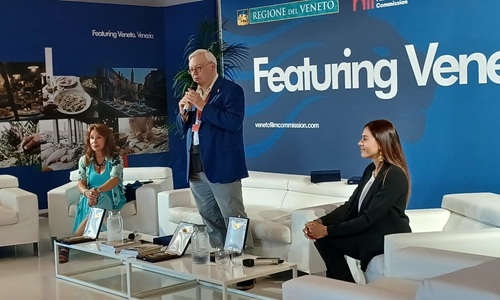
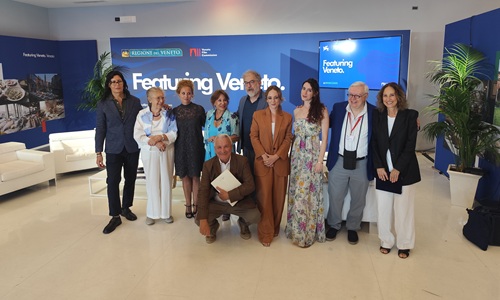
Hosted by the Veneto Region – Veneto Film Commission at the 83rd Venice Film Festival, the ANVGD honored some of the personalities who, in recent years, have contributed to bringing the history of the Adriatic border to the small and big screen:
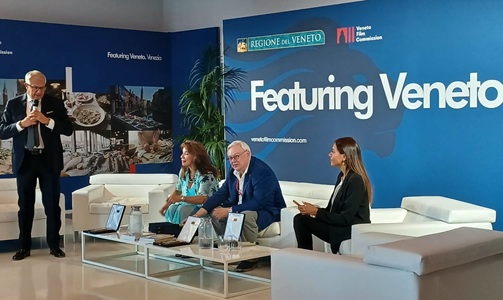
Maria Pia Ammirati, Director of Rai Fiction, who highlighted the importance of making the historical reality of our country known without reticence through fiction such as The Rose of Istria , The Girl with the Suitcase and The Marcher – The True Story of Abdon Pamich , which in recent years have been broadcast in prime time on the occasion of Remembrance Day.
Sara Lazzaro, the actress who played the beloved aunt of Egea Haffner, the little girl with the suitcase immortalized in a photograph that became an icon of the exodus, and the film that told her story achieved a 20% audience share in prime time on February 10, 2025.
Andrea Pennacchi, the actor who starred in The Rose of Istria , was proud of the recognition he received and wanted to share the credit with the recently deceased director Tiziana Aristarco, who had the sensitivity to tell the story of the exodus, bringing to the stage the squalor of life in a Refugee Collection Center for the first time.
Selene Gandini, the actress who played Norma Cossetto, a symbol of the Foibe massacres, in Red Land – Rosso Istria , a pioneering film on these issues: "I want to thank my mother, who taught me the importance of free thought. Now I continue to tell the stories of women fighting for an act of light that will bring them out of the shadows."
Maximiliano Hernando Bruno, director of Red Land , declared that the film marked a watershed in his life: «It is an artistic work of which I am proud, because it helped bring to light a forgotten page of history».
Alessandro Centenaro, producer at Venicefilm, the production company that has produced many of the works referenced here: "I am grateful for this recognition, which rewards those who do the hard, painstaking, daily work behind the scenes necessary to make films, documentaries, and fiction."
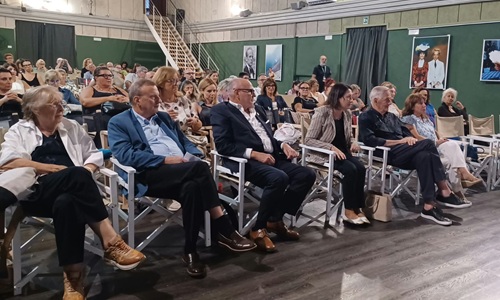
A refresher course for Veneto teachers on Cinema and History: the Foibe and the Julian-Dalmatian Exodus was then held . The seminar opened with a discussion between Alessandro Cuk (film critic and national vice president of ANVGD), actress Selene Gandini, and producer Alessandro Centenaro of Venice Film, who focused on Red Land – Rosso Istria , the 2018 film that brought to the big screen the story of Norma Cossetto, the symbol of the Foibe massacres. Lorenzo Salimbeni, a freelance journalist and historical researcher, dedicated a talk to the Foibe, while Professor Donatella Schürzel (Europaeus PhD in European History and national vice president of ANVGD) focused on the exodus and refugee collection centers.
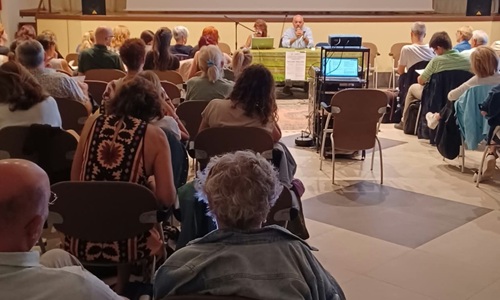
Finally, the documentary "In odium fidei. The Christian martyrs of Tito's persecution," directed by Maximiliano Hernando Bruno and produced by Venicefilm with the contribution of the National League of Trieste, was presented. The three Istrian martyrs of communism, killed immediately after the war and later beatified as martyrs in odium fidei (Italian Francesco Bonifacio, Croatian Miroslav Bulešić, and Slovenian Lojze Grozde), are at the center of the narrative, which begins with the killing of Father Angelo Tarticchio in the tumultuous days following September 8, 1943.

There is no shortage of references to the lynching suffered by Bishop Antonio Santin when he went to impart confirmations in Capodistria in 1947 and to the climate of terror that induced the prelate of Fiume, Ugo Camozzo, to abandon the Kvarner diocese together with 25 priests.