Language
 English

The action of the OZNA (later UDBA) continued even after June 1945
TRIESTE – “Day of Liberation from Yugoslav Occupation”.
June 12, 1945 is only the beginning of a long struggle to re-establish democracy and bring Trieste back to Italy
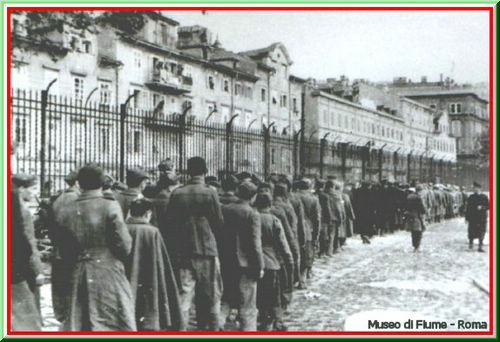
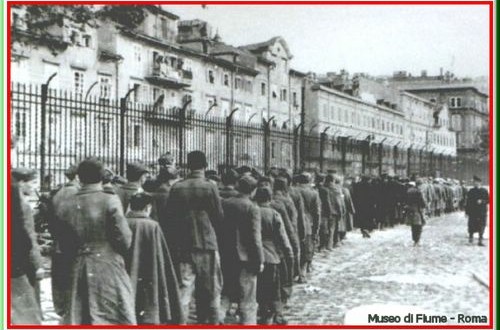
After June 12, 1945, which marked the beginning of the liberation from the Yugoslav nightmare, there was no real peace and security in Trieste not only for the Italians, but also for elements of the Slovenian minority not in line with Tito's communists. From new archive documents and journalistic sources of the time, it can be deduced how for a long time, in Trieste and in other parts of Italy, the various sections for the Defense of the Yugoslav People (OZNA and then UDBA) were strangely operational and continued to carry out repressive action against any possible opponent of the Yugoslav communist regime. Cases of people being kidnapped and then murdered were not rare.
In November 1945, “Il Secolo XX” of Rome reported the activity of the OZNA in Italy, which had already organized a political school in Monrupino, enlisting Slovenes who knew Italian well, to send them to the USSR in Odessa for higher training courses. Furthermore, the OZNA still had its headquarters in the autumn of 1945 in Trieste at Via Carducci n. 6, in the building of the Social Security Institute, occupied by Tito's emissaries. The disappearances of Italians from Trieste also occurred under the Allied government, while the killings of Italians in Fiume, Zara and Istria continued unabated. There were numerous cases of Slovenes who were not communists, but of Catholic-liberal or Christian-popular tendencies, who disappeared at the hands of the hitmen of the Yugoslav secret police. The OZNA bases were present, throughout 1945, not only in Trieste and the immediate vicinity but also in Puglia, specifically in Bari and Gravina. A ruthless network in which only some fascist elements fell, but above all liberals, republicans and populars who did not agree with the Stalinist methods of the Yugoslavs. The connivance of large sectors of the Italian PCI with the Yugoslav police network that became UDBA in 1946 continued for many decades in Italy. The leaders of the PCI were not so much interested in the route of the new border but in the political outcomes of the liberation struggle which, at least until 1948, were in tune with those of the Slovenian Edvard Kardelj, one of Tito's strongmen. The turning point of a communist revolution in Italy stopped with Tito's expulsion from the Cominform in June 1948.
A story still little known to the public, which the anniversary of June 12 brings to the surface.
Marino Micich
Head of Department Historical Museum Archives of Rijeka