Language
 English

The Origins of the 1953 Balkan Pact
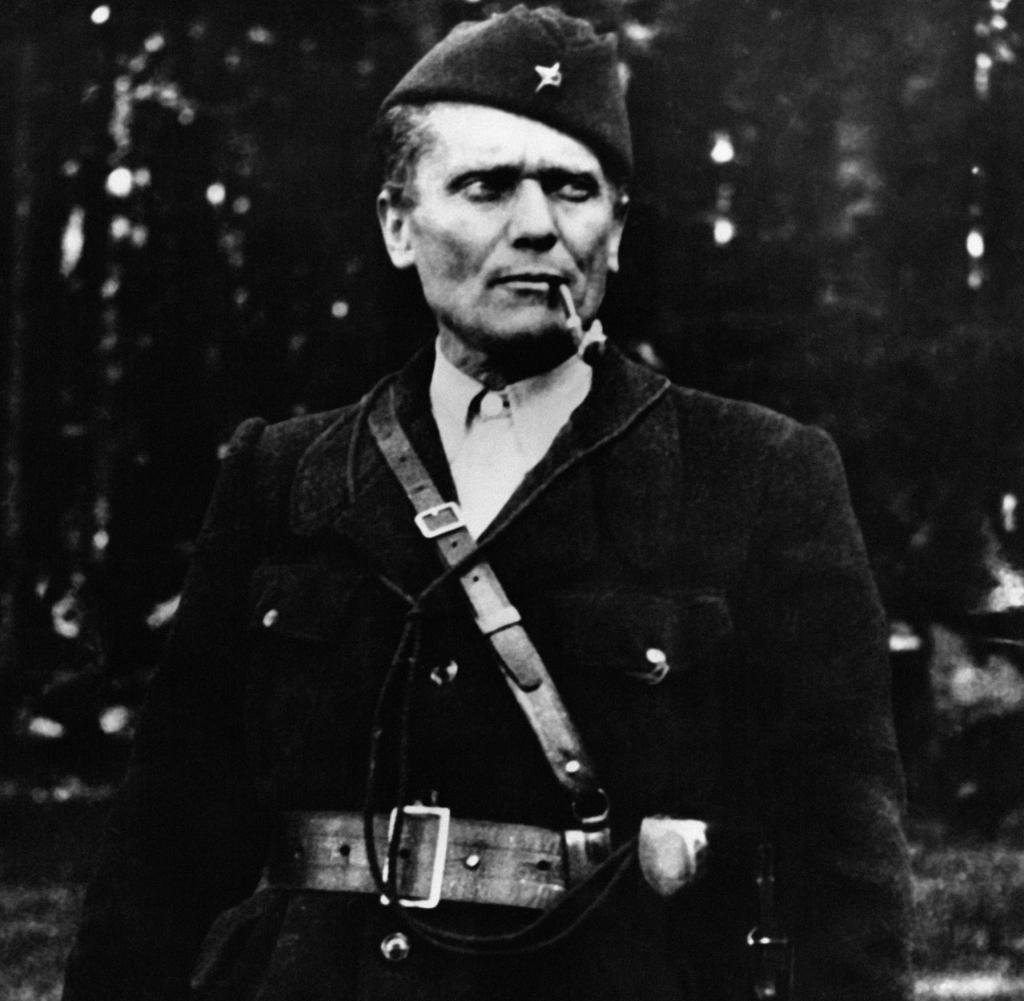
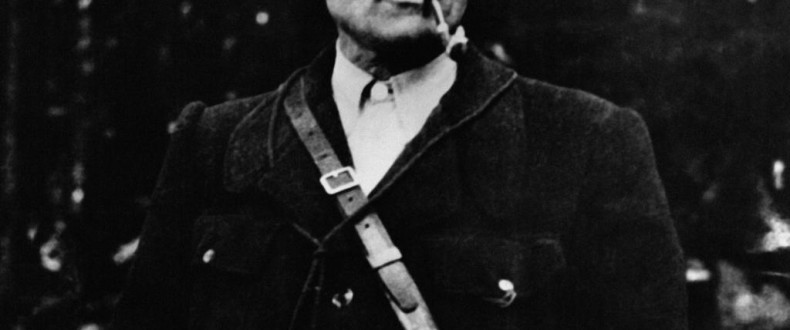
Yugoslavia has always been unique among the Soviet Union's satellite states. This Balkan state, unlike the others, immediately sought to establish its own strength under Tito's strong pressure, even competing with Moscow. The Yugoslav model was considered dangerous and, in some respects, not fully socialist. On the other hand, the Soviets were seen as oppressive. What marked a profound rift between the two countries was Belgrade's refusal to establish a federation with Bulgaria. Following numerous warnings from Stalin, the Yugoslav Communist Party (CPY) was expelled from the Cominform on June 28, 1948. Naturally, this situation did not leave the United States government inactive, as it saw an opportunity to weaken the Soviet bloc, which was being openly challenged for the first time by one of its satellite states. Thus Washington devised the “wedge strategy” which involved using the figure of Tito to foment nationalist moods in Eastern Europe, but its success was, ultimately, rather limited.
The US then decided to be more accommodating with Yugoslavia, with the aim of encouraging it to enter its sphere of influence. In fact, the United States accepted the Yugoslav request to benefit from the Marshall Plan. This new attitude worried Italy with regard to the question of Trieste, since it feared that if a claim were made by Yugoslavia, it would be satisfied to the detriment of Italian interests. On 5 October 1954, with the London Memorandum, Zone A of the Free Territory of Trieste passed into Italian hands and Zone B went to Yugoslavia. However, despite great efforts, the United States failed in its attempt to bring Yugoslavia into the US orbit. It had taken a third path, which did not include joining NATO or even joining the Warsaw Pact, which however was created only in 1955. In 1953 it created the Balkan Pact with Greece and Turkey, and together with Egypt, India and Brazil, it founded the Non-Aligned Movement in 1956.
The first contacts between Yugoslavia, Greece and Turkey can be traced back to the aftermath of the "Yugoslav schism" and, more assiduously, from 1950. Both the Turkish government and the Greek government led by Plastiras, began to look with great interest at Belgrade, despite the fact that there were still outstanding problems, with the hope of finding a solution to them through a regional agreement. The attitude that Belgrade would take became central in Greek and Turkish evaluations, but Tito's availability was still unknown. The Yugoslav President was then inclined to establish only economic and cultural relations and not military ones with Athens and Ankara. The leader of the PCI seemed above all interested in ensuring the continuity of American supplies. Some political figures of the time, such as the Italian minister Martino, considered it unlikely that Yugoslavia would enter into such a regional alliance, given that it had not done so when the threat of the Cominform was most dangerous and concrete. In favor of a Greek and Turkish rapprochement with Belgrade, there was also the fact that Ankara considered Greek military aid alone insufficient to defend the region. The suspicion that the Yugoslav leader did not really want to tie himself up with Greece and Turkey, but only to give the impression of wanting to implement an alliance with them to continue receiving aid from the West, grew day by day in Ankara and Athens. According to Panayiotis Pipinelis, Greek representative in NATO, Tito's ambiguous attitude was due to the fact that he did not want to expose himself excessively to Soviet pressure, so the Atlantic delegate advised Greece and Turkey not to rush negotiations, otherwise any form of agreement with Yugoslavia could fall through. Meanwhile, Italy was considering whether to communicate to the Turkish and Greek governments that a formal agreement with Belgrade, with which the question of Trieste was pending, would be considered an unfriendly act on their part.
Washington did not remain on the sidelines and put strong pressure on Greece to conclude the Balkan agreement, as it considered it the best option to bring both Yugoslavia and Turkey closer to the Western sphere of influence. On 11 August 1952 there was an attempt at a thaw between Italy and Yugoslavia, through a meeting between their ambassadors in Turkey, with which the Yugoslavs asked to set aside the question of Trieste during the Balkan discussions, since it was precisely Italian hostility, resulting from this still unresolved situation, that had caused its exclusion from the discussions between Athens, Ankara and Belgrade. A Yugoslav delegation was sent to Greece at the end of August with the aim of overcoming the mistrust of the leaders and people of the Hellenic state, but did not obtain concrete results. Tito, however, was not entirely convinced of cooperation in the Balkans, since he believed that his country would gain nothing from it, indeed it was only to the advantage of Greece and Turkey, and in this regard the Yugoslav leader had always been against formal military agreements. However, the relationship with the West was still fundamental in order to continue receiving military and economic aid, and therefore it was necessary to continue negotiations for a Balkan agreement.
Washington, while not wanting to take any direct initiative in the tripartite talks, followed their progress with great interest, and continued its policy of bilateral assistance to Belgrade. The US, unlike the British, did not consider Thrace an area of primary importance, since they saw Italy and Anatolia as the basic areas of "endless resistance" while the Balkan area was considered only as a "security zone". In September there was an important meeting between representatives of Greece and Turkey and a Yugoslav military delegation, led by General Saksić, to examine the issue of military cooperation between the countries. The main aim of this delegation was to establish the borders within which there would be an intervention by Yugoslavia. Obviously Athens and Ankara were surprised by this clarification, since it implied the possibility of neutrality if the conflict did not directly concern Yugoslav territories. Tito's reluctance to conclude formal agreements was thus becoming the central issue of any possible agreement between the three countries and was leaving the governments of Greece and Turkey increasingly perplexed, even though the Hellenic state had been assured that if there was an attack against them, Yugoslavia would mobilise all its forces.
In December, Turkey sent a military mission, led by General Hakki Tunabolyu, to repay the previous Yugoslav visit. This trip to Belgrade did not lead to any acceleration in future cooperation, but the mission was merely informative. Ankara was aware that the integration of Yugoslav and NATO forces exposed the alliance's countries to significant risks, as they would have to contend with a highly destabilized region like the Balkans. Supporters of Yugoslavia's integration into the Western fold were further strengthened by the agreement reached in economic negotiations between Washington and Belgrade. Richard Allen, head of the Mutual Security Act mission to Yugoslavia , declared that the total aid would amount to $99 million, of which $78 million would be provided by the United States, $12.6 million by Great Britain, and $8.4 million by France. This subsidy was intended to strengthen the country's productive capacity and consolidate its defense system. This would have allowed the Yugoslav state to maintain its independence, but also to initiate, through targeted investments, industrial and agricultural development comparable to that of Western states.
On 27 and 28 January 1953, the Prime Minister of Turkey, Mehmet Köprülü, went to Athens for talks with the Greek Prime Minister Papagos and the Foreign Minister Stephanopoulos. The meeting confirmed the existence of a common interest of the three countries in defending themselves and in adopting a common policy for the maintenance of peace in the Balkans, denouncing the danger of the possible occupation of Thrace in the event of a conflict, as it was the main route for the Soviet Union to reach the Straits. Köprülü, however, took time to clarify the form of the three-way collaboration, convinced that a generic definition constituted the most suitable framework for maintaining the Yugoslav consensus. Subsequently, the Greek Foreign Minister went to Belgrade with the intention of establishing means and methods with which to intensify the tripartite collaboration by initiating discussions of a military nature as well. Between 15 and 20 February 1953, important military talks took place in Ankara between the representatives of the three states. The importance of the meeting was evidenced by the level of delegations sent to discuss the common defense strategy. The Yugoslav delegation was led by Generals Dovas and Vukcević. On February 19, political talks also began in Athens between Greek Foreign Minister Mostras, Yugoslav Ambassador to Athens Jovanovic, and Turkish Ambassador to Athens Taray. The text of the treaty was thus rapidly taking shape. One of the most interesting aspects of the military discussions was the exchange of information on the size of the forces of the Eastern European countries loyal to the Soviet Union, their location, and their possible lines of attack in the event of war.
On 28 February 1953 in Ankara there was the final agreement with Köprülü, Koča Popović and Stephanopoulos who signed the treaty of friendship and collaboration. Thus the Balkan Pact finally became a reality. In their official speeches the three ministers did nothing but confirm the agreements reached in the previous months: the Pact was only an initial instrument of collaboration between the three signatory countries which, in accordance with the principles of art. 51 of the United Nations on individual and collective self-defense, for five years assumed the commitment to consult each other on all matters of mutual interest, guaranteed each other mutual assistance against possible aggression and promised to start a special collaboration in the cultural, technical and economic sectors. Furthermore, they committed to resolve any disputes with peaceful means, also guaranteeing that the Pact would not contradict international commitments already undertaken previously, a detail strongly desired by Greece and Turkey since they also belonged to the Atlantic Alliance. Furthermore, the possibility was left for future accessions by other states that shared the principles of the treaty. A conference of the three Foreign Ministers was to be held at least once a year. In early July 1953, the Conference of Foreign Ministers of the three countries was held in Athens. The central issue of the meeting was the organization of common defense on the basis of the proposals of the General Staffs. At this meeting, the commitment to safeguard the independence of all neighboring states was emphasized, while the importance of the acceptance of the recently established agreement by the satellite countries of the USSR was emphasized. In August 1954, representatives of the Greek, Turkish and Yugoslav armed forces met in Thessaloniki. Here, the construction of common fortifications on the respective borders with Bulgaria and Albania was also discussed.
After three days of discussions, the new text was finally signed in Bled on 9 August and a joint statement was issued in which the agreement was defined as the natural result of cooperation between the three countries, with great significance for the territory. This act constituted a very broad legal, political and military basis for future cooperation, which offered the opportunity for international political action, as well as their security, and constituted a valuable contribution to the consolidation of peace on the basis of respect for sovereignty and independence. Despite these optimistic premises and the interest shown by the signatory governments as well as by some Western states, the Balkan Pact was short-lived. It effectively ceased to operate in the second year of its existence, and was tacitly abolished by Greece and Yugoslavia in 1959 and 1960 respectively. The main reason for its collapse was to be found in the improvement of relations between the Soviet Union and Yugoslavia, starting in 1955, following the well-known and sensational visit of Bulganin and Khrushchev to Belgrade.
Thus Tito began to minimize the military content of the Balkan alliance, emphasizing its economic and social aspects, but his allies did not like the reduction of the pact from a military alliance to a simple economic and cultural collaboration. Furthermore, in 1955, the Greek-Turkish conflicts on the Cyprus question arose again. Thus, from this moment on, the conditions for a military alliance no longer existed and the existence of the Balkan Pact appeared superfluous.
di Andrea Cantelmo – 04/06/2021
Source: Centro Studi Eurasia-Mediterraneo