Language
 English

The persecution of priests in Tito's Istria
Pietro Zovatto's volume recalls the methods and victims of Yugoslavian anti-religious politics
In the history of the eastern Italian border, the religious factor and priests have often played a leading role. Starting in the late nineteenth century, when the Slavic clergy of the Gorizia, Trieste and Istrian hinterland worked to consolidate the Slovenian and Croatian national consciousness: these were what Engels defined as "nations without history", but in this context they took shape in opposition to the increasingly vigorous Italian irredentism and under the protection of the authorities of the very Catholic Austro-Hungarian Empire. Emperor Franz Joseph, Catholic and Apostolic, had, in fact, appreciated the loyalty displayed by his Slovenian and Croatian subjects from the "Springtime of the Peoples" of 1848 onwards, rewarding it with a series of policies that, by protecting their specificities to the detriment of the Italian-speaking community, in fact created the conditions for a pernicious divide and conquer. The Kingdom of Italy that the Italian separatists looked to, moreover, presented anti-Catholic Masonic connotations exacerbated by the Roman question, which had ended with the annexation of Lazio and the end of the temporal power of the Popes. Austro-Slavism, envisaging developments in a trialistic sense (a third Slavic crown to be placed alongside the Austrian and Magyar ones) or federalist for the composite imperial structure, constituted a cornerstone for the affirmation of their own cultural specificity under the aegis of the Habsburgs, capable of keeping the tumultuous Italians at bay and far from Yugoslavism led by Orthodox Serbia that would emerge strengthened from the Balkan Wars (1912-13).
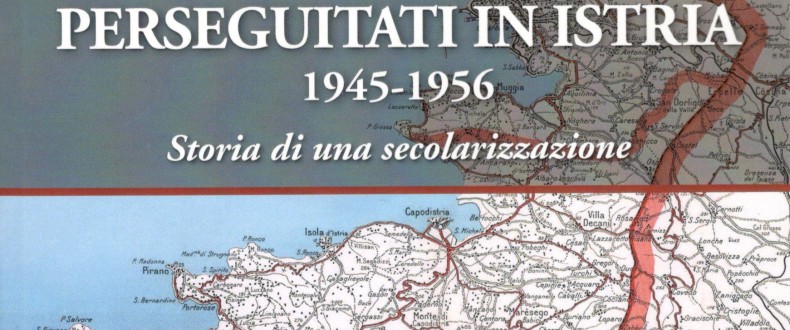
Undoubtedly favored by a greater number of vocations than the local Italian society and enriched by the operation of recovering the Old Slavonic liturgy in Glagolitic, the Slavic-speaking ecclesiastical hierarchy would later go through the ordeal of the First World War and the annexation to Italy, as well as the linguistic restrictions imposed by fascism. The approach of Titoist communism towards the church would prove to be much harsher and more repressive, as it had to be scaled down within the new communist state: Slovenian, Croatian and Italian priests would experience violence, oppression and even martyrdom in odium fidei. «Priests persecuted in Istria 1945-1956 History of a secularization» (July, Trieste 2017) by Pietro Zovatto focuses on a story that is part of the complex project of disarticulation of Julian-Dalmatian society by the nascent Tito regime.
A few years ago, the cases of Istrian priests Don Francesco Bonifacio and Don Miro Buleši, beatified after suffering martyrdom while carrying out their pastoral duties in the tumultuous post-war period, attracted the attention of the news. Don Angelo Tarticchio, on the other hand, is the first martyr, having been massacred during the first wave of mass killings following the power vacuum created by the political, military and institutional collapse of 8 September 1943: tortured, castrated and thrown into a sinkhole, when he was exhumed he had his head encircled by a crown of barbed wire. Reconstructing the story, Zovatto recalls the bishops of Pola Radossi, Fiume Camozzi and Zara Munzani, who also participated in the exodus that involved 90% of the Italian community, but above all the role of Antonio Santin. Bishop of Trieste and Capodistria, after having risen to the rank of defensor civitatis in the spring of 1945 characterized by the German military collapse and the 40 days of killings, deportations and Titoist violence in Venezia Giulia, he found himself managing a diocese crossed by the Morgan Line, established by the Belgrade agreement of 9 June 45 and which defined a Zone A under Anglo-American military administration (Trieste, Gorizia and Pola) and a Zone B under Yugoslav military administration (the rest of Venezia Giulia). In this latter region, a process of annexation to the reborn Yugoslavia had in fact begun, which envisaged the removal or elimination of points of reference for the birth of an opposition and in this sense the priests became a privileged target. Santin himself risked lynching when he went to Capodistria on 19 June 1947 on the occasion of the patronal feast of San Nazario, while his sermons from the Trieste pulpit, when they took on tones of denunciation of Tito's violence, unleashed further repressive measures against the clergy on the other side of the Morgan Line. Daring escapes of priests who ended up on the proscription lists of the Ozna (the Yugoslavian secret police), attacks on churchyards, processions of the faithful who defied the Yugoslavian authorities by demanding and obtaining the release of their priests from prison: not only Italian priests, but also Slovenian and Croatian ones were victims of this climate of terror.
Lorenzo Salimbeni
Source: Il Giornale d'Italia – February 25, 2018