Language
 English

Controversy over Gabriele d'Annunzio and Ronchi dei Legionari
Following the publication of the following article in the Trieste newspaper “Il Piccolo” on September 21, 2017, responses from patriotic associations and exiles were immediate.
Mesic agrees: Fiume's feat forgotten
The Croatian ambassador in Rome responded to the request of Barone of the ANPI: "Such anniversaries damage the friendly relations between our countries"
by Luca Perrino
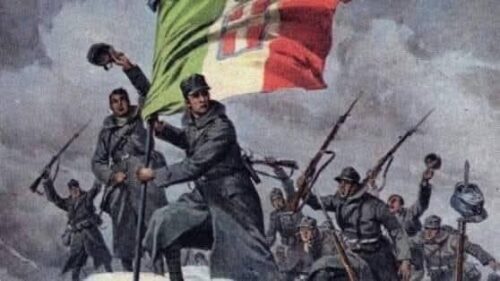
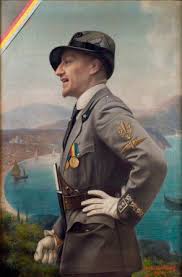
“A good 98 years of divisions, distinctions, even battles and controversies. The march on Fiume, the one that, on September 12, 1919, saw Gabriele D'Annunzio as its protagonist, is still a topic of discussion in Ronchi dei Legionari. Thus it is that Marco Barone, lawyer and historian, but also member of the board of directors of the Anpi, in a personal capacity wrote to the Croatian embassy in Rome and the embassy responded to him promptly. In the letter Barone, after a long introduction in which he recounts the facts, asked the ambassador, Jasen Mesic, to urge the intervention of the Republic of Croatia with the Italian authorities so that ceremonies and celebrations of the occupation march on Fiume no longer take place. But also that the figure of D'Annunzio no longer be considered an Italian "value", given his highly offensive and racist words as expressed towards the Croatian people.
The response to Barone goes in the direction that Barone himself wanted. "We share your opinion - it reads - that such anniversaries damage the atmosphere of friendly relations between our two countries and that celebrating them incites nationalistic feelings. The Embassy of the Republic of Croatia in Rome, for its part, will undertake everything possible within its competence, and we would equally appreciate your further commitment to this issue. We are sure that you, as a respected citizen of the Italian Republic, together with other fellow citizens, can, more than anyone else, contribute to changing this climate and to building even better good neighborly relations, especially in the multi-ethnic areas adjacent to the borders."
So the commitment is expected. All that remains is to wait for the next moves and what will happen on September 12th. Will the event promoted by the National League still take place? It is certain that, precisely on the occasion of the appointment a few days ago, the mayor Livio Vecchiet expressed the intention, in 2019, to commemorate the hundred years with an exhibition and a whole series of initiatives. And that the councilor for Culture, Mauro Benvenuto, expressed the desire to give greater visibility to the part of the antiquarium that houses many D'Annunzio artifacts. A museum that, recently, has been enriched with some documents made available by the committee for the historical-literary valorization of Gabriele D'Annunzio. These are, among other things, a flyer from December 14, 1920 made by D'Annunzio himself and addressed to Senator Attilio Hortis, then vice president of the Senate for the positions taken and a flyer printed on December 21, 1920 that expressly mentions Ronchi. Can there be coexistence or will it always be head-on confrontation?
"It was a nationalistic undertaking," Barone explains, "led by a warmongering person like D'Annunzio, and racist towards the Croatian people. The Ronchese community has always been generally opposed to paying homage to both D'Annunzio and that march. Suffice it to say that the monument that was built to commemorate and celebrate the military occupation of Fiume by Italy at the hands of D'Annunzio was built in the neighboring municipality of Monfalcone because the municipality of Ronchi dei Legionari did not give its availability given the fascist nature of that march and the partisan history. It is a totally disrespectful act towards the Republic of Croatia and the city of Fiume. A historical and political act," he concludes, "that certainly does not run in the direction of favoring relations between Italy and Croatia."
Barone then concludes by returning to the proposal to remove the suffix of the Legionaries from the name of the city. A proposal that, however, has never had any follow-up among local institutions and that continues in some ways to be a dream in someone's drawer"
Response from the Society of Fiume Studies:
Let he who is without sin cast the first stone!
Lawyer Barone should ask himself not so much about a historical fact that has given prestige to the Italian homeland however you look at it, but why it involved a high Croatian diplomat who had just taken office in Italy; and, furthermore, it would be more appropriate for Baroni to sensitize public opinion, as a representative of the ANPI of Monfalcone, on the end of the Monfalconesi, his fellow citizens imprisoned and made to disappear by the Yugo-communist regime of Tito after 1948.
Since Goli Otok (Bare Island) is in Croatia, the ANPI of Monfalcone could ask the new Ambassador Mesic for help in carrying out research on that concentration camp and finding out how many Monfalconesi never returned from there.
I answer again that D'Annunzio was anti-Croatian but in a political and not racial sense. He was against the Croats who wanted the Serbian-Yugoslavian state and who wanted Fiume, because this was instead populated by Italians with a majority, just read the censuses of 1918. D'Annunzio accepted the invitation of the Italian Fiume people left alone to themselves in those dramatic moments.
Never forget that, although a convinced nationalist, D'Annunzio founded in Fiume the League of Oppressed Peoples, in which also participated the Croats, the Montenegrins as well as the Egyptians, the Irish etc. who did not want to pass after the First World War under the scepter of the Serbian kings. He promulgated a modern constitution following the creation of the Italian Regency of Carnaro, composed with the revolutionary trade unionist Alceste De Ambris, which stated among other things that in the submunicipalities of Fiume with a Croatian majority it was allowed to study in that language. D'Annunzio's work was very complex and unfortunately individual sentences of his are exploited but in substance the analysis is more complex and should be left to historians.
Many years have passed since those events and we are surprised to read on the web and in the “Piccolo” such lapidary comments about D'Annunzio. It was the era of heated and opposing nationalisms and all the European peoples were involved: Italians, French, Croatians, Slovenians, Russians, Germans, etc. etc. Who was it in 1914 in Sarajevo to throw the first stone, I think a certain Serbian nationalist Gavrilo Pincip... and who was it who declared war on little Serbia, Austria-Hungary, and who was fighting in the Austro-Hungarian ranks, the cream of the Croatian regiments? In short, it is really a case of saying "let he who is without sin cast the first stone!".
We need to historicize and not exploit history for "divisive" purposes, even more so since Italy and Croatia have long shared the European Union project, where we need to develop good culture for the present and the future. Fiume-Rijeka, European capital of culture in 2020, will be able to provide the right stimuli for this change of trend, I am sure.
Dr. Marino Micich
Director of the Historical Archive-Museum of Rijeka
Response from the National Association of Venezia Giulia and Dalmatia:
D'Annunzio in Fiume and Ronchi dei Legionari: indelible pages of history of the eastern border
After almost a century, Gabriele d'Annunzio's enterprise in Fiume, a city at the time inhabited by a majority of Italians, still arouses controversy instead of representing an extremely complex page of history, to be calmly analyzed.
There was the military uprising of September 12, 1919, which launched the march toward the Carnaro from the town of Ronchi, but also the plebiscite in which the people of Fiume, as early as October 30, 1918, had demanded annexation to the Kingdom of Italy based on the principle of self-determination. There were the rallies and the gestures of D'Annunzio's rhetoric, honed in the well-known days of May 1915 and destined to be opportunistically imitated and exaggerated by Benito Mussolini during the twenty-year period. But above all, there was the absolutely avant-garde libertarian content of the Carnaro Charter, developed by the revolutionary trade unionist Alceste De Ambris and formally drafted by the Abruzzese poet, who on this occasion once again displayed the artistic and literary talents that had brought him fame in the pre-war period. The messages from the "Commander" of Fiume included invectives directed at the Kingdom of Serbs, Croats, and Slovenes, but they were devoid of racist overtones, as he also had contacts with Croatian, Montenegrin, Kosovar, and Macedonian separatists who wanted to secede from a state in which the Serbian component appeared hegemonic and authoritarian. As in his interventionist speeches, from Fiume, too, d'Annunzio extolled the glories of Italy, but his diverse entourage included collaborators who promoted the League of Oppressed Peoples, aimed at the European peoples and colonies who had suffered unjust border impositions under the Peace Treaties, or the failure to honor promises of autonomy and independence.
All this is probably still unknown to Marco Barone (who as a lawyer is certainly well versed in the disciplines of law but perhaps not so much in the historical and literary ones) who periodically proposes the abolition of the toponym "dei Legionari" from the locality of Ronchi (it does not seem that either the Municipal Council or petitions from residents have yet effectively supported this which appears to be a rancorous personal battle and little felt by the community) and presents an arsenal of arguments based on the definition of Gabriele d'Annunzio as a precursor and "John the Baptist of fascism" now obsolete and surpassed by scientifically established historiography, and by official literary criticism, from Marxist to the most recent, careful instead to define the dialectical and gradually more conflictual relationship between the Poet and the Duce, until reaching the definitive isolation of the former.
It is surprising that the new Ambassador of the Republic of Croatia to Italy, recently installed in place of Prof. Damir Grubiša, who, as a cultured man, has shown himself to be sensitive and attentive in addressing the issues of the eastern Italian border during his mandate, has paid so little diplomatic attention to such complaints, which go as far as to ask that pressure be applied so that the usual annual commemoration of September 12, which commemorates the start of the expedition of d'Annunzio and his deserters from the Royal Army, does not take place.
Today, no one dares to discuss Fiume/Rijeka's membership in Croatia, but many patriotic, military, and exile associations from Istria, Fiume, and Dalmatia simply wish to recall the period in which, thanks to the work of Gabriele d'Annunzio (in this case a warrior poet, not a warmonger, which is a completely different thing, but also a playwright, a refined poet, and a novelist of European fame), the capital of Kvarner embarked on the complex international political journey that would lead to its internationally recognized membership in Italy from 1924 to 1947.
Donatella Schurzel
National Vice President of the National Association of Venezia Giulia and Dalmatia
Response from the National League:
A serious case of “revisionism”
Marco Barone, a well-known exponent of the far left in the Isonzo area, has suffered a serious accident.
His frenzied anti-D'Annunzio campaign (in which he involved the post-Titoist Mesic) in fact appears to have completely forgotten a fundamental fact: the explicitly positive judgement on the Fiume enterprise formulated by two sacred monsters of communist history and thought, Antonio Gramsci and Vladimir Ulianov Lenin.
Comrade Barone, to pretend to now disown comrades Gramsci and Lenin is, to say the least, a very serious act of "historical revisionism".
Serious and convinced self-criticism is urgently needed as soon as possible.
Paolo Sardos Albertini
President of the National League