Language
 English

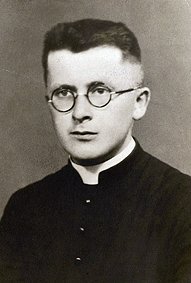
How many priests and nuns ended up in the foibe?
Father Antonio Curcio, parish priest of Bencovazzo (Dalmatia), Father Angelo Tarticchio, parish priest of Villa di Rovigno, Father Giovanni Manzoni, parish priest of Rava (Sebenico), Father Ladislao Piscani, vicar of Circona (Go), Father Miroslavo Bullesich, parish priest of Mompaderno and vice director of the Seminary of Pisino, six nuns disappeared from a convent in Fiume and 76 religious of whom nothing more has been heard, Father Francesco Bonifacio and Father Miro Bulesic, both killed in “odium fidei” are some of the numerous priests and nuns who, from 1943 to 1948, lost their lives thrown into the sinkholes together with an unspecified number of people, guilty of being Italian.
Some say that 12.000 people were thrown into the foibe, some say 15.000 and some even 30.000. The brutal murders perpetrated by the militias of the communist leader Josip Broz Tito have never been recorded, but traces of some involving priests and religious people remain. Among these are those of Don Raffaele Busi Dogali and Don Giovanni Pettenghi, stabbed to death on 15 June and 2 August respectively, in Dalmatia, Don Antonio Pisic, murdered on 31 January 1945, Don Lodovico Sluga, killed together with 12 other people, the seminarian Erminio Pavinci from Chersano (Fianona) killed together with his father Matteo, the parish priest of Golazzo (diocese of Fiume), taken away by the Titoites on 14 August 1947 while he was accompanying a funeral.
A 2004 state law established the Day of Remembrance to renew memory and pay homage to the victims of the massacres that occurred between 1943 and 1948 in the lands of the so-called "eastern border". It is one of the darkest pages in the history of our country. More than seventy years have passed and the foibe and the foibati are still, for a part of Italian society, a denied massacre, a tragedy often used to create heated controversy or exploitation. Foibe is a term that in the collective imagination is compared to a disturbing phenomenon whose contours, reasons and above all the main perpetrators still tend to remain imprecise.
In a strip of land, today mostly enclosed within the borders of Croatia, from 1943 to 1946, thousands of Italian citizens were eliminated, killed for reasons that were more ethnic than political by Marshal Tito's Yugoslavian army. Their bodies, thrown into karst cavities, the foibe, also suffered the indignity of being deprived of a dignified burial. There were also cases of living people tied to a corpse and thrown into gorges 30/40/50 meters deep. Human brutality sometimes reaches horrifying depths.
The Slavic invaders tried to strike first of all those who belonged to the Italian ruling class or who constituted points of reference, aggregation and civic order: intellectuals, entrepreneurs, teachers, doctors, military and ecclesiastics. The hatred towards the latter also derived from the ideological convictions of the Yugoslav partisans, Tito being at the time a close ally of Stalin.
After the total annihilation of every Italian civil and military apparatus in Venezia Giulia and Dalmatia, only bishops and priests remained in place capable of representing the Italian population, which was very religious.
Among the causes that led to the Exodus of approximately 300 thousand Italians from Venezia Giulia, an important role was played by religious persecution, which was carried out with the specific intent of pushing the Italians to leave.
Many priests faced the difficult and dangerous situation that had arisen with courage and determination. Men of peace and harmony did their utmost to help everyone (Italians and Slavs), to help friends and enemies, to give a Christian burial to all those who were victims of hatred and the most ferocious revenge. Many of those courageous priests also tried to track down the people killed to give them a worthy burial.
Among the religious figures who hit the headlines and remained in the hearts of the Julian-Dalmatian exiles, we can mention Monsignor Antonio Santin, who was attacked in Capodistria by a crowd of enraged Titoists under the indifferent gaze of the People's Guards.
Father Francesco Bonifacio and Don Miro Bulesic, who died in “odium fidei”. The first was surprised on the way home by four popular guards; beaten to death, his remains were never found (it is thought they were thrown into sinkholes). The second, parish priest of Mompaderno and vice-director of the seminary of Pisino, was murdered on August 24, 1947 after the confirmation of 237 boys in the church of Lanischie, also in Istria. At the end of the liturgy, Don Miroslav and Monsignor Jacob Ukmar were attacked by communist militants who wanted to prevent the celebration of the confirmations. The Croatian militia broke into the rectory where they slit the throat of Don Miroslav and beat Monsignor Ukmar until he bled.
Don Angelo Tarticchio, originally from Gallesano d'Istria, was arrested by communist partisans at the age of 36, beaten and insulted along with other fellow villagers, after horrible torture he was thrown into the Gallignana sinkhole. When his body was exhumed he was found completely naked with a crown of thorns stuck in his head.
These are some of the events that struck those lands and which saw priests and nuns oppressed by Tito's militias both for their faith and because they were defenders and leaders of defenceless populations.
Federici Study Center – 09/02/2021
Source: History On The Net