Language
 English

Finding Yourself on Remembrance Day
The journey of a young woman in today's Istria, looking for her great-grandfather thrown into the sinkhole in '43, his roots and the reasons for a useless, colorless and homeless brutality
by Lucia Bellaspiga – 09/02/2021
Source: occur
The young woman who leaves for Istria in search of the sinkhole into which Romeo Martini, a shopkeeper in Santa Domenica di Albona and owner of thirteen houses, was thrown in 1943, is someone who has all the right credentials: in addition to her maternal grandmother who was a partisan in Tuscany, "I also had a membership card for the Young Communists, I smoked Diana Blu, I read "il manifesto", I listened to the songs of the little groups formed in the social centers that urged people to gouge out the eyes of fascists". But the story of her father's family, "a mysterious story that no one dared to talk about", had never stopped digging into her, a void that not even ten years of analysis will ever fill. So she secretly read in the rare pages of some newspaper "stories that were just starting to be talked about", with the eternal skirmish between those who told of people killed by Tito's communists "just because they were Italian" and those who objected "also because they were fascists". Events buried under decades of voluntary oblivion, and the only ones who talked about them «were the dumbest ones in my high school», those who in reality «knew nothing» and «seemed ready to leave to take back Fiume, when they had never been beyond the border of the province of Parma»… This is how she, the left-wing girl, feels a sense of violated intimacy and discovers a sense of belonging within herself: that story is hers, Romeo Martini thrown by Tito's followers into the Vines sinkhole is her great-grandfather… Meanwhile «at the Young Communists' club they said that the story of the sinkholes was “a revisionist operation aimed at re-evaluating fascism”. On one of the old wooden chairs a hand had written: One, ten, one hundred sinkholes!».
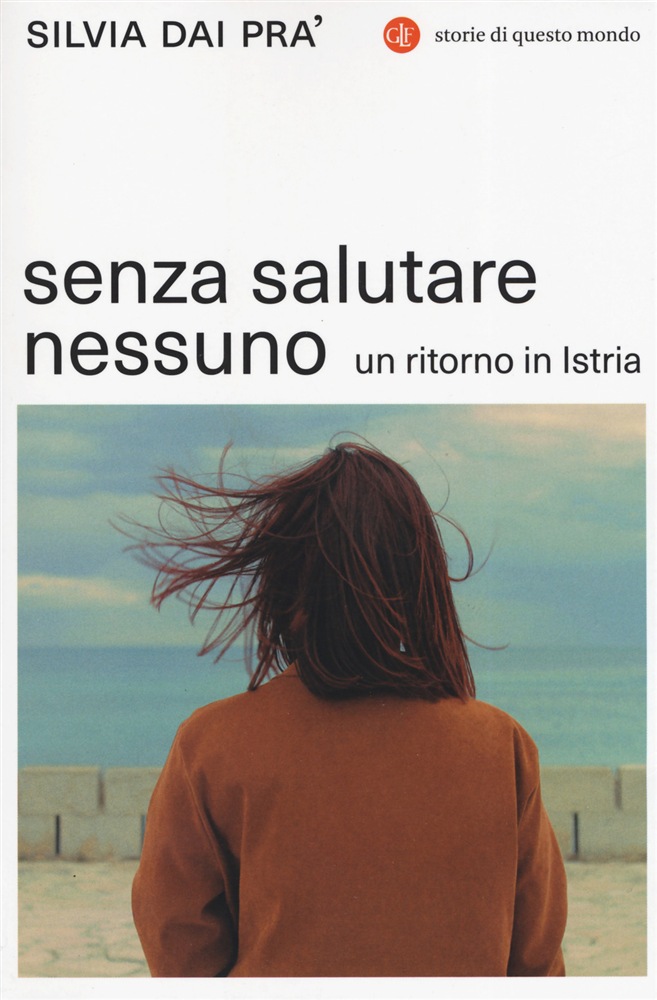
Without saying goodbye to anyone , subtitled A return to Istria by Silvia Dai Prà, published by Laterza (160 pages, 16 euros), is the book that was missing. A sort of novel-reportage free from ideologies and sincere beyond all limits in pursuing the author's sole objective: to understand something beyond the factions, to unravel the events that occurred many years ago in that region of Italy (then Yugoslavia, now Croatia, once Austria-Hungary, and before that the Republic of Venice) where everything has been fluid for centuries, where people do not move and yet change nation because borders shift, and with them, surnames change (in the cemetery, Rauni rests next to Raunic, Mrs. Nacinovi with her daughter Nacinovich, Mr. Verbano next to his brother Verbanac), the names of villages change (Santa Domenica di Albona was called Sveta Nedelja after September 8, 43, and Nedešcina under Yugoslavia, when "communism swept away the weight of faith from toponymy"), and the destinies of men change. That in the end they can have Slavic surnames but Italian sentiments and vice versa, because the original spellings are lost in the mists of time and no one knows what they were like in the beginning.
It will be up to Silvia, born in 1977, to return to Santa Domenica di Albona to fill the voids that have already devoured the psyche of her father and her grandmother Iole, Romeo's daughter: why had her great-grandfather fallen into a sinkhole at the age of 39, tied with wire to the elbow of his brother-in-law Giacinto, neither of them ever being fascists? Had anyone seen it? And what was the accusation? Wearing tourist flip-flops on her feet, with her husband and little girl in tow, Silvia travels back to the heart of Istria, asks, investigates, listens, and in the end finds everything: the house that belonged to her grandmother, who lives there today, the neighbors from back then who whisper wary memories, the gravestones in the cemeteries (how many things gravestones tell...), the steles with the red star on top, which in all the villages of Istria remember the victims of Nazi-fascist terror, but call heroes those who committed massacres in the name of Tito. He also finds the sinkhole and stops on the edge, his feet where Romeo placed his before entering the abyss, perhaps alive, perhaps with a bullet in his head. It is precisely the piles of bullets that still tell us today that the sinkholes were the most ferocious instrument of extermination, certainly not a burial place.
There is no rhetoric and no prejudice in the pages of Silvia Dai Prà, who with self-irony mitigates the severity of the theme and in encountering the characters drags the reader into the vortex of her emotions. The Istria of today's tourists, the paradise of sea, pine forests and vineyards, clashes with a past that is still present there in the embarrassed silences of those who struggle to remember bad things, "on both sides". It is in that Istria that the author puts the pieces back together: Romeo, like the others who died with him, had done nothing, but he was Italian and then he was wealthy, in his grocery store he gave credit to those who could not pay. A generous man until shortly before, an "enemy of the people" after the "upheaval". Along with him, many others were arrested, Italians but not only, people with fascist membership cards but not only, the rich but also the poor, even the workers of the Arsa mine, pregnant women and minors, even Maria Cnappi, a midwife guilty of the botched birth of a Slavic woman. Even Lelio Zustovich, secretary of the Communist Party of Albona, already confined by fascism to Lipari, was rounded up by the Croatian Communists because he was Italian, "his body was never found".
There are still those who remember the torturer, Mate Stemberga, so sadistic that his own people called him the monster. He is the man who points a gun to the temple of a woman whose two children have just been killed and forces her to say "I am happy that my children are dead". The Italian partisans protest, they cannot take orders from a criminal: they will be massacred among the "Italian fascists". The stele of the "partisans fallen for the freedom of Istria" is dedicated to comrade Stemberga, eliminated by his own people. He is Romeo's murderer, and Silvia sits in front of her house, talking to her grandchildren. They look into each other's eyes. Some have the dead in the Foiba, others have them in Dachau. This was Istria, whose civilian population after September 8 was caught between two fires, Nazis and Communists. On October 16, 43, thanks to the return of the Germans, the firefighters of Pola descended into the Vines sinkhole and recovered the bodies, including Romeo and Giacinto still tied with wire, and the midwife, the pregnant women, the children (on the same October 16, the Germans deported 1.023 people from the ghetto of Rome, 16 of whom would return…).
If Nazism exposed its corpses in a sort of pornography of death, Communism made them disappear: was it mercy or cowardice?, the author asks. «Perhaps Communism hid its dead because they were not foreseen at the root as in Nazi-Fascism», because Communism spoke of love and peace, in theory… «but what peace can there be when dismembered bodies of midwives and pregnant women re-emerge from the earth?». How can we «contextualize» the fate of Albina Radecchi and her sisters, aged 17, 19 and 21, used for days as sex slaves by Tito's partisans and then thrown into a sinkhole, the eldest eight months pregnant?
After Romeo's death, Silvia's family fled with the exodus, thinking "we'll come back". But only Romeo remained: born Martincich, dead Martini, buried without a name in the tomb of today's Martincic. This is the story of a people whose pain "is a hole that many tried to take possession of but that few really know"
Silvia Dai Prà, Without Saying Goodbye to Anyone. A Return to Istria , Laterza, Rome-Bari 2019.