Language
 English

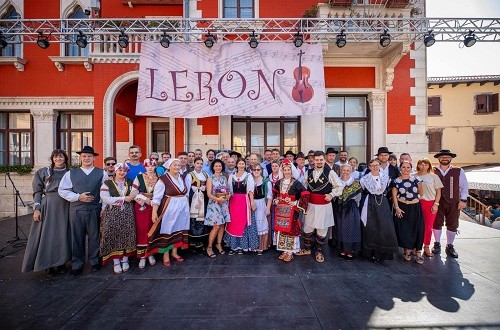
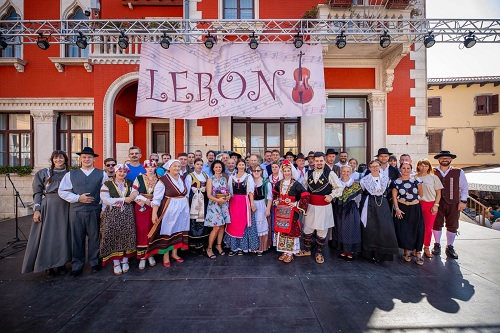
The 21st International Folklore Festival in Dignano has concluded
This year too, the jury had no easy task in choosing the winner of this 21st edition of Leron. Confirmation comes from Lorella Limoncin Toth, superintendent of cultural heritage for the Istrian Region, who joined the ethnologist, Lidija Nikočević, and the musicologist and composer Massimo Brajković in the judging commission.
“It wasn’t easy, the six groups were all good, coming from different cultures and traditions and therefore it wasn’t easy to choose the best one,” Limoncin Toth told us, who then summarized the jury’s verdict: “The award for the best choreography and traditional dance went to the Greek folk group from Thessaloniki, the award for the best folk instruments and musical performance to the Polish ensemble Banda Burek from Wišniowa, while the prize for the originality and philological accuracy of the costumes went to the Posagnot from the province of Treviso”.
The main prize, the one that all three categories have in common, went to the “Bunjevačko kolo” from Subotica, an association that brings together the Croatian minority in Vojvodina. “Young, wild, with very refined costumes, each one different from the other, it was truly a spectacle to see them”, explains Limoncin Toth. Marin Jaramazović, who leads the group from Serbia, is more than satisfied. “Here in Vojvodina, home to about fifteen different ethnic groups, the folklore tradition is very rich”, says Jerazimović, satisfied and proud of the Vojnjan recognition. “Vojodina and Istria are very similar in mentality, openness, multi-ethnicity, multilingualism and much more”, says the leader of the group of young people who, with their dances, friendliness and vivacity, thrilled the jury and the public. “Representing a minority, an ethnic group gives us greater responsibility,” Jarazimović told us, who leads only one of the groups of “Bunjevačko kolo”, a society founded in Subotica in 1970 and which brings together the so-called “bunjevci”, a branch of the Croatian ethnic group present in the Serbian-Hungarian border area and with a presence of approximately 20 thousand members in Vojvodina.
Lionella Pausin Acquavita
Source: Radio Capodistria – 27/08/2023