Language
 English

SOS for Diocletian's Palace in Split
Underground to consolidate, interventions are also needed on the walls. The Municipality: «We don't have money for restoration»
by Andrea Marsanich – March 13, 2018
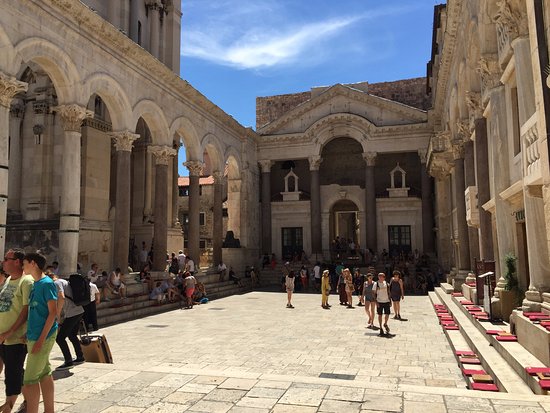
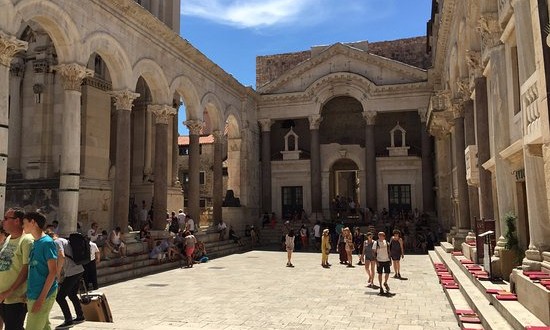
SPLIT. From a touristic point of view, Split is the strongest of the big cities in Croatia, with thousands of holidaymakers who flock every day in the high season to the historic centre, the one surrounded by the walls of Diocletian's Palace, built 1.700 years ago. They are tourists attracted by thousands of years of history, by monuments, palaces, towers and bastions. A heritage that unfortunately does not receive the care it needs, and that causes risks and dangers for holidaymakers and residents themselves.
A couple of months ago, Radoslav Buzančić, director of the Split Institute for Conservation, stated that the underground areas of Diocletian's Palace should be closed because visitors risk their safety as soon as they set foot there. There could be collapses, and therefore the underground areas need to be strengthened to ensure everyone can sleep soundly. The result of Buzančić's alarm? The underground areas have remained open because they are a classic cash cow; they bring in approximately 8 million kuna (1.75 million euros) from ticket sales for the Dalmatian capital.
In return, however, the Municipality does not allocate sufficient funds for the restoration of the underground areas. The massive Porta Aurea of the historic building is also in deplorable conditions, or almost, while scaffolding has been positioned for the restoration of the roof of the small church of the Madonna del Campanile. In the western part of the temple walls, the damage caused by time and atmospheric agents is clearly visible. Some stones are crumbling and there are many fears related to a sudden collapse.
Goran Nikšić, head of Municipal Services for Split's historic core, was unperturbed: "Time inexorably destroys stone, and our restoration efforts have increased in recent decades. Currently, the financial situation is as it is; we lack the resources for restoration work. As soon as we have them, we will resolve the situation, perhaps using artificial stone. The greatest pressure is on the corners of the buildings, with stone blocks that can crack after centuries or even millennia. Unfortunately, I repeat, we don't have enough money to proceed with the repairs."
In the city of San Doimo – we are talking about its oldest part – the greatest dangers concern the roof tiles, fixed in a “dancing” way. With every strong wind of bora or sirocco, there is a fear that some of these tiles will fall, seriously injuring (or even worse) the unfortunate passer-by on duty. The Banovina (former Government Palace), the building that houses the municipal administration, does not worry much about repairing the roofs, unlike what the municipal management of Ragusa (Dubrovnik) has done and is doing. Aerial photos of the two Dalmatian cities testify to the difference in behavior regarding the roofs located in the historic centers.
The situation along the passage that runs alongside the western walls of the Cornaro bastion, built by the Serenissima, is also at risk. It is in a pitiful state, and proof of this is the fact that signs have been posted indicating the danger of collapse. At the same time, the capital Zagreb is silent and does little or nothing for this Mediterranean gem, which needs financial support to continue to be magnetic, but without dangers for those who pass through its center.
Source: Il Piccolo