Language
 English

The Luxardo tradition lives on in the Euganean Hills
On the portal «I parchi letterari» Don Giulio Osto retraces the history and origins of the famous factory owned by the exiled Dalmatian family.
On the portal I parchi letterari , at the web address www.parchiletterari.com/contributi-scheda.php?ID=04785 , a text by Don Giulio Osto, priest of the Diocese of Padua, professor of Theology at the Theological Faculty of Triveneto and at the Higher Institute of Religious Sciences of Padua, of which he is also the secretary, was recently published. He traces the history of the distillery of the Luxardo family, exiled from Zara and which we reproduce here.
A «Zara Street»
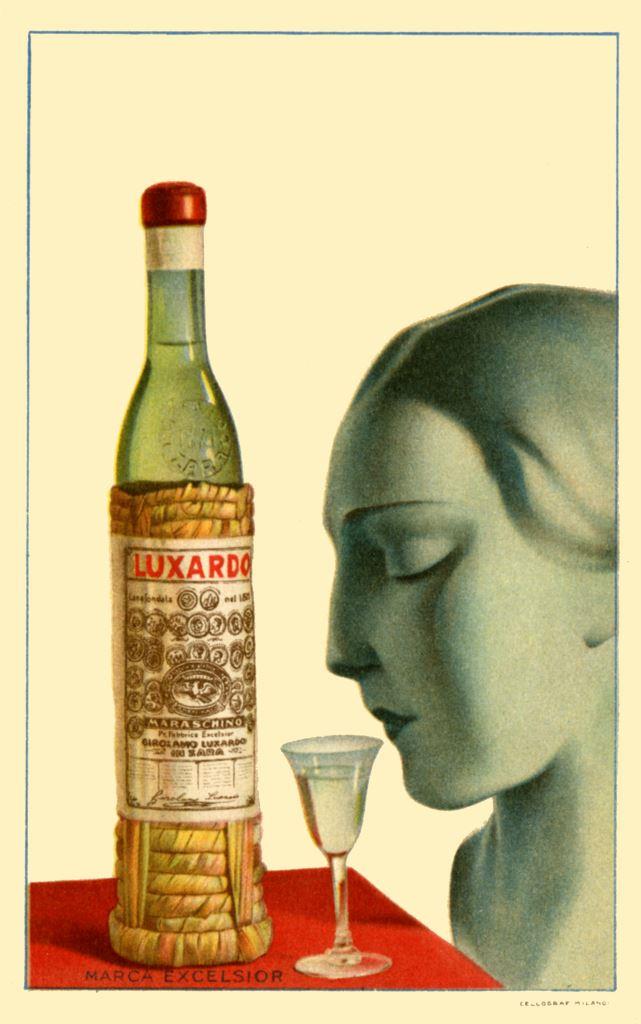
The attentive traveler walking through Torreglia, near Abano Terme, inside the Francesco Petrarca and Euganean Hills Literary Park, comes across a street with a name that is a bit unusual for the Euganean environment. Just beyond the Antica Trattoria Ballotta, on the Via Romana, on the right there is, in fact, Via Zara. Taking this street you can see the Luxardo Distillery on the left. Just take a bottle of the famous Maraschino to find the most important clue right on the historic label: on the left it says: Zara 1821 and, on the right, 1947 Torreglia. Two places, two dates and a long history that intertwines Dalmatia, that is, present-day Croatia, where the beautiful city of Zara stands, and the Euganean town of Torreglia.
From Dalmatia to Torreglia
During the Second World War, at the end of 1943, the Luxardo company in Zadar was bombed and completely destroyed. It was one of the most prestigious industries, first of the Kingdom of Dalmatia within the Austro-Hungarian Empire (1797-1913), then of the Kingdom of Italy (1918-1939), fortunately surviving the Great War. In 1944, after the retreat of Italian and German troops from Dalmatia, Tito's communist partisans arrived in Zadar.
One of the most tragic effects was the fate of the inhabitants who were protagonists of the Istrian-Julian-Dalmatian exile, unfortunately still little known in its complexity. Many people were killed, many taken to labor camps and others were made to disappear into the foibe, that is, enormous cavities in the mountains.
The rebirth of Maraschino
In 1944 Pietro Luxardo and his brother Niccolò with his wife were killed, drowned in the sea of Zara. The only surviving brother, Giorgio Luxardo, exiled in Italy, after analysis and evaluations, had the courage to try to start over and, together with Niccolò III, now of the fifth generation of the family, began to evaluate which could be a favorable territory for the cultivation of marasca plants, a fruit very similar to cherries, but with a more acidic and bitter flavor.
In fact, the Maraschino marasche liqueur was created from an exclusive recipe of the Luxardo family.
The addition of the writing 1947 Torreglia, on each bottle, speaks of the strength of a rebirth and instills hope and confidence even today.
Along with the famous liqueur, ideal on fruit and ice cream, Luxardo produces delicious jams and other spirits such as the famous Sangue Morlacco and a special grappa which, precisely because it is produced a few kilometres from Arquà Petrarca, takes the name of Grappa del Petrarca ( www.luxardo.it ).
Remembrance Day
The painful events of the Istrian-Julian-Dalmatian exile became an occasion for national awareness through the establishment, only in 2004, of the Day of Remembrance, organized primarily by the National Association of Venezia Giulia and Dalmatia. The date of the celebration is February 10th because in 1947, the Peace Treaty was signed that assigned Istria and much of Venezia Giulia to the newly formed Yugoslavia, with the consequence that those who had always been Italian suddenly became foreigners, simply from the other side of the Adriatic ( www.arcipelagoadriatico.it ).
The beauty of the Euganean landscape, therefore, also holds memories of very sad and painful events that deserve the responsibility of knowledge and the courage of memory.
Roberto Palisca – 23/10/2021
Source: The Voice of the People