Language
 English

On the beach of Pola there was a real massacre
An explosion that seems to come from the bowels of the earth lifts the city, shattering shop windows and shop windows for miles around, while an obscene mushroom of smoke darkens the sky…
By Lucia Bellaspiga – August 18, 2020 – Source: Avvenire
An explosion that seems to come from the bowels of the earth lifts the city, shattering shop windows and storefronts for miles, while an obscene mushroom of smoke darkens the sky on a sunny August afternoon. Dozens of bodies are thrown into the sea and hang from the branches of the pine forest, many unrecognizable, some pulverized. There are over a hundred, but only 64 will be able to be given names and surnames, for the others we will rely on doctors: they will be the ones to count the dead by putting together the pieces and counting the limbs. A third are children…
This isn't the Beirut gutted on August 4, 2020, even if the scene is identical: it's Italy, Vergarolla, the beach at Pula . And it's August 18, 1946 , 74 years ago today. The war has long been over, Italy has been a Republic for months, it's the same Italy as today. And Pula is still part of it, even if Marshal Tito's ambitions aren't to give up this very Italian city. On the beach, twenty-eight large war devices, now completely harmless, have lain for years: anti-submarine bombs and torpedo warheads long since defused by bomb disposal squads under Anglo-American control. "As children, we always played astride them," says Claudio Bronzin, then 12, "our mothers used to hang their towels out to dry." But that day, unknown hands reactivated the devices to detonate in the crowd: Vergarolla was therefore the first terrorist attack of the Italian Republic and the bloodiest, more bloody than the Bologna train station or Piazza Fontana . The first in a long series of massacres that remained unaccounted for and unjustified. The only one, however, erased from memory: never a crown from a President of the Republic, never a line in the history books.
Why? Let's rewind the tape.
In those very days in Paris the great powers that won the Second World War were deciding the fate of Pola and redrawing the eastern Adriatic borders: would Pola be abandoned in the hands of the Yugoslav dictator or, like Trieste and Gorizia, would it be saved and remain Italian? The population was optimistic or at least hoped for the right to self-determination, demonstrations multiplied, and even on that Sunday in August thousands of Polesani crowded the beach for a patriotic sports competition: they wanted to reiterate their clear desire to remain Italy. Only three days earlier, on August 15, the crowd had gathered inside the Roman Arena draped in Tricolors in what today we would call a flash mob, to sing Verdi's “Va' pensiero”… But hopes and ideals disintegrated on the beach of Vergarolla and the exodus suddenly seemed the only possibility of salvation.
Livio Rupillo also remembers well what happened that day, immediately after lunch on the beach: "I was six years old, playing in the sand with my mother. Nothing was found of her, just a finger with a wedding ring." His grandfather, a shoemaker, and his uncle had already been thrown into the Foiba. Then, in Vergarolla , his mother was killed, but also his four-year-old friend Fulvio, the neighbors, his entire world: "For years, disgust obsessed me. Until then, I loved seagulls, but that day I saw them dive into the bloody debris in the sea, into the trees. For a six-year-old, it was a shock," he recounted in the recent documentary L'ultima spiaggia – Pola tra la strage di Vergarolla e l'esodo by director Alessandro Quadretti, produced thanks to the financial support of the Libero Comune di Pola in Esilio (Aipi-Lcpe). Instead, little Giuseppe Berdini and his friends preferred to see the races more closely, which is why they were aboard six boats, in the open sea: «First we heard a shot, immediately after there was an explosion, and pieces of human beings flew into the boat… Our loved ones were on the shore, at that moment we lost them all».
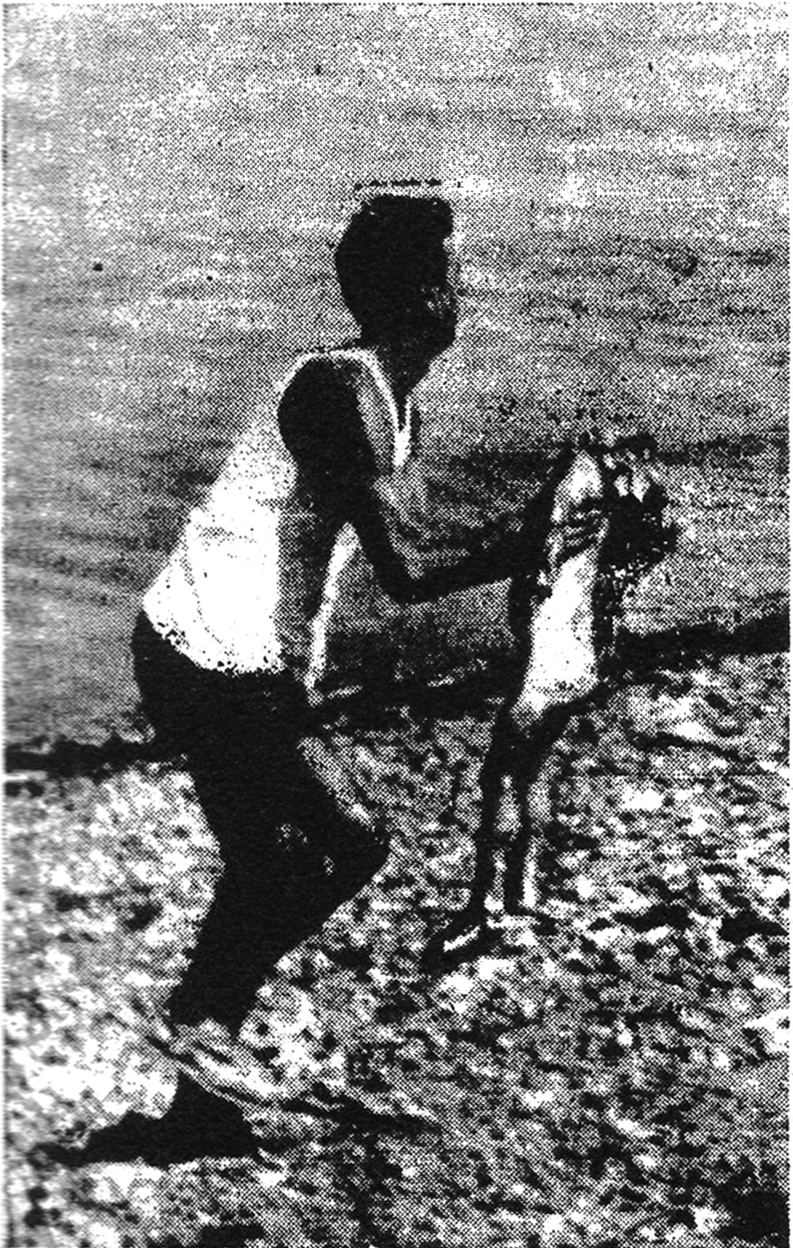
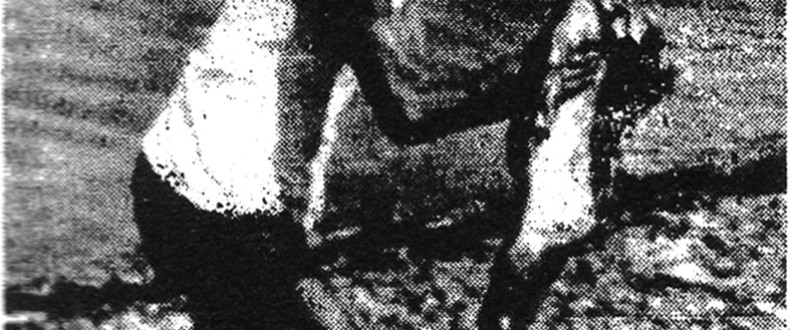
Many people testify to this by that initial “shot”, in reality the trigger that made the twenty-eight devices explode. The massacre caused a very strong impression, the press showed horrendous images (the photo of the decapitated child, picked up by a rescuer, is very well known), the Allies immediately opened an investigation and the investigations, coordinated by the British police of Scotland Yard, easily ascertained that the attack was malicious, against the theory supported by Yugoslavian circles that spoke of an “accident”: the devices could not have exploded at all, they had been reactivated on purpose with the help of timed detonators. Yet the massacre soon fell into silence and Lino Vivoda, one of the victims of which was his little brother, explains why: “Tito was then the necessary counterweight to the other communism, that of Stalin, for this reason he was flattered by the Allies and the West, including Italy. Reasons of State undermined justice and the dead of Vergarolla died a second time”. On the other hand, the context in which the attack takes place demonstrates the escalation of violent actions that prepared it, two examples among many are enough: two months earlier, in June 46, pro-Yugoslav militants stopped the Giro d'Italia and shot at the civil police, while the Sunday before the massacre a bomb misfired on the beach of Trieste during a rowing race, it would have been another massacre... for which we would have to wait only a few days. From the archives of London a document of the time attests to the "expressed will of the Yugoslavs to boycott any Italian event, even sporting": Pola must empty, at all costs the city must become Slavic.
In short, Vergarolla is not only the crossroads of the emerging post-war global scenarios, but also the training ground for the now imminent Cold War, as well as the harbinger of the Italian massacres of the following decades: it is too important a chapter to be left unsaid, yet no one is talking about it today. "This is why we have long been calling for the Parliamentary Commission on Massacres to finally address the Vergarolla tragedy , as it does with all other massacres in Italian history, and shed light on what happened," says Tito Sidari, president of AIPI-LCPE (Association of Italians of Pula and Istria – Free Municipality of Pula in Exile). Numerous survivors are still alive, with their clear memories: if not now, when? Furthermore, in recent years, two young historians have delved into secret documents held in archives around the world: William Klinger, Italy's leading Tito scholar, visited those in Belgrade, while Gaetano Dato consulted those in Zagreb, London, Washington, and Rome. "The more years pass, the more difficult it will be to determine the facts," Sidari continues, "but in the meantime, Italy must officially recognize Vergarolla as the first terrorist attack in our Republic. Then we will investigate those responsible, but let's at least begin to remember that it happened, as we do on the anniversaries of so many other massacres, even if they go unpunished." The same request comes from Federesuli and the Committee of the Families of the Victims of the Julian, Istrian, Rijeka, and Dalmatian Regions: "Vergarolla is only the first of many unpunished massacres in Italy, but it is the only one consigned to oblivion. As is the case with the anniversaries of the others, let us at least commemorate the memory of the dead and the unrelenting pain of our families."
A fundamental contribution to the reconstruction of the facts came in 2016 from the pages of Avvenire , which on the seventieth anniversary of Vergarolla collected for the first time the testimony of a Polesine exile in Australia : “My mother never stopped confiding in me throughout her life the story of her brother, my uncle Antonio Riboni, who died at the age of 33 because he could no longer bear the weight of his conscience…”, Claudio Perucich told us, who left Pola at the age of seven in 1949, two years after the massive exodus of Italians that emptied the city in 1947, leaving it to the Yugoslavs. "My uncle had socialist ideals," he too was a member of that youth who, for communist ideology, sided with Tito's partisans, "but that didn't mean he was willing to betray Italy and advocate the annexation of Istria and Dalmatia to Yugoslavia, unlike other Italians obedient to Togliatti." On the afternoon of the massacre, Uncle Antonio was also in Vergarolla for a swim. When he saw such a crowd sitting around the mines, he suggested to his friends that they move away from there, saving their lives... "My uncle knew most of the more than one hundred people who were killed; they were all our people, and this devastated him inside. He wanted to know, he wanted to understand who had done it, if his fellow political believers really had something to do with it, so he began to investigate his circles, since he was connected to the pro-Tito command in Pola..."
Precisely because of these ties, and for having strangely advised his friends to stay away from the devices despite everyone knowing they had been defused, he himself was placed on the suspect list of the Allied military government that had opened the investigation. But "my uncle, hidden from his party comrades, continued to investigate until he obtained the truth he was seeking, and what he learned left him devastated," his nephew revealed to us. "It was precisely them, his ideological comrades. Even though he was innocent, he felt partly responsible and lost the will to live..." His conscience failed him. Before hanging himself, he revealed everything to his sister, warning her not to tell anyone what he had discovered, under penalty of death threats for the entire family, "even though those ideological comrades of his had been his friends since school." In short, "the instigators of Vergarolla were members of the Titoist hierarchy present in Pola in the immediate post-war period. And among them, unfortunately, also the names of old Italian Polesani, allied with Tito for communist ideology", Perucich explained to Avvenire . "After seventy years, I too have finally freed myself of a burden that I could no longer bear".
Also today, like every year, in the Cathedral of Pula, the relatives of the victims and a representation of Italian exiles and those who remained gathered for the Mass in suffrage of the victims and placed their wreath on the plaque that commemorates the 65 recognized dead. Among them were also the two children of the heroic doctor Geppino Micheletti, a surgeon at the city hospital who for over 24 hours continued to operate on the wounded and save dozens of lives despite the news of the death of his little ones (the body of one was found, of the other only a shoe, kept for his whole life in the pocket of his white coat when he entered the operating room).
On the occasion of the Day of Remembrance in 2018, the then Minister of Health Beatrice Lorenzin announced the long-awaited awarding of the Gold Medal of Health to Dr. Micheletti, but since then everything has remained in good intentions. Unfortunately, the unprecedented and crowded commemoration in the Chamber called for in the summer of 2014 by Senator Laura Garavini also had no follow-up: it certainly helped tear down the curtain of silence, but unfortunately it was never repeated. It should have inaugurated a new course, in reality even today around the memorial stone of Pola the absolute solitude of the survivors and from the Italian institutions not even a telegram.