Language
 English


The Complexity of the Eastern Border History
With reference to the article “History rewritten in silence” by Simonetta Fiori in the Tuesday 6 July edition of “Repubblica”, the Federation of Associations of Istrian, Fiume and Dalmatian Exiles would like to make some clarifications. First of all, it is painful to note that the history of the eastern border is always interpreted in the context of fascism and the political attack on the right, forgetting centuries of Italian presence, history, culture and tradition on the eastern Adriatic coast, as well as the adherence to the Risorgimento of native ruling classes and volunteers. It is necessary to distinguish the ideological and political reading that has...

Dreaming of freedom
Gabriella Chmet recovers her memories as a teenager growing up in Tito's Yugoslavia, painting a merciless and ironic fresco of a nation that no longer exists and of its god-master. It was certainly not the (alleged) lack of flavors among the yogurt jars, as former Croatian president Kolinda Grabar Kitarović once declared, that made life in the Socialist Federal Republic of Yugoslavia insipid and bitter. The relatives of the thousands of people who disappeared into thin air, the hundreds of thousands of Julian-Dalmatian exiles forced to leave everything to save themselves, the many political persecuted (and interned), or how many escaped... know something about it.

Slovenian independence also meant the end of a communist dictatorship
The Yugoslav tanks leaving and the flags with the red star being lowered are scenes that bring to mind not only the independence of Slovenia, whose thirtieth anniversary is being celebrated these days, but also the days that the people of Trieste, Gorizia and Polesine lived on 12 June 1945, when the occupation by Tito's partisan forces ended. The events of the eastern border would still have been long before at least Gorizia and Trieste returned to all intents and purposes within the borders of the Italian Republic, while Pola itself, the rest of Istria, Fiume and Zara continued to suffer the persecution of Italianness and the liberticidal grip of the consolidation...

Slovenia and Croatia still fighting over Istria
Wars in the former Yugoslavia, 30 years later: Ljubljana demands a corridor to access international waters, Zagreb does not accept the arbitration ruling Thirty years ago, on June 25, 1991, the decade of wars in Yugoslavia began. Slovenia and Croatia declared themselves independent, but the fascist-communist president of Serbia, Slobodan Milosevic, did not accept the dismemberment of the former dictatorship of Tito, who had died ten years earlier. The conflict with Slovenia was resolved in ten days with a few dozen deaths. The Serbo-Croatian war, on the other hand, lasted four years, involved Bosnia and was extremely bloody: almost one hundred thousand deaths. Finally, in 1999, the Kosovo appendix: to liberate the...

The Origins of the 1953 Balkan Pact
Yugoslavia has always been unique among the satellite countries of the Soviet Union. The Balkan state, unlike the others, immediately tried to find its own determination under the strong pressure of Tito, even competing with Moscow. The Yugoslav model was considered dangerous and even, in some respects, not fully socialist. On the other hand, the Soviets were seen as oppressors. What marked a deep rift between the two countries was Belgrade's refusal to build a federation with Bulgaria. Following numerous warnings issued by Stalin, on 28 June 1948 the Yugoslav Communist Party (PCY) was expelled...
Tito's Massacres: No One Remembers Prozor
Prozor is the most brutal war crime of which Italian soldiers were victims before the armistice of September 154th; privates, officers, wounded and mutilated, unloved, surrendered after having done their duty, murdered by communist partisans to the last man, without any mercy or respect for the customs of war and international laws, of which the Kingdom of Yugoslavia was a signatory. The 1th Murge Occupation Infantry Division was formed on 1941 December 259; part of the VI Army Corps of the Royal Italian Army, it included the 260th and 154th Murge Infantry Regiment and the XNUMXth Murge Artillery Regiment....

Lussino, the war of the Marò island
On April 20, 1945, the islands of Cres and Lussino, in the Upper Adriatic, were invaded by Tito's partisans who disembarked from British landing ships. A small contingent of the "Decima" Division was present on the island of Lussino for garrison purposes. Two days later they were massacred in Ossero and buried in a mass grave. In 2019, their remains were exhumed and transferred to the Military Shrine of the Fallen from Overseas in Bari, waiting for science to give their remains a name. Let's retrace the dramatic events that affected the island of Lussino from 1941 to 1945. The article continues here: http://www.laverita.info/maro-italiani-2650513034.html by Edoardo Frittoli...

The trial on the foibe was blocked
Sergio Dini, former head of the military prosecutor's office in Padua: «We had identified those responsible but the investigation was transferred from the Supreme Court and disappeared. The commander of the Borovnica concentration camp? He received an Italian pension until his death» by Andrea Pasqualetti - Il Corriere della Sera - 11/02/2021 Source: Storia In Rete Doctor Sergio Dini, when you were the military prosecutor of Padua you investigated the foibe. It was the early 1945s. What did you discover? «First of all we had identified the commander of the Slovenian partisans of the IX Corpus, the partisan unit of Tito's army that between May and June XNUMX had occupied Gorizia, arranging for the arrest and killing...

Goli Otok, Tito's concentration camp
As we all know, this year marks the centenary of the birth of the Communist Party of Italy. Communists in general, and Italian ones in particular, have always elevated themselves to the rank of the only custodians of the TRUTH. Left-wing intellectuals have always cursed any form of "historical revisionism", not considering that knowledge of history is always in motion, because new or little-known facts can emerge, archives are opened, documents are declassified and much more. As the journalist Pansa wrote: "Perhaps we should remind all those "professors" that there has always been a "three-nosed denialism", much more...

How many priests and nuns ended up in the foibe?
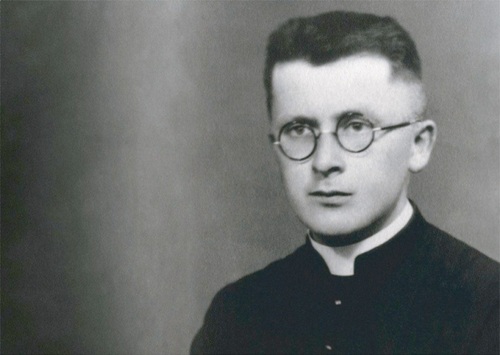
Father Antonio Curcio, parish priest of Bencovazzo (Dalmatia), Father Angelo Tarticchio, parish priest of Villa di Rovigno, Father Giovanni Manzoni, parish priest of Rava (Sebenico), Father Ladislao Piscani, vicar of Circona (Go), Father Miroslavo Bullesich, parish priest of Mompaderno and vice director of the Seminary of Pisino, six nuns disappeared from a convent in Fiume and 76 religious of whom nothing more has been heard, Father Francesco Bonifacio and Father Miro Bulesic, both killed in “odium fidei” are some of the numerous priests and nuns who, from 1943 to 1948, lost their lives thrown into the foibe together with an unspecified number of people, guilty of being Italian. There are those who say that the foibes were...