Language
 English


A documentary about Istria in 1947 offensive to the Exiles
about: Antonio Rocco
Deputy Director General
TV Koper – Capodistria
Robert Apolonius
Editor-in-Chief Responsible
TV Koper – Capodistria
and PC: Alessandra Argenti Tremul
TV Koper – Capodistria
Joseph Grimaldi Buccino
General Manager
Ministry of Foreign Affairs and International Cooperation
Francesco Saverio De Luigi
Plenipotentiary Minister
Ministry of Foreign Affairs and International Cooperation
Maurizio Tremul
President of the Executive Board
Italian Union
Gentlemen,
I am writing about the programme broadcast by the TV Koper – Capodistria television network on 15 September 2017 entitled: “ 1947: A new world was born ”, edited by Alessandra Argenti Tremul and available at the link: http://4d.rtvslo.si/arhiv/tv-kulturno-umetniski/174491325.
This broadcast is viewed as an insult to the people of the Julian-Dalmatian Exodus and, as President of the Federation of Associations of Istrian, Fiume, and Dalmatian Exiles, an inappropriate provocation towards the work carried out by the Institution I have led in recent years, aimed at transforming the Memory of the events that occurred at the end of the Second World War into elements of values and perspectives to be shared in our society.
These elements have in recent years brought about a rebirth of an awareness of identity, where the people of the Exodus and the indigenous Italian-speaking people of Slovenia, Croatia, and Montenegro find a historical, cultural, and geopolitical reconciliation of extreme importance within the framework defined by the highest ideals promoted by the European Union in its original conception.
Now, all this patient work of recomposition is put at risk by an incautious media content that is decidedly biased and misleading.
We fully understand the autonomy of your editorial line, however we cannot underline how in: “ 1947: A new world was born ”, there is no space for the voices of that “ ninety percent of people who lived in Zone B ” (numerical quotation taken from the broadcast itself by the interviewee, Maro Argentin, from Piran), nor for the associations that represent that part of the population ousted with the Exodus.
The entire program, in its contents, seems to have come out of an old-fashioned news program, certainly, it seems like a tribute to a cultural establishment still in vogue in certain environments marked by the national-communist tradition. We want to believe that this is pure coincidence, or our interpretation dictated by hypersensitivity, but we cannot underline some aspects that sound like a slap on an open wound.
In fact, the construction of the program that was broadcast takes on a decidedly ambiguous connotation, unfortunately in line with the discourses that ideologically motivated justificationists and reductionists have been spreading in recent years, bringing insult to 12 thousand people who have disappeared - because of their Italianness at the hands of a barbaric communist and nationalist persecution - and to 350 thousand Exiles - who have forcibly left their land to preserve age-old values without having to compromise with a dictatorial, unjust and historically defeated regime, as demonstrated by the fall of the Berlin Wall in 1989.
In the documentary, a spectator unaware of the events on the Eastern Border is led by the hand into a historical setting that is certainly not false, but characterised by a story that makes no mention whatsoever of the reasons for the Exodus , nor of the persecutions perpetrated against native Italian-Italian speakers that occurred at the end of the war and, above all, after the end of the war.
In order that you too may better understand the feelings of the people of the Exodus aroused by the vision of the broadcast, some emblematic passages are illustrated below. At different times, space is given in the service:
1) To Mrs. Lucia Moratto Ugussi, from Buie, who reports how many families have begun to leave the Istrian lands, specifying that these families were mainly those of state officials, lawyers and notaries, that is, people who worked in court and at the land registry. Immediately after this memory, the montage reports the memory of Loredano Pugliese, from Isola, who expresses the difficult conditions of fishing for the people who remained.
2) The story of the martyrdom of Maria Medizza and Lina Zecchigna, blossoming girls and partisan couriers shot by the Nazi-fascists on 28 September 1944, in the midst of the war.
3) On the Nazi crimes committed during the war – an intervention that takes up a substantial central part of the service – which begins with the testimony of Luciano Parovel, who recounts a massacre committed in the vicinity of Capodistria, and continues with the atrocities committed against the populations of Northern Slovenia, to end with the martyrs and persecuted of the Risiera di San Sabba.
4) To the voice-over which, in a chronometric manner, at the end of the discussion of the war events, cites the date of 15 September 1947 while the period images showing a cheering crowd are shown.
These four steps alone are enough to understand the feelings of those who experienced the Exodus directly.
At point 1), the message conveyed is clear: the bourgeoisie was leaving while the proletariat remained, but we know this is entirely false. The data suggest that between 70 and 80% of the population of the Exodus from Istria consisted of students, unemployed, laborers, workers, farmers, fishermen, and small traders—essentially, proletarians , as they used to say. Yet, the issue of class struggle, while not openly expressed, is clearly induced.
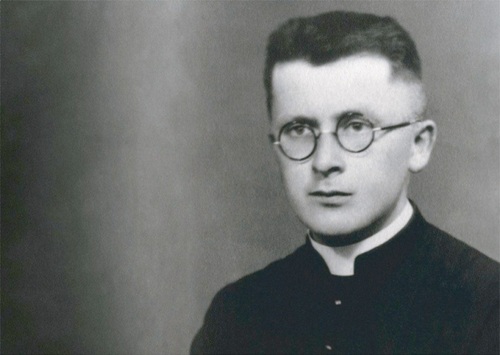
Points 2) and 3) describe atrocious facts, both true and historically proven, but the question in this case is: why not also address history starting from the minutes of the Crown Council of November 12, 1866, which clearly state how ethnic hatred between Slavs and Italians was instigated by the Habsburgs? Why not also mention Norma Cossetto, Don Miroslav Bulešić, and Don Francesco Bonifacio (killed in hatred of the faith ), or Don Angelo Tarticchio, or Giovanna Bonifacio, who died after the war in a Yugoslavian labor camp, or Dolores Butcovih, or Margherita Cescutti, killed, along with so many others, after the end of the war? Why not also say a word about the terrible occupation of Trieste that occurred from May 1 to June 12, 1945, or mention the fate suffered by the people of Monfalcone? By omitting these details and highlighting only a few, the broadcast's lack of balance is self-evident. We reiterate our full respect for the editorial autonomy of the editorial line, but, at the same time, we cannot help but point out that a partial reading of history does not contribute to the construction of a single identity or a shared history.
Point 4), in reality, defines the direction of the entire documentary: the war took place and it was terrible, but the dawn of a new order, more just and fair, triumphed in the end, in the face of the deaths mentioned above, of the Exiles and of the human disaster of that Land.
Ultimately, the unsuspecting viewer who wishes to delve deeper is led into a sort of legitimization of the massacres perpetrated by the People's Tribunals against the majority Italian population, which, with the Exodus, had become a minority, also persecuted (as is clearly demonstrated in the video thanks to Federico Rossi's testimony: " hated without merit as Italian citizens "). Furthermore, the agrarian reform is described in such a way as to induce its own praise. Such a partial account of history implicitly justifies atrocious actions, such as the denial of basic human rights, and indeed not a single word is spent on remembering them.
We would have liked a mention of how:
q The rights to self-determination of peoples and their form of government, as provided for by the Atlantic Charter of 14 August 1941, by the Yalta Conference of 4-11 February 1945, by the Charter of the United Nations signed in San Francisco on 26 June 1945 and reaffirmed subsequently in Helsinki, on 1 August 1975, at the Conference on Security and Co-operation in Europe, were violated.
q The right to life – guaranteed for “human, national, religious, political groups” – was violated in contempt of the United Nations Resolution of 11 December 1946 on the Crime of Genocide and the subsequent Convention established by the UN General Assembly on 9 December 1948.
q The rights established by Article 9 of the Declaration of Human Rights of 10 December 1948, which prohibits arbitrary arrest, detention or forced exile, were violated.
q The rights set out in Annexes VI and XIV of the Paris Peace Treaty of 10 February 1947 were violated, which explicitly stated that “the assets, rights and interests of Italian citizens permanently resident in the territories ceded at the date of the entry into force of the Treaty were to be respected”, and could not be retained or liquidated, but returned to their legitimate owners.
q The same rights as in the previous point were violated on the basis of what was established by the European Convention on Human Rights and Fundamental Freedoms, signed in Rome on 4 November 1950, as well as by what was established in Paris, on 20 March 1952, by Additional Protocol No. 1 of the same Convention, where Article 1 states that: “every natural or legal person has a right to the peaceful enjoyment of his possessions [since]. No one shall be deprived of his property”.
q The Vancouver Declaration of 16 December 1976 (Habitat Report I) was not respected, which states that: “All countries have the duty to cooperate fully to ensure that the parties concerned permit the return of displaced, removed or transferred persons to their homes and to give them the right to own and enjoy their property and all that belongs to them.
There is no trace of any of this in the story of the dramatic September 15, 1947 – understood by our people not so much as the birth of a new world but as the catastrophic end of an era.
It is strange that a Television Network like yours, significant not only in the panorama of regional TV, but also at an international level, with headquarters in a country of great civilization and devoted to progress such as Slovenia, in a multinational and profitably multicultural ecosystem, should blatantly slip by not observing basic rules regarding the respect for diversity entailed by an ethnic group structurally connected to the fragile Land of origin, regardless of the current administrative reality.
Given the sensitive issues addressed by our associations, we look forward to a short meeting with the leadership of your television network to initiate and/or continue a discussion on the issues raised here. In this regard, our associations are already offering their full support for the production of a similar documentary, starting from the perspective of the majority of the people who once inhabited the current territory and who left against their will . This will ensure greater balance and civilized pluralism in the narrative of the history and identity of an ethnic group.
Antonio Ballarin
President of the Federation of Associations of Istrian, Rijeka and Dalmatian Exiles
Rome, 19 September 2017