Language
 English

In the battle of Opicina there were already the tensions of the Cold War
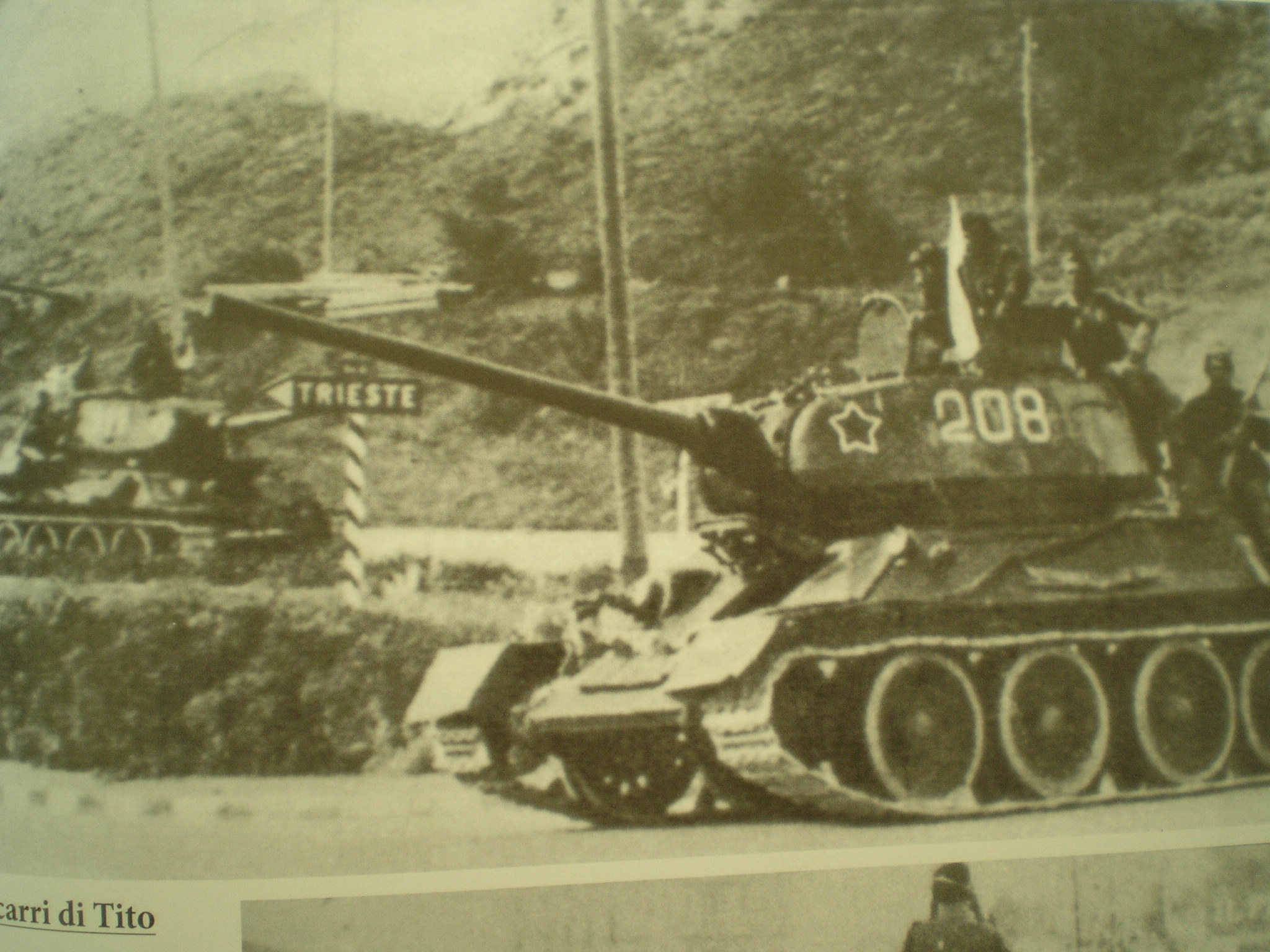
The events recalled in the Trieste daily newspaper Il Piccolo on April 30, 2020, in the article " The Battle of Opicina of April 30, 1945. How Partisans and Allies Defeated the Nazis " provide food for thought on the local and international situation during that final spring of conflict. Reference can be made, for example, to Leone Veronese Jr., "1945 the Battle of Opicina" (July, Trieste 2010) and to the work based on British intelligence sources, "Flashpoint Trieste. The First Battle of the Cold War" by Christian Jennings (Leg, Gorizia 2017), which shows that the military operations in the upper Adriatic were certainly coordinated between the Yugoslavs and the Anglo-Americans, but on the latter's side there were various issues. The "Trst je naš" chanted by Tito's partisan forces was countered by logistical considerations that dictated the occupation of the port of Trieste (and secondarily the naval base at Pola) to supply the Allied troops who would be deployed in Austria and southern Germany, territories connected to the Julian port thanks to the infrastructure built by the Habsburgs. These two differing perspectives on the fate of Venezia Giulia would, in effect, give rise to the so-called "race for Trieste," as it was described by an officer of Her Majesty who experienced it firsthand.
Furthermore, the military and political leaders of London and Washington were aware of Italy's concerns regarding the definition of the new eastern border, so much so that they feared military and political clashes between forces belonging to the anti-Nazi front, and the precedent of the Greek civil war that broke out between nationalists and communists after liberation demonstrated that the delicate Mediterranean sector could degenerate into similar situations. Without omitting the growing awareness within the Atlantic alliance of the fact that, once Nazi-fascism had been defeated, the new adversary would be Soviet communism, of which Tito was the supreme representative in the Balkan chessboard at that time in history.
Therefore, the Anglo-Americans and the Yugoslavs converged on Trieste with barely compatible intentions and in fact there were moments of tension when the British armoured column arrived from Trieste at Opicina, where the Germans, like their comrades entrenched in the city, wanted to surrender to a regular army that would treat them in accordance with the laws of war for the protection of prisoners, rather than to the Yugoslav partisan troops who would massacre them. The tension was such that a brief firefight took place between the English and the Yugoslavs, which was in continuity with the capture of British raiders landed in Istria by the communist partisans and would find a sequel in the diplomatic tensions between Western powers and Belgrade that continued until Tito's exit from the Cominform in 1948.
The partisan victory at Opicina, together with the arrival in the city of the IX Corpus, would also have marked the beginning of those 40 days of roundups, denunciations, summary trials, deportations, sinkholes and disappearances into thin air of which not only former fascists and Nazi collaborators would have been victims, but also and above all anti-fascist patriots opposed to annexation to the nascent communist Yugoslavia and former partisans who had fought against the Nazis also sparking the city insurrection of 30 April. The Yugoslav national liberation war had, in fact, transformed into an expansionist military campaign with sights on Venezia Giulia, Carinthia and Thessaloniki: Tito's troops who fought at Opicina did not intend to bring Liberation to the Italians on the eastern border, but rather to subject them to a new foreign occupation.
Lorenzo Salimbeni